






 Portuguese
  Spanish
  4 min of reading
  0 comments


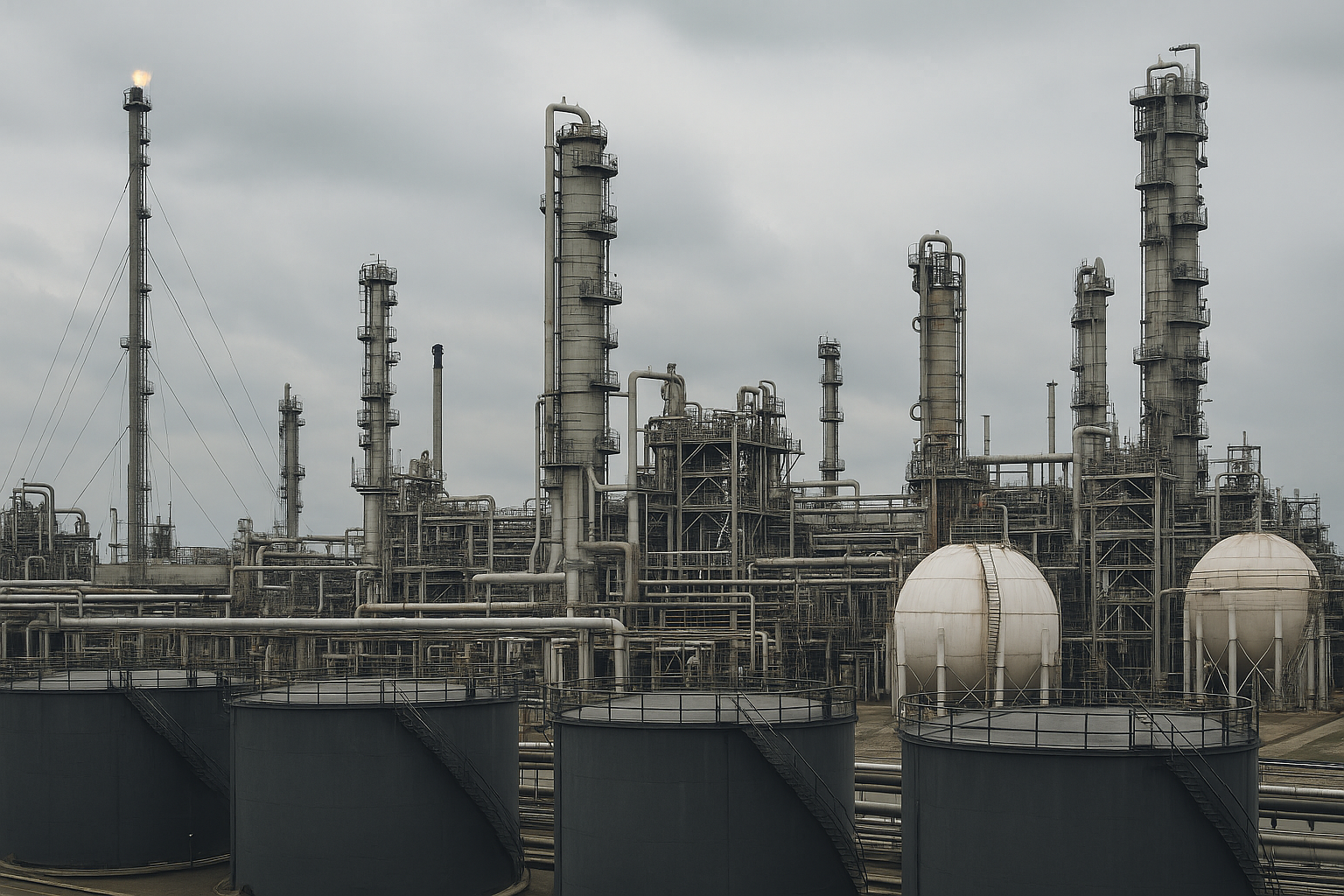
Discover How the Challenges of Oil and Gas Directly Influence the Economy, the Environment, Business, and Your Everyday Life, from Market Prices to the Transformations of the Global Energy Matrix.
The oil and natural gas have always been at the center of industrial, political, and economic transformations in the world.
In fact, these energy resources, extracted from the depths of the Earth, power cars, airplanes, generate electricity, heat homes, and serve as raw materials for numerous products in our daily lives, such as plastics, fertilizers, and even medications.
However, few people realize that the challenges faced by this sector go beyond technical or environmental issues.
-
Oil production grows in Rio, but reserve replacement raises a warning sign

-
Petrobras is expected to complete the drilling of the Morpho well in the Foz do Amazonas in August 2026, the first well in the Equatorial Margin, an oil frontier that the ANP estimates at more than 30 billion barrels and could redraw the map of Brazil.

-
Oil returns to the center of concerns with tension between the US and Iran

-
IEA reduces forecast for global oil demand in 2026 after impacts of the Middle East crisis
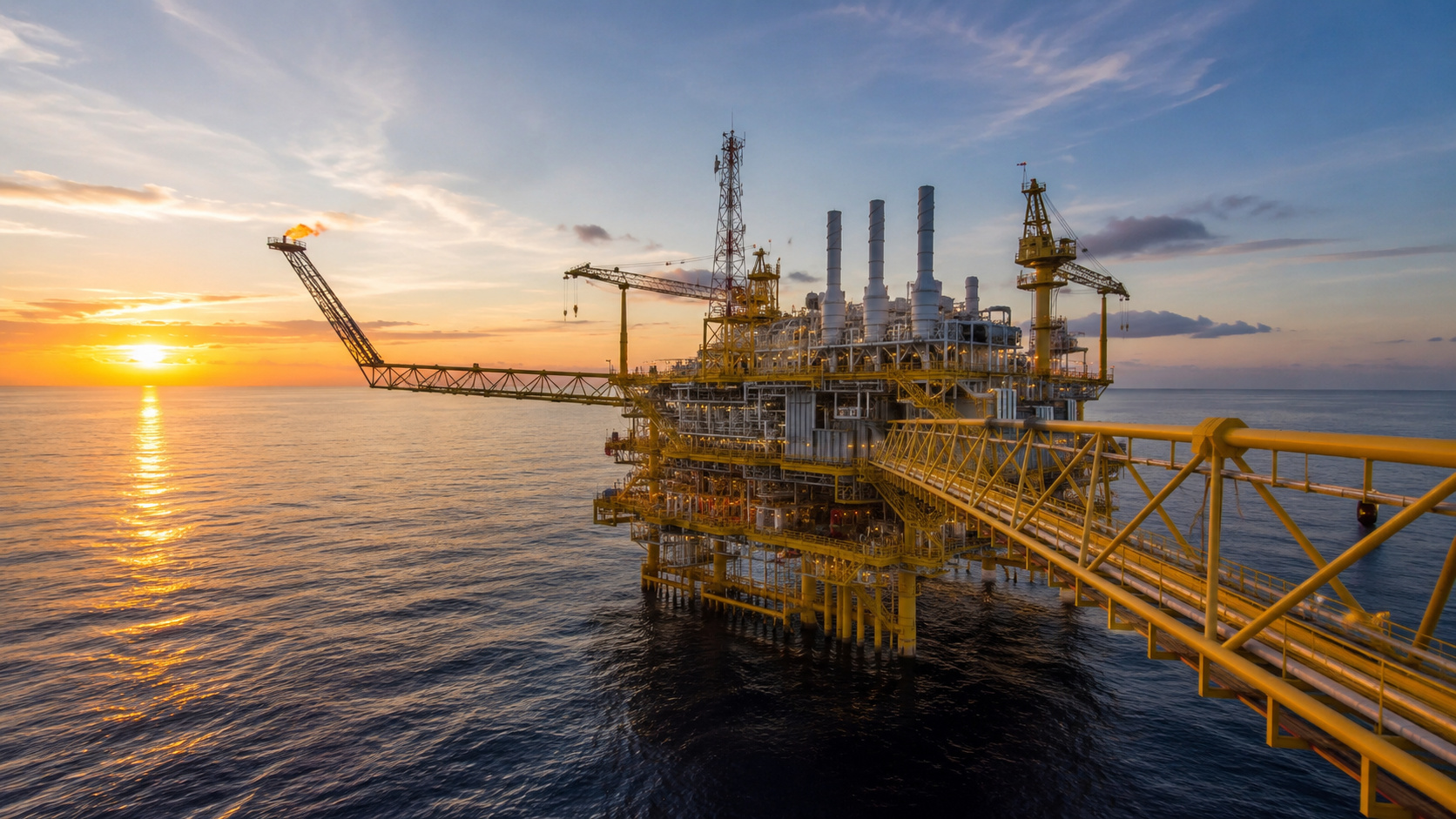


They directly affect our daily lives, the prices we pay for goods and services, and how businesses operate.
According to the International Energy Agency (IEA), the first commercial oil well was drilled in 1859 in Pennsylvania, United States, marking the start of the oil era, which fueled global industrial development.
This discovery revolutionized the economy of the time, replacing whale oil and coal as the main energy sources.
Throughout the 20th century, oil became the primary energy source, especially after the internal combustion engine became popular, allowing for the advancement of motorized transport.
As highlighted by the Organization of the Petroleum Exporting Countries (OPEC) in its 2023 report, this dependence created a complex global network that connects countries, financial markets, and production chains.
However, the depletion of more accessible reserves has led to exploration in more challenging locations, such as deep waters and severe climate regions.
According to the National Oceanic and Atmospheric Administration (NOAA), this complexity increases environmental risks and raises production costs, affecting market stability.
The growing demand for oil and gas, driven by emerging countries like China and India, intensifies the pressure on natural resources.
The global population, which surpassed 8 billion in 2023 according to UN data, consumes energy at unprecedented levels, forcing the sector to adapt quickly.
Geopolitics and Economic Instability in the Oil and Gas Sector
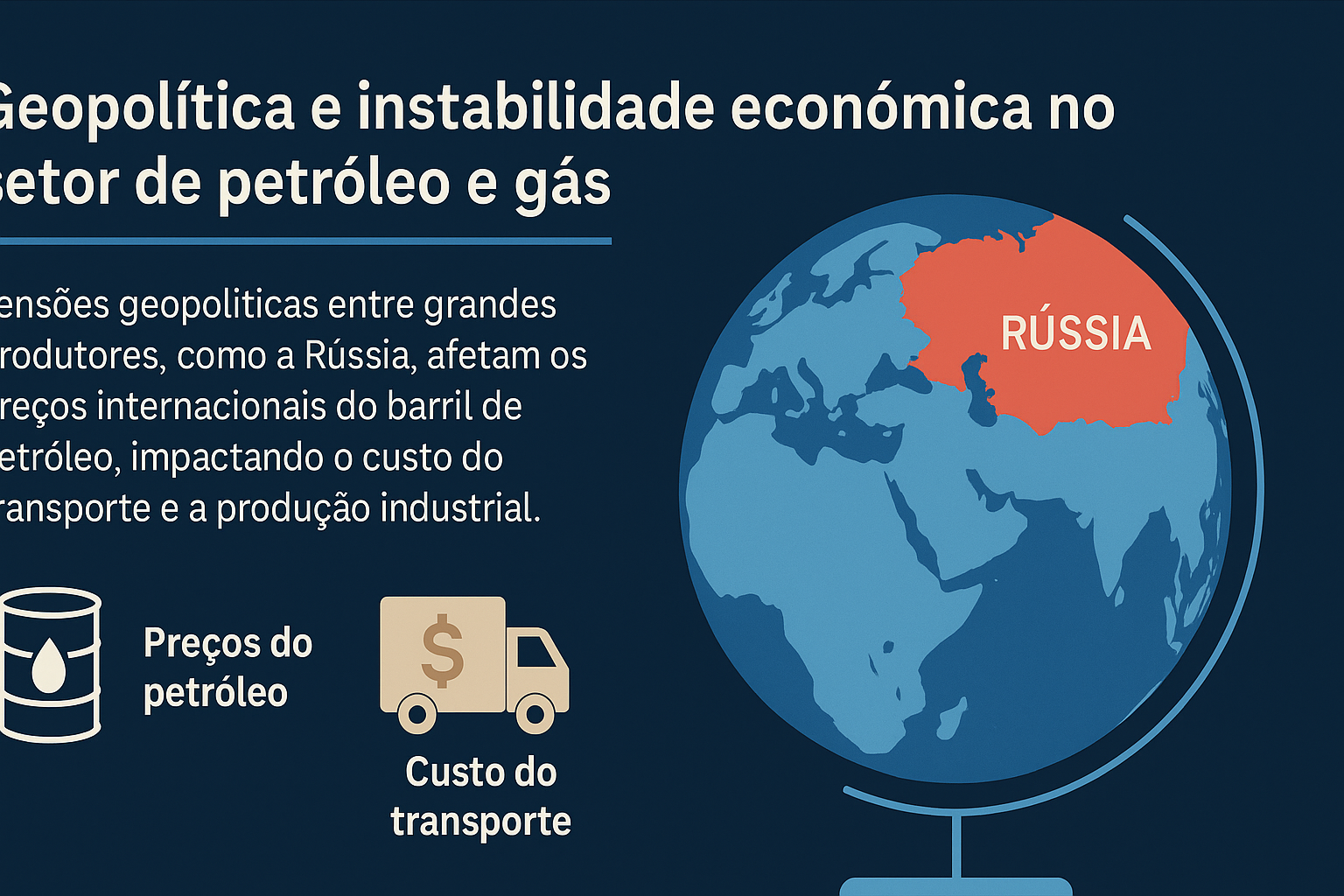
The sector suffers from external influences, especially geopolitical tensions between major producers.
Russia, for example, plays a crucial role in the global natural gas supply, as shown in the International Energy Agency’s 2024 report.
These political disputes directly affect international oil barrel prices, impacting transportation costs and industrial production.
As pointed out by the World Energy Council (WEC) in its latest study, even diplomatic statements can cause fluctuations that resonate with consumers’ pockets.
The economic dependence on oil-producing countries, such as Venezuela and Nigeria, creates a delicate scenario.
According to the World Bank, these economies suffer from price volatility and the difficulty of diversifying their income sources, resulting in social and political instability.
Additionally, the energy transition, driven by the 2015 Paris Agreement, requires countries to reduce greenhouse gas emissions.
The pressure to replace fossil fuels with renewable sources poses a challenge for nations whose budgets depend on oil exploitation.
The International Renewable Energy Agency (IRENA) emphasizes that this transition should be gradual and planned to avoid severe economic impacts and unemployment in regions dependent on the oil industry.
Environmental Impacts and Technological Advances

Environmentally, oil extraction and consumption contribute to about 75% of global carbon dioxide emissions related to energy, according to the Intergovernmental Panel on Climate Change (IPCC).
Events like the 2010 Gulf of Mexico oil spill highlight the catastrophic impacts that accidents can have on the environment and local communities.
The NOAA has extensively tracked the consequences of this disaster, which still affects the region’s biodiversity.
In response, the sector invests in technologies to reduce risks and mitigate environmental impacts.
The carbon capture and storage (CCS) technology, mentioned by the International Energy Agency in its reports, has the potential to significantly reduce emissions from fossil fuel combustion.
Moreover, technological advancements in horizontal drilling and fracking have expanded access to previously unreachable reserves, especially in shale formations.
However, these techniques also generate controversy due to local impacts, such as intensive water consumption and contamination risks.
These innovations are crucial to maintaining supply but increase costs and environmental demands.
Reflections for Businesses and Consumers
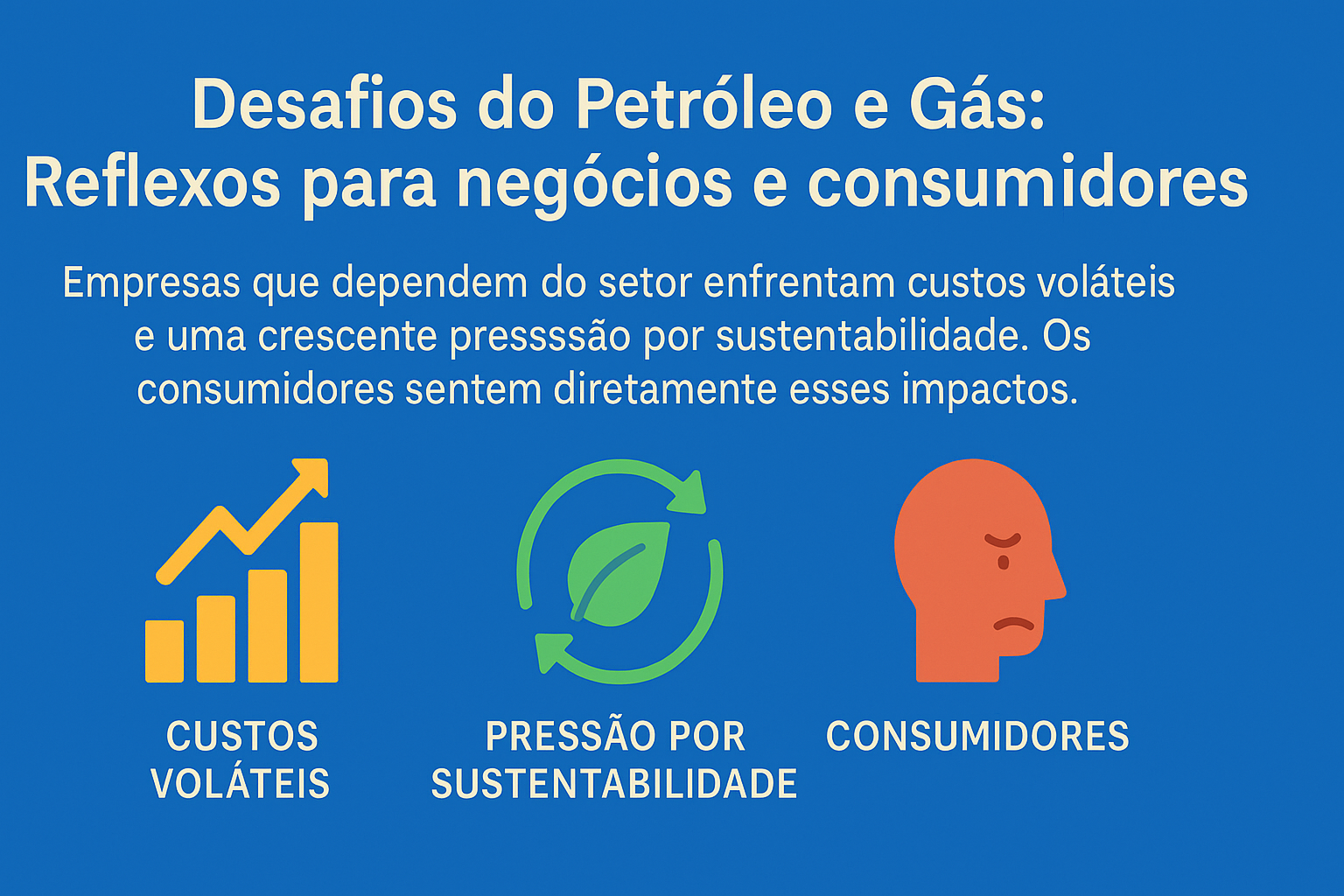
Companies dependent on oil and gas face an environment of volatile costs and increasing pressure for sustainability.
According to an analysis by Bloomberg Energy Finance, the demand for clean energy has led investors to demand greater transparency and environmental commitment.
On the other hand, the end consumer directly feels the impact of the sector’s variations.
Fluctuating prices of gasoline and natural gas affect inflation and transportation costs, reflecting in the price of food and consumer goods; which is one of the challenges of oil and gas.
Therefore, understanding these challenges is essential for businesses that want to adapt and thrive in a transitioning world.
The Future of Oil and Gas in the Energy Transition
According to the International Energy Agency, even with the expansion of renewables, global oil consumption is expected to remain high until 2040. This indicates that fossil energy will remain essential for several decades.
Thus, the sector needs to balance technological innovation, sustainability, and energy security. The integration of oil, gas, and renewable sources will be crucial in this process.
Governments will play a decisive role, as emphasized by the World Bank, creating public policies that encourage sustainable investment and social protection in producing regions.
Moreover, the challenges of oil and gas involve raising consumer awareness and engaging civil society, which are crucial to promote rational resource use and push for responsible practices.









Be the first to react!