






 Portuguese
  Spanish


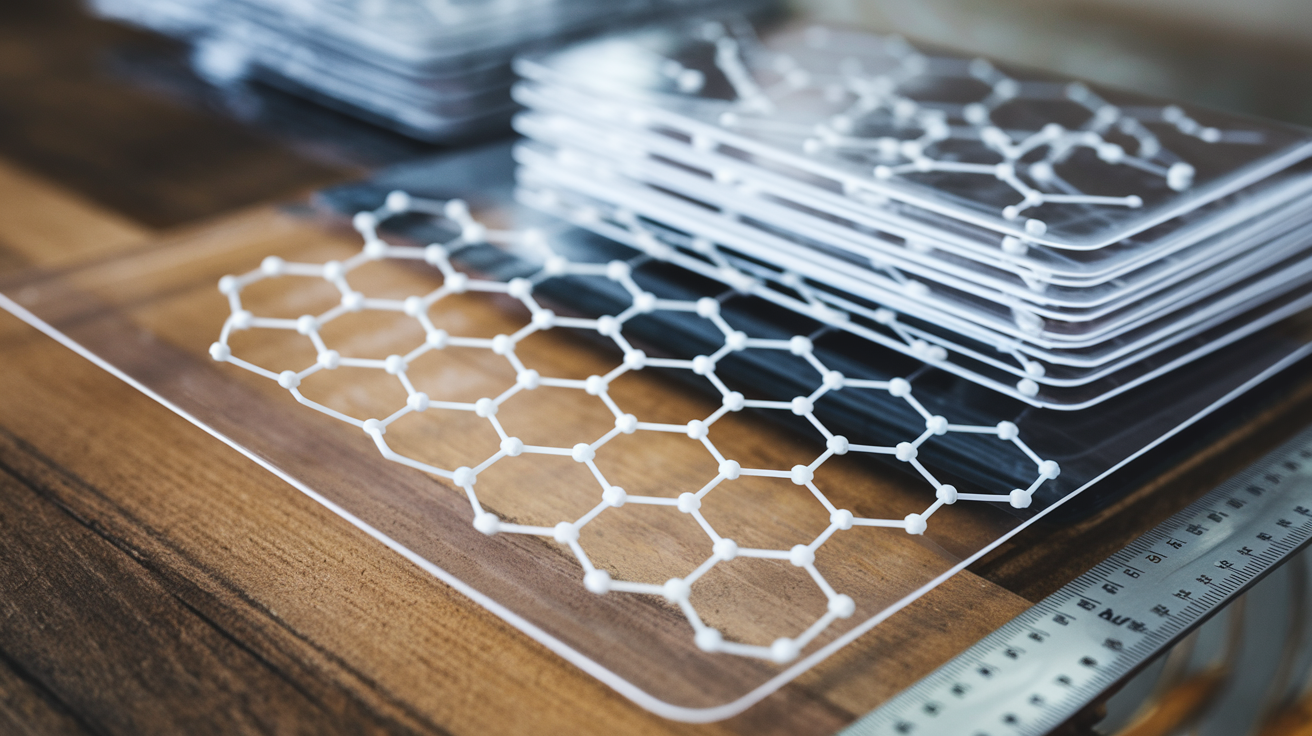


Discovery Of White Graphene Could Boost Global Sustainability. Understand How The Material Can Be A Key Player In The Production Of New Sustainable Technologies.
Two-dimensional materials, such as molybdenite and graphene, gained fame quite rapidly, but there are some alternatives, and some of them are even more promising than these materials that stand out in nanotechnology. Now, hexagonal boron nitride (hBN), known as white graphene, is emerging as a new key player for sustainable technologies, with vast potential that surpasses the boundaries of traditional graphene.
Importance Of The Discovery Of White Graphene For New Sustainable Technologies
With just one atom thick, white graphene stands out for its extreme strength and versatility. It can block electric currents, withstand chemical aggression, and resist high temperatures.
These qualities with the discovery of white graphene make the material ideal for applications in advanced sustainable technologies, where it will be responsible for protecting sensitive microchips and boosting the creation of faster and more efficient transistors.
-
4,000-Year-Old Child’s Skull Unveils Ancient Burial in 7,500-Year-Old Norwegian Rock Shelter, Impressing Archaeologists

-
Norway Defeats Brazil in World Cup but Invests Billions to Preserve the Amazon, Strengthens Amazon Fund, and Joins Brazil in Leading Global Effort Against Tropical Deforestation

-
Denmark Constructs Its Largest Breakwater with 175 Concrete Blocks and World’s Largest Excavator to Combat 8-Meter Waves, at a Cost of $156 Million

-
Swedish Company Develops Offshore Wind Turbine That Eliminates the Need for Cranes and Simplifies Maintenance




Recently, scientists from the University of Surrey in the United Kingdom announced new advances that may strengthen white graphene as a fundamental material for the future of technology. The team unveiled the atomic processes governing the formation of white graphene, offering new perspectives for its use in various areas, including clean energy and ecological solutions for the chemical industry.
According to the research leader, Professor Marco Sacchi, the research on the discovery of white graphene sheds light on the essential processes that control the formation of this material and its nanoscale structures. With this understanding, it is possible to optimize its properties for a range of innovations in sustainable technologies.
Main Advance Of Scientists With The New Research
One of the biggest innovations generated by the research was the discovery of how to grow white graphene on metallic substrates, further expanding its possibilities beyond sustainable technologies. The discovery of white graphene and new techniques opens pathways for cleaner energy solutions and more sustainable industrial processes.
By combining Density Functional Theory with microkinetic modeling, the researchers were able to map the growth process of the material from borazine precursors. This enabled the development of an atomic model that reflects the reality of producing the material at any temperature, making its production more accessible and efficient.
Additionally, the researchers demonstrated the creation of porous hBN, a version of the material that features structured voids on its surface. This modification expands the properties of white graphene, making it more functional for applications such as advanced catalysis, selective absorption, and other fundamental chemical processes.
With this discovery of white graphene, the material not only advances in the field of electronics but also positions itself as a key player in facing global energy challenges and environmental issues.
Brazilians Find A Way To Produce White Graphene
In addition to more advanced sustainable technologies, the discovery of white graphene also stands out in fundamental areas for sustainability, such as monitoring and filtering pollutants. Its versatility makes it a viable option for enhancing hydrogen storage systems and creating electrochemical catalysts for fuel cells.
Rodrigo de Souza and his colleagues from the Center for Innovation in New Energies (CINE) and the Institute of Energy and Nuclear Research (IPEN) developed a fast, clean, scalable, and simple way to obtain white graphene nanosheets.
The team was able to extract the material using plasma generated by a modified Tesla coil, acting on the material confined within a tube. The Tesla coil is a simple device that can even be built at home, capable of producing high-voltage discharges, creating electric arcs.


Todos medicamentos estão com grafeno igual o glúten etc… para matar silenciosamente 😢