Portuguese
  Spanish


Between June 23 and 25, 2026, the only KC-30 of the FAB (Brazilian Air Force), the Airbus A330 with registration FAB2901, crossed the Atlantic to fetch in Spain a new batch of 105 mm anti-tank ammunition for the Leopard 1A5 tanks of the Brazilian Army. The aircraft made two flights between Morón Air Base in Spain and Galeão Air Base in Rio de Janeiro, and then proceeded on a humanitarian mission to Venezuela.
The scene seems like a movie, but it’s real military logistics. According to the portal Aeroin, the FAB’s KC-30 was sent to Spain to bring back anti-tank ammunition for the Leopard 1A5 tanks of the Brazilian Army, in a strategic air transport that mobilized the largest plane of the Air Force to replenish the stockpiles of the Ground Force.
The operation was coordinated by the Army. According to the Army Logistics Command (COLOG), the mission took place between June 23 and 25, transporting 105 mm HEAT-T M456A1 anti-tank ammunition acquired from the Granada Ammunition Factory in Spain, and aimed to replenish and strengthen the strategic and operational stocks that provide firepower to the Leopard 1A5 tanks of the Brazilian Army. Next, see what the FAB’s KC-30 is, how the mission in Spain was, what this ammunition is, how the military logistics chain worked up to the depot in Brazil, and why such an operation says a lot about the country’s strategic autonomy.
What is the FAB’s KC-30, the largest plane of the Brazilian Air Force
Let’s start with the star of the mission. The FAB’s KC-30 is an Airbus A330 adapted for transport and aerial refueling, the largest plane ever operated by the Brazilian Air Force, capable of carrying dozens of tons of cargo over thousands of kilometers without a stop, making it the ideal tool for a task like fetching ammunition from the other side of the Atlantic.
-
Brazilian Air Force Seeks to Acquire More Gripen Fighter Jets

-
U.S. Air Force Launches Air-to-Air Missile Project with Range of Up to 1,850 km for Indo-Pacific Operations

-
Australia to Deploy Up to 8 Nuclear-Powered Submarines in Indo-Pacific, Establishes Billion-Dollar Naval Chain Through AUKUS, Joining Elite Group Capable of Extended Underwater Missions
-
Indonesia Begins Construction of 2,000-Ton Scorpène Stealth Submarines with Advanced Weaponry and French Steel



The detail that draws attention is the quantity. The Air Force has a single active KC-30, the aircraft with registration FAB2901, which means that every heavy strategic transport mission of the country depends, today, on this same solitary plane, a point that the operation itself made clear.
It is important not to confuse the aircraft. The KC-30 of the FAB is the large Airbus A330 for transport and refueling, different from the KC-390, the tactical freighter manufactured in Brazil, and it was precisely the size of the A330 that allowed bringing the ammunition load from Europe in a few flights.
That’s why the choice makes sense. For a mission that required crossing the ocean with a heavy batch of ammunition for the Leopard 1A5 tanks, the KC-30 of the FAB was the natural option, combining range, capacity, and the autonomy of not needing to rely on third-party aircraft to arm the Ground Force.
The mission in Spain: fetching the Leopard ammunition
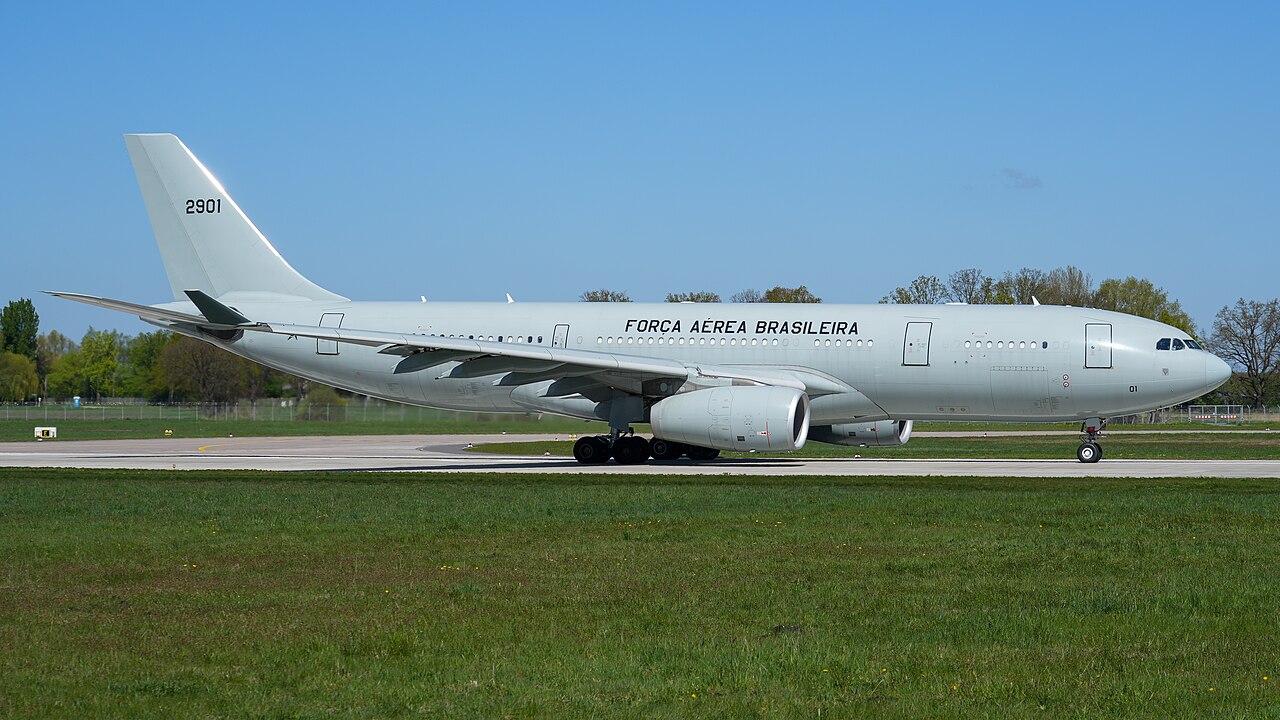
The operation route was transatlantic. The KC-30 of the FAB departed from Morón Air Base in Spain, heading to Galeão Air Base in Rio de Janeiro, carrying the new batch of anti-tank ammunition that will replenish the depots of the Leopard 1A5 tanks of the Brazilian Army.
It wasn’t a single flight. To handle the entire load, the FAB2901 made two flights between the Spanish base and Galeão, a back-and-forth that shows both the volume of the cargo and the military logistics effort required to bring the ammunition from Europe to Brazil in a few days.
The ammunition itself came from a specific factory. The batch was acquired from the Granada Ammunition Factory in Spain, producer of the type of anti-tank shot that equips the Leopard 1A5 tanks, and it was up to the KC-30 of the FAB to serve as an air bridge between the European supplier and the Brazilian Army.
And the plane’s schedule didn’t stop there. After completing the two flights with the Leopard tank ammunition, the same KC-30 of the FAB proceeded to a humanitarian mission to Venezuela, a sequence of tasks that helps to understand why the aircraft is so sought after within the Air Force.
What ammunition is this? The 105 mm anti-tank shot of the Leopard 1A5
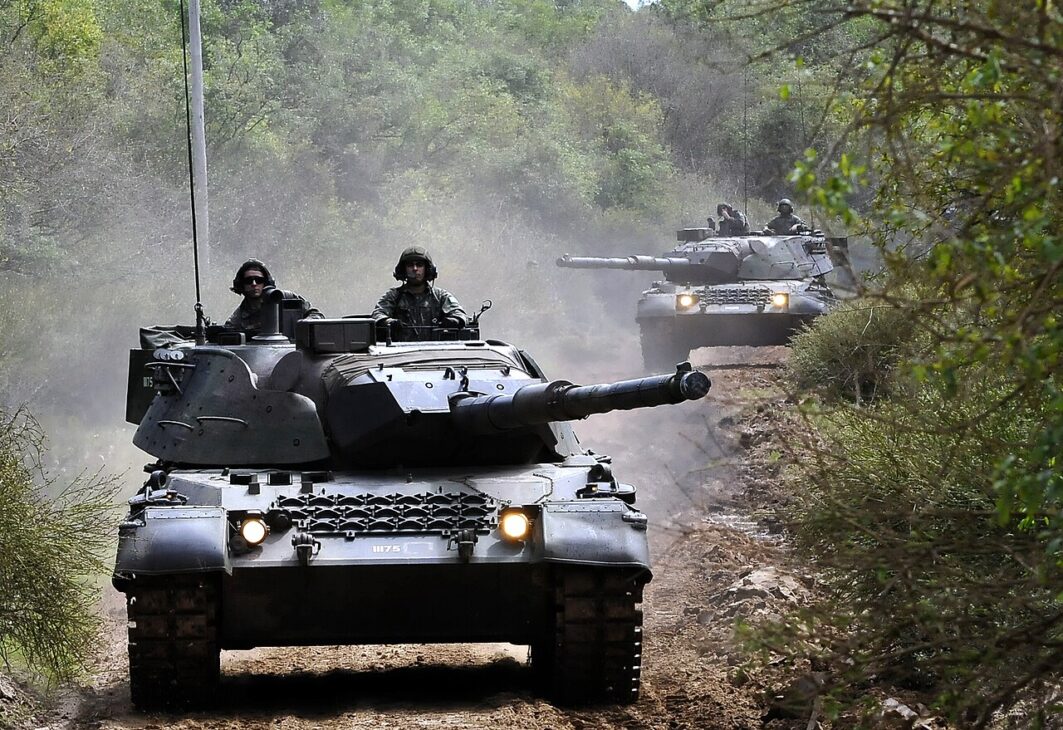
The heart of the mission is the projectile. The load brought by the KC-30 of the FAB is the 105 mm anti-tank ammunition of the HEAT-T M456A1 type, the shot designed to penetrate armor that equips the main gun of the Leopard 1A5 tanks used by the Brazilian Army.
Without ammunition, the tank is just steel. A combat vehicle like the Leopard 1A5 only fulfills its role when it has the right ammunition for its cannon in the arsenal, which is why restocking this supply was treated as a strategic mission, to the point of mobilizing the largest aircraft of the Air Force for the task.
The declared objective was to reinforce the stocks. The operation aimed to replenish and strengthen the strategic and operational ammunition stocks of the Brazilian Army, ensuring that the armored troops have the necessary supply for advanced training and for the so-called rapid response, the drills that keep the troops ready to act.
It is worth noting what was not disclosed. Neither the portal nor the Army’s statement revealed the exact amount of ammunition brought by the KC-30 of the FAB, only that it was a new batch of 105 mm anti-tank rounds, enough to give new strength to the firepower of the Leopard 1A5 tanks.
From Galeão to the arsenal: the military logistics chain in Brazil
The arrival in Brazil was just the beginning of another stage. After the KC-30 of the FAB landed at Galeão, the ammunition entered a careful military logistics chain, which involved reception, customs clearance, and land transport to the secure storage location.
Each link has its function. The reception was handled by the Army’s Logistics Support Base, with customs clearance done by the Import and Export Division of Material, a process that treats the ammunition of the Leopard 1A5 tanks with the same legal rigor as any sensitive import.
Then came the convoy transport. From the base in Rio de Janeiro, the anti-tank ammunition traveled in a convoy to the Central Ammunition Depot, where it was securely stored, ending the journey that began in Spain and passed through the KC-30 of the FAB.
This mechanism reveals an important trait. The mission demonstrated the interoperability between the Armed Forces, with the Army planning and coordinating the operation and the Air Force executing the transport with the KC-30 of the FAB, a partnership that turns military logistics into a decisive factor of combat power.
A single KC-30 for many missions: the alert the operation exposed
The mission was a success, but it raised a yellow flag. Having only one KC-30 of the FAB available means that the country relies on a single aircraft for all heavy strategic transport missions, and the operation of the Leopard tanks ammunition made this bottleneck quite visible.
The sequence of tasks illustrates the problem. The same FAB2901 that made two flights to Spain immediately followed with a humanitarian mission to Venezuela, meaning a single aircraft had to handle very different commitments in succession, with no room for downtime or unforeseen events.
According to the portal’s analysis, this raises a debate. The reliance on a single KC-30 of the FAB for so many fronts reignites the discussion about investment in the country’s strategic air transport capability, a topic that tends to take a back seat until a real mission, like the Leopard 1A5 ammunition, exposes the fragility.
The message is clear for future planning. A regional power that needs to cross the Atlantic to arm its Leopard 1A5 tanks and still assist neighbors in emergencies cannot indefinitely depend on a single aircraft, and the operation serves as a reminder of the importance of expanding the military logistics fleet.
What are the Leopard 1A5 tanks of the Brazilian Army?
To understand the mission, it’s worth knowing the recipient of the ammunition. The Leopard 1A5 tanks are combat vehicles of German origin that today form the armored backbone of the Brazilian Army, equipped with a 105 mm cannon, the same that fires the anti-tank ammunition brought by the KC-30 of the FAB.
They are the central piece of the shock force. Employed mainly in territorial defense, the Leopard 1A5 tanks give the Brazilian Army maneuverability and heavy firepower, and it is this fleet that needs 105 mm ammunition in stock for training and to respond to any need.
Keeping these tanks ready requires continuous effort. Besides the maintenance of the vehicle itself, it is necessary to ensure a constant supply of ammunition, and it was precisely this part of the equation that the KC-30 of the FAB mission came to solve, by bringing from Spain the anti-tank shot that supplies the Leopard 1A5.
This is why the operation was so relevant. Replenishing the ammunition stock of the Leopard tanks is what keeps the deterrent power of the armored force alive, transforming a fleet of steel into a real military capability, ready for training and defense.
Why does a military logistics operation like this matter?
The answer lies in autonomy. Being able to send the KC-30 of the FAB to Spain and bring back ammunition for the Leopard 1A5 tanks on its own shows that Brazil has strategic air transport autonomy, without needing to rely on foreign aircraft or intermediaries to arm its troops.
There is also the lesson about planning. A military logistics operation like this involves overseas purchasing, transatlantic transportation, customs clearance, and secure storage, a long chain that only works with coordination between the Army and the Air Force, proving that supply and transportation are as important as the weaponry itself.
There is also the value of readiness. By replenishing the ammunition stocks of the Leopard 1A5, the Brazilian Army ensures that its armored troops can train and respond at any moment, and it is this capability of always being ready that the mission of the FAB’s KC-30 helped sustain.
Finally, the operation educates the public. Military logistics missions rarely get the spotlight, but they are what keep the Armed Forces running, and seeing the country’s largest plane cross the ocean to fetch ammunition gives Brazilians a concrete notion of how national defense depends on well-oiled backstage operations.
What the KC-30 mission has to do with Brazil
The link is direct because everything here is Brazil. The mission of the FAB’s KC-30 involved national resources, troops, and planning to arm the Leopard 1A5 tanks of the Brazilian Army, and shows how the country projects capability beyond its own borders when needed.
There is a portrait of national defense in action. The operation united the Air Force and the Army in the same task, revealing the interoperability between the Armed Forces and how decisive military logistics is in transforming idle equipment into real combat power, something of interest to every citizen.
And there is the debate about investment. By exposing that the country relies on a single FAB’s KC-30 for so many missions, the operation fuels the discussion about how much Brazil needs to invest in strategic air transport, a public budget topic that directly affects the country’s defense and humanitarian aid capacity.
Finally, there is the sense of sovereignty. Being able to fetch the ammunition for the Leopard 1A5 tanks in Spain with its own means is a sign that Brazil maintains strategic autonomy, and the mission of the FAB’s KC-30 serves as a reminder that defense is built with planes, ammunition, and above all, well-planned military logistics.
And did you imagine that Brazil crosses the Atlantic to arm its tanks?
In the end, the mission of the FAB’s KC-30 tells a story bigger than a simple flight. It shows a country capable of mobilizing its largest plane to fetch ammunition in Spain, coordinate a complex military logistics chain, and still assist a neighbor, all with a single and highly sought-after Airbus A330.
More than the feat, there is the warning. The reliance on just one FAB’s KC-30 to arm the Leopard 1A5 tanks and attend to emergencies shows that Brazil needs to think about the future of its strategic transport capacity, at the risk of overburdening a unique and valuable resource.
And you, did you imagine that the Brazilian Army needs to cross the Atlantic to resupply ammunition for its Leopard 1A5 tanks, and that all this depends on a single K-30 of the FAB? Share your opinion in the comments and share with those interested in defense and the Armed Forces.