Portuguese
  Spanish


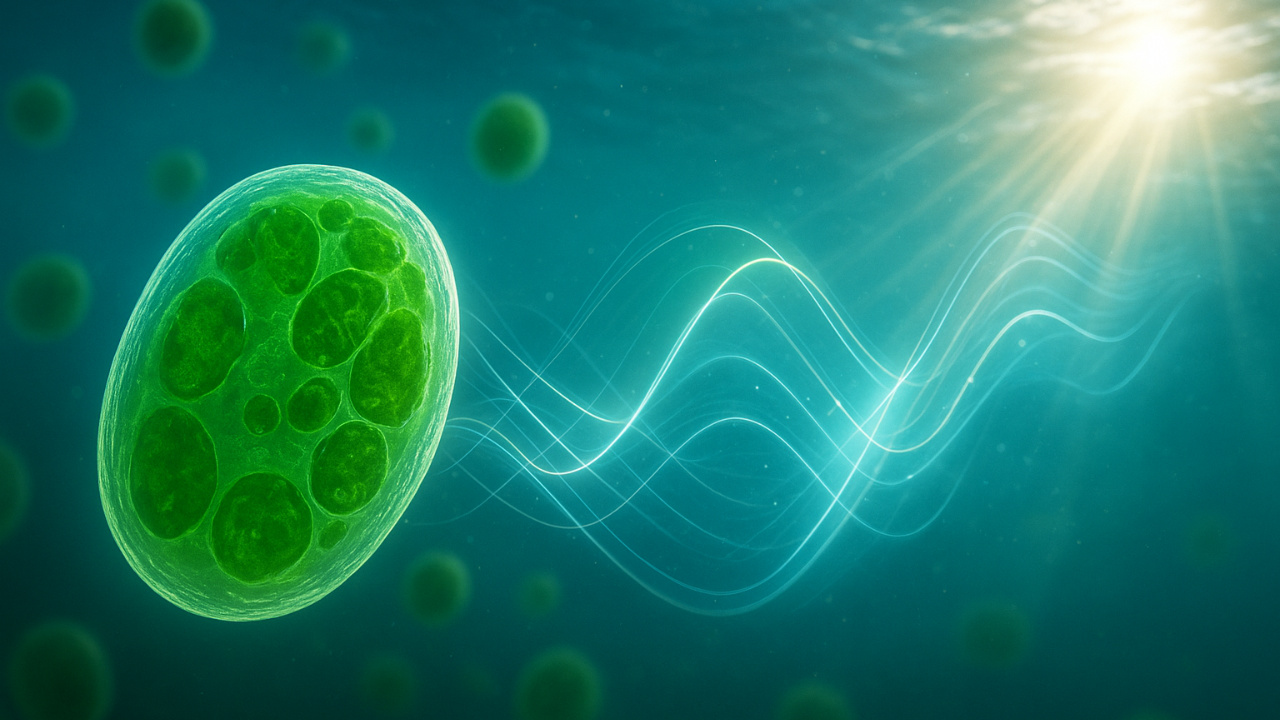

Researchers Identify a Pigment in Seaweeds Capable of Dissipating Excess Solar Energy Without Harming Photosynthesis. The Discovery May Inspire New, More Efficient and Durable Solar Energy Technologies Based on Natural Quantum Processes.
A group of Japanese and Italian scientists made a discovery that could change the course of solar energy generation. The study revealed that certain seaweeds developed a quantum tool capable of dissipating excess solar radiation without compromising photosynthesis. This ability, according to the researchers, may inspire the creation of biomimetic solar panels, which are more efficient and resistant to degradation.
The study, published in the journal Cell Reports Physical Science, was conducted by scientists from Osaka Metropolitan University in Japan and the University of Padua in Italy. They observed that algae of the genus Codium fragile, common in coastal regions, have special pigments that serve as a natural shield against intense light.
Siphonein: The Pigment That Protects Without Interfering in Photosynthesis
The main highlight of the research is siphonein, a carotenoid found in green algae that acts as an intelligent defense system. When chlorophyll absorbs excess solar energy, it enters an unstable state that can generate reactive and damaging oxygen molecules to cells.
-
Solar energy reaches 55 GW, becoming the second largest power source in Brazil’s energy mix

-
Solar energy can increase property value by up to 10% and become a selling point.
-
Solar and wind energy surpass natural gas for the first time in the world and accelerate energy revolution

-
Africa has about 500,000 cell towers and most still burn diesel to operate, while companies rush to cover antennas with solar energy and avoid signal blackouts.




The siphonein comes into action precisely at this critical moment. Through a quantum process known as triplet-triplet energy transfer (TTET), it captures the excess energy and safely dissipates it as heat. This way, the pigment protects the photosynthetic system without interrupting the process of converting light into energy.
According to researcher Ritsuko Fujii, one of the authors of the study, “it is one of the most effective carotenoids ever discovered.” The pigment functions as a biological safety valve, regulating the flow of solar energy to the algae’s cells.
Comparison with Terrestrial Plants Reveals Impressive Difference
To test the efficiency of siphonein, scientists compared the behavior of the algae to that of spinach, a widely studied terrestrial plant. Using electron paramagnetic resonance (EPR) spectroscopy, they were able to observe how solar energy behaved during photosynthesis in both organisms.
The results were striking. While spinach samples showed signs of excited chlorophyll — an indicator of cellular damage — in the algae, those signs completely disappeared. The reason: the presence of siphonein.
Located in the light harvesting complex (LHCII), the pigment acts precisely and autonomously, preventing the formation of free radicals. Additionally, seaweeds also have other carotenoids, such as siphonaxanthin, which aid in the absorption of blue-green light and reinforce their natural resistance.
From the Sea Floor to Solar Panels: Biomimetic Inspiration
The research opens the way for a new frontier of sustainable solar energy. The way algae manage light energy can be replicated in artificial photovoltaic materials. Currently, traditional solar panels face efficiency loss over time due to degradation caused by continuous exposure to the sun.
By applying the same quantum principle observed in the algae, scientists hope to develop more durable solar panels, capable of self-regulating and reducing performance loss. This approach, known as biomimetics, aims to copy natural processes to enhance human technologies.
The team from Osaka Metropolitan University intends to continue the research by creating synthesized pigments inspired by siphonein, simulating its quantum behavior with the aid of computational modeling.
Nature and Science: The Combination That Can Transform Solar Energy
More than a biological curiosity, the study represents a breakthrough for the future of clean energy. According to researchers, the natural sophistication of algae may be a key to addressing one of the greatest challenges of modern solar engineering: balancing efficiency and durability.
“Our goal is to bring the sophistication of nature to engineering,” says Fujii. “The way algae handle light may be the key to the next generation of clean energy.”
The discovery reinforces the idea that nature continues to be one of the best engineers on Earth, offering sustainable and intelligent solutions that can redefine the role of solar energy in the global transition to a low-carbon future.