Portuguese
  Spanish


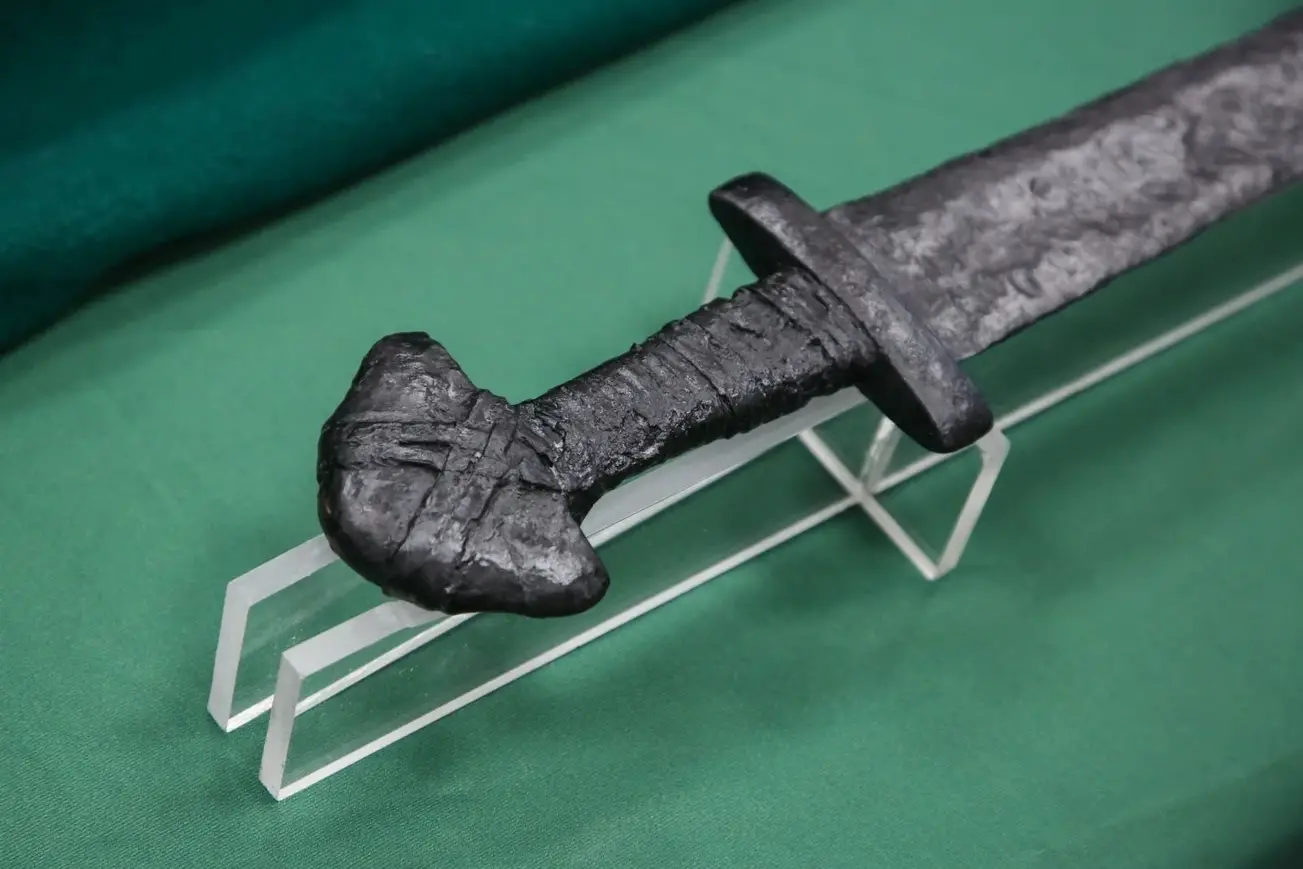

A Viking Sword Was Found by a Diver in Poland, Revealing New Details About the Presence and Influence of Vikings in the Region More Than a Thousand Years Ago.
An extraordinary discovery in northeastern Poland has uncovered a rare Viking sword in excellent condition. The find was announced by the Military Museum in Białystok and is being hailed as one of the most remarkable relics of medieval history in the country.
The sword, dated to the late 9th century or early 10th century, is one of the few specimens found on Polish territory.
Robert Sadowski, director of the Military Museum, highlighted its uniqueness: “It is very uncommon, as far as I know, there are only three or four swords like this in the country.” The piece impresses both by the shape of the hilt and the details of the blade, suggesting a possible Viking origin or connection to Baltic cultures.
-
Artesian Well Becomes Lifeline for Small Brazilian Farm: Drilling Reaches 60 Meters, Finds Marble, Navigates Rock Fissures, and Strikes Fresh Water

-
Street Cleaner in Brazil Finds Discarded Books That Helped His Wife Pass Civil Service Exam and Become Police Captain
-
July’s Night Sky to Feature Planetary Alignments, New Moon, Venus at Sunset, Buck Moon, and Two Meteor Showers

-
Fisherman Catches 18kg Catfish Near Brazil’s Itaipu Lake, Among Largest Recorded in Recent Years



Mysteries of an Ancient Viking Sword
Experts believe that the sword may have been lost during a river crossing or amid a battle that took place in the region.
This latter hypothesis gains strength with the marks recorded on the blade, such as microcracks and scratches, indicators of its participation in battles.
According to Dr. Ryszard Kazimierczak from Nicolaus Copernicus University in Toruń, these damages reveal a violent past and reinforce the historical context of the object.
Although Poland was not a significant center of activity for the Vikings, archaeological remains show that these Scandinavian navigators left marks in strategic locations, such as commercial and administrative centers. This sword, therefore, sheds new light on the Viking presence in the region.
Conservation Challenges
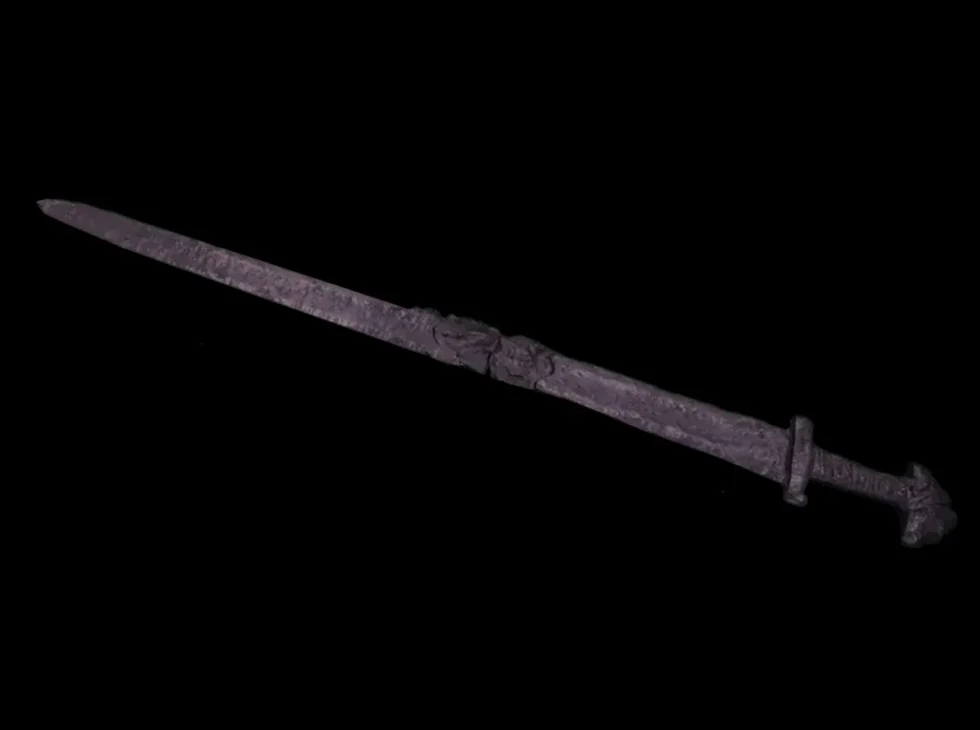
After being buried for centuries in the sediments of the Supraśl River, the sword required specialized care for its preservation.
Dr. Kazimierczak explained that the process took place in a controlled humid environment, essential to avoid damage to the structure of the piece when removed from its natural habitat.
Now, the sword will be displayed alongside another similar relic found in the same area during drainage works in the 1970s. Both are part of the collection of the Military Museum in Białystok, consolidating the site as a reference for studies on the Viking presence in Poland.
A Discovery That Connects Past and Present
The discovery is not just an archaeological triumph, but also an opportunity to reimagine the past. Every detail of this sword — from the battle-marked blade to the hilt that carries the strength of its ancient bearer — connects the present to the rich tapestry of stories that shaped medieval Europe.
This sword, now immortalized in exhibition, serves as a powerful testament to the ingenuity of the Vikings and the complex cultural interactions that defined the era.