






 Portuguese
  Spanish
  3 min of reading
  0 comments


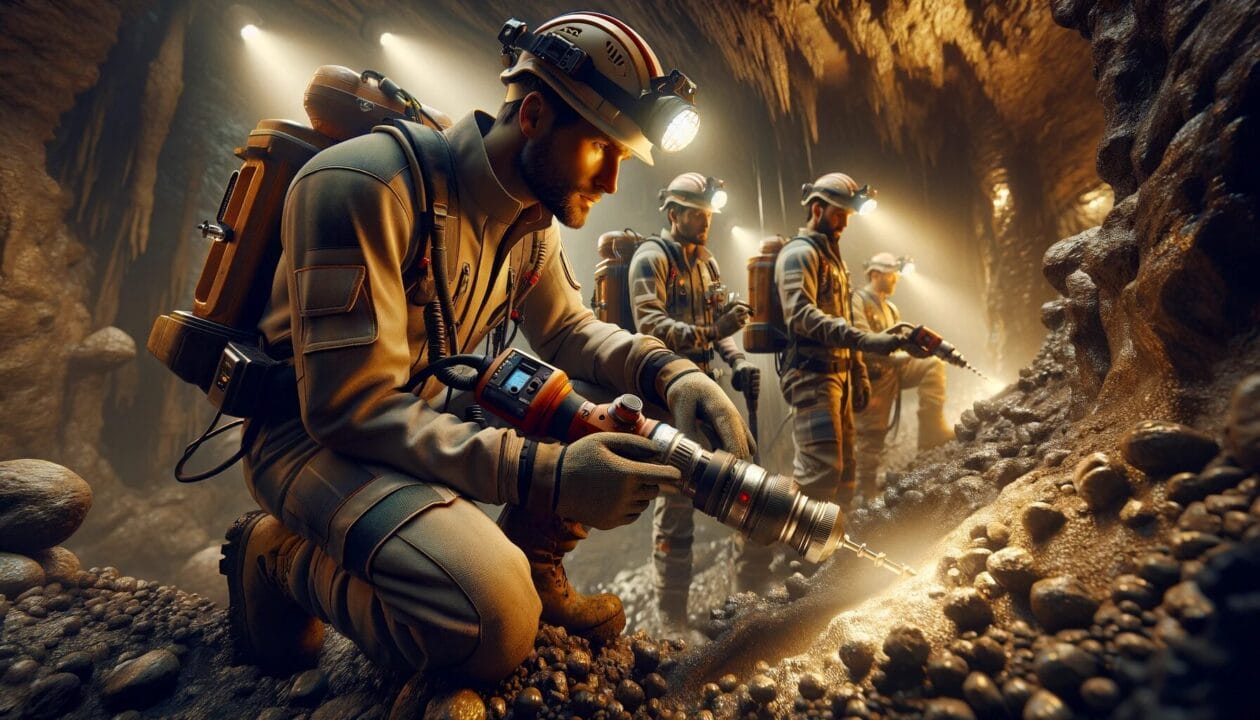
Researcher Finds A Large Subterranean Hydrogen Reservoir, Located About 3 Thousand Meters Deep, With Potential To Transform The Global Fuel Market.
Earlier this year, while searching for methane in the Lorraine Basin in northeastern France, Professor Jacques Pironon and his team made a potentially revolutionary discovery for the hydrogen market. At a depth of about 3 thousand meters, they found an extensive deposit of subterranean hydrogen.
Subterranean Hydrogen Promises To Be The Key To Zero Emissions Of Pollutant Gases
According to Pironon, director of research at the National Centre for Scientific Research (CNRS) in France, at the University of Lorraine, the discovery was a great coincidence. Not long ago, such a discovery would have only sparked academic interest.
Currently, it generates a significant buzz from various sectors. This happens because many believe that hydrogen will be an essential fuel in the coming years. The expectation is that it will be the key to leading the global economy to zero its emissions of pollutant gases, as hydrogen does not produce CO2 when used as fuel or in industrial processes. The major disadvantage of hydrogen is that, currently, many forms of production are not sustainable at all.
-
Brazilian mechanic invented a lamp made from a PET bottle during the 2001 blackout, the idea turned into an NGO present in 30 countries and has already illuminated 40,000 people in 200 communities without electricity in Brazil.

-
The first trillionaire in history, Elon Musk, opens his wallet and pays the equivalent of R$ 306 billion, or US$ 60 billion, for the artificial intelligence programming startup Cursor, in yet another AI investment made through SpaceX, his rocket company.
-
The future of computers may change sooner than expected: Amazon bets on commercial quantum computing within seven years, while qubits, the Ocelot chip, AI, and scientific simulations take center stage in the new race among big techs.

-
What does a Covid-19 vaccine have to do with heart attack and stroke? A study with over 1 million veterans reveals an unexpected link between immunization, the heart, and seniors over 75 years old.




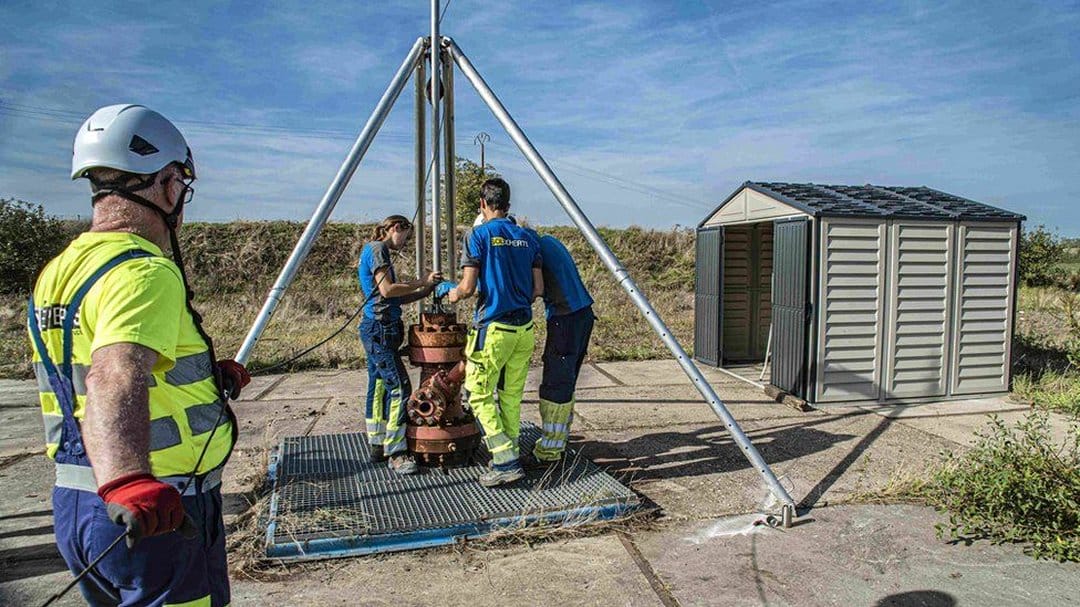
[Image: CNRS]
According to the Carbon Trust, less than 1% of current global hydrogen production is emission-free. There is gray hydrogen, produced by splitting methane into carbon dioxide and hydrogen (H2). Blue hydrogen is produced similarly, but the CO2 generated is captured and stored. Black hydrogen is produced by the partial burning of coal.
Finally, green hydrogen is produced through the electrolysis of water into oxygen and hydrogen. However, green hydrogen is relatively expensive and scarce, so any other type of emission-free supply of this gas is welcome. Known as natural hydrogen, golden hydrogen, or white hydrogen, natural deposits could be an important source.
Discovery Of Subterranean Hydrogen Could Reach 250 Million Tons
Known as natural hydrogen or white hydrogen, natural deposits can be an essential source. They are produced in various ways; however, the main process involves the interaction of underground water with iron-rich minerals such as olivine. This causes the water to split into oxygen, which binds to iron, and hydrogen.
The French discovery does not represent the first time natural hydrogen has been found. There is already a small well in Bourakébougou, in western Mali, and it is also believed that large deposits exist in the US, Australia, Russia, and several European countries.
However, the expectation is that the discovery of subterranean hydrogen in France represents the largest natural deposit of the gas ever found. Professor Pironon estimates that there could be 250 million tons of hydrogen, enough to cover current global demand for more than two years. There should be many other hydrogen deposits to be discovered worldwide, as the US Geological Survey (USGS) estimates thousands or perhaps billions of megatons.
Only 100 Thousand Megatonnes May Be Accessible
According to Geoffrey Ellis, a research geologist at the USGS, not all this subterranean hydrogen will be easily exploitable, as he modeled the amount of geological hydrogen.
According to Ellis, this is the global model, and the vast majority will be inaccessible, too deep, too far offshore, or in accumulations that are too small for access to ever become economically viable.
However, the USGS estimates that there are likely around 100 thousand megatonnes of accessible hydrogen, which could represent hundreds of years of supply. The techniques to extract it, according to Ellis, should be similar to those of natural gas.





Be the first to react!