






 Portuguese
  Spanish


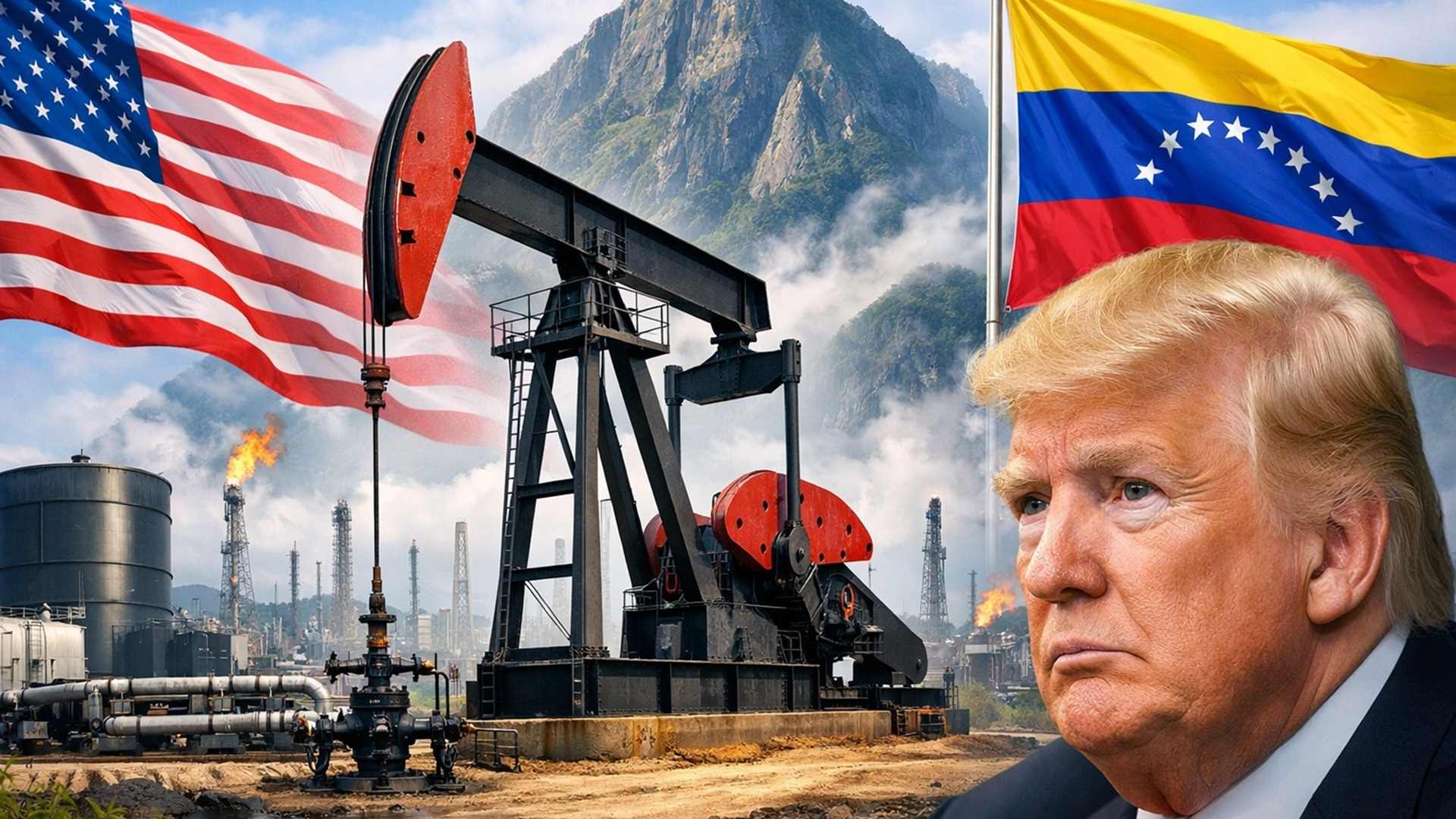


The US Attempt to Access a Strategic Territory Valued at US$ 100 Billion in Oil Faces Structural, Legal, and Operational Obstacles Tied to PdVSA, Including Recent Sanctions, Debt of Over US$ 60 Billion, Historic Production Decline, and Distrust from Major International Investors
The Trump administration bets that Venezuela’s strategic territory could attract up to US$ 100 billion in energy sector investments through partnerships with PdVSA, despite the history of sanctions, criminal charges, sharp production declines, and the state-owned company’s financial fragility.
Strategic Territory and the US Policy Shift
During Trump’s first term, US authorities accused PdVSA executives of diverting billions of dollars and using company aircraft for cocaine trafficking. Now, the same administration sees the Venezuelan strategic territory as a centerpiece for a new energy policy.
The strategy directly depends on PdVSA, considered the only gateway to oil exploration in a territory with the largest proven reserves in the world. According to Oswaldo Felizzola, director of the energy center at IESA business school, any company interested in operating in this territory needs to negotiate with the state-owned company.
-
Brazil to Issue “Panda Bonds” in China, Aiming to Raise Up to 5 Billion Yuan at Lower Interest Rates Than Dollar Debt
-
NATO Faces Internal Tensions as U.S. Pushes for Increased Defense Spending, Targeting 5% of GDP by 2035, with Warnings for Countries Near 2% Level

-
Brazil to Introduce B16 Diesel with Increased Soybean Oil Content for Trucks by 2026
-
Brazil’s July Bolsa Família Payments May Include Extra $150 and $50 for Families with Children, Pregnant Women, and Updated CadÚnico Registration


Venezuela once produced about 3 million barrels per day, positioning it among the largest global producers. That volume dropped to 300,000 barrels daily at the lowest point of Nicolás Maduro’s government and is currently around 900,000 barrels, diminishing the territory’s weight in the international market.
Legal Reform and Sanctions Flexibility
After Nicolás Maduro’s capture on January 3, the Venezuelan regime changed the legislation governing the oil sector, breaking with 25 years of Chavismo. The previous model defended oil sovereignty and strict control by PdVSA over the national strategic territory.
Shortly after the legal change, the US Treasury Department relaxed sanctions and issued a general license allowing American companies to export and trade Venezuelan oil. The Ministry of Information and PdVSA did not respond to requests for comment on the measure’s impact on the strategic territory.
Delcy Rodríguez, the vice president and interim leader of the country, stated that the reform aims to attract significant international investments. According to her, the goal is to turn the strategic territory holding the largest reserves into a major effective producer.
Skepticism from Oil Companies Regarding Venezuelan Territory
Despite the changes, major companies remain cautious. Exxon Mobil’s president, Darren Wood, labeled Venezuela as “non-investable,” even acknowledging the strategic territory’s importance. Mike Wirth, CEO of Chevron, stated that the company’s operations could grow with suitable governmental adjustments.
Chevron is currently the only major US oil company operating in the Venezuelan territory, in partnership with PdVSA. Oxford Analytica assessed that production increases are likely to be gradual, with long-term investments still uncertain.
José Ignacio Hernández, an oil consultant and law professor, said that foreign companies might avoid association with PdVSA due to sanctions and allegations against former managers. For him, the legal history weighs more heavily than the potential of the strategic territory.
New Operational Model
The Venezuelan government and the Trump administration hope that the new institutional model will make the strategic territory more appealing, especially to smaller companies. PdVSA would loosen strict control and begin functioning as a contract manager.
Francisco Monaldi, director of the Latin America energy program at the Baker Institute, stated that PdVSA should operate less than one-third of national production. Even so, it will continue to own fields, refineries, and fuel stations within the territory.
Under the new law, companies can operate through joint ventures with PdVSA, which maintains majority control. In specific situations, the government may grant operational management to private companies, a model similar to that adopted with Chevron in the territory.
Another option is the service contract, allowing companies to operate state-owned fields by assuming costs and risks. The US Treasury has not yet formally authorized direct extraction, but new relaxations are expected to broaden exploration of the strategic territory.
From Efficiency to PdVSA Politicization
Founded 50 years ago during the sector’s nationalization, PdVSA emerged as Venezuela consolidated its strategic territory as an oil power. The country is a founding member of OPEC.
For decades, the company was considered one of the most efficient state-owned enterprises in the world, with assets in Europe and the United States, including the Citgo network. Technical management protected the strategic territory from political interference.
This model changed after Hugo Chávez took office in 1999. PdVSA became part of the Chavista political project. Strategic positions were filled by allies, the logo changed from blue to red, and revenues were used for social programs inside and outside the territory.
Following the 2002 strike, Chávez dismissed about 19,000 employees, half the workforce. The loss of experienced technicians compromised the Venezuelan territory’s productive capacity for years.
Debt, Structural Collapse, and Crisis
According to Venezuelan economists, PdVSA is practically bankrupt, with about US$ 60 billion in external debt. The company lacks the capital to invest in maintaining the assets of the strategic territory.
Abandoned wells have rusted, while poor management, corruption, and sanctions have plummeted production. Henrique Capriles stated that PdVSA cannot be independently audited after years of opacity and political use of the resources of the strategic territory.
Former employee Nieves Ribullen reported the deterioration of the Amuay refinery since 2008. In 2012, an explosion killed more than 40 people. Authorities cited sabotage, but experts pointed to maintenance failures.
Employees were required to participate in pro-government events, wearing red. Those who refused risked losing contracts. This system inflated the workforce.
Currently, PdVSA has about 85,000 employees, but less than 20% are directly involved in oil activities, according to Ivan Freites. Many professionals emigrated, while those who remained saw their income decline due to hyperinflation.
Carlos Márquez, a former PdVSA employee, stated that he had to work as a taxi driver to survive before leaving the country. He now lives in the Canary Islands after the collapse of the sector that sustained the Venezuelan strategic territory and PdVSA, which is now at the center of negotiations and risks for international investors.







