Portuguese
  Spanish



New Chinese Trains Promise to Connect Two Major Cities in Just Over an Hour
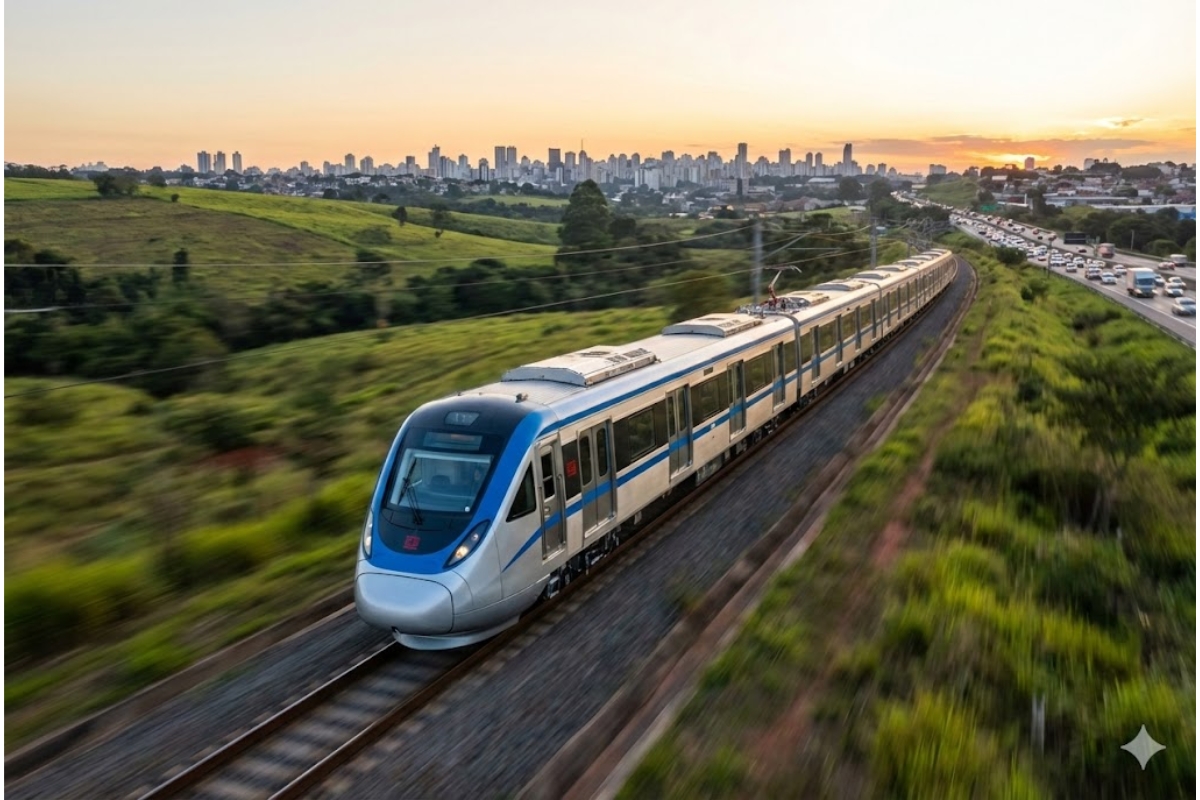
The landscape of rail transport in Brazil is about to undergo its most drastic change in decades. With the arrival of the new trains from the Chinese giant CRRC at the Port of Santos, the Intercity Train (TIC) North Corridor project shifts from being a technical promise to an operational reality under the management of the concessionaire C2 Mobilidade sobre Trilhos (a consortium formed by the Brazilian Comporte and CRRC).
Chinese Trains Promise to Connect São Paulo to Campinas
The new trains represent the latest in medium-speed transportation. Capable of reaching 140 km/h, they are designed to reduce the travel time between Barra Funda Station (SP) and Cultura Station (Campinas) to just 64 minutes. Currently, a driver can take over two hours to cover the same 101 km during peak hours.
User experience was the focal point of the design. Unlike the old CPTM models, CRRC trains offer:
-
Brazil’s First Freight Railway Built from Scratch, EF-118 Connecting Espírito Santo to Rio de Janeiro, Goes to Auction in October Attracting Chinese Giant in Multi-Billion Dollar Bid for Southeast Rail Network

-
Trans-Siberian Railway’s New Sister Line, BAM, Stretches 4,300 km Through Permafrost and Seismic Zones in Northern Russia

-
180-Year-Old Bridge Disappears from Brazilian Farm, Found 180km Away, Sparks Investigation into Illegal Sale of Historical Heritage
-
Brazil’s Defunct Railway Network Leaves Over 100,000 Properties Abandoned for Nearly 30 Years, Facing Neglect and Safety Risks as Government Struggles to Regulate Assets Amid Degraded Stations and Unlawful Use




- Acoustic Comfort and Stability: Equipped with pneumatic suspension and noise insulation, eliminating the vibrations common in conventional tracks.
- Connectivity and Convenience: The design includes onboard Wi-Fi, USB ports at every seat, and real-time informational screens.
- Smart Climate Control: Air conditioning systems that adjust automatically based on the car’s occupancy.

Economic Impact and the “Station Effect”
The total estimated investment of R$ 14.2 billion is aimed not just at transportation. Following successful models from countries like Japan, C2 Mobilidade plans to turn the stations into business hubs. Municipalities like Jundiaí, Louveira, Vinhedo, and Valinhos are expected to see significant real estate appreciation.
The speed of travel allows professionals to work in the city of São Paulo while living in the countryside, boosting the local economy. Additionally, the project includes the creation of shopping centers and parking buildings integrated with the stations, generating ancillary revenues that ensure the system’s long-term sustainability.
Construction Schedule and Investments for 2026

The year 2026 is a crucial milestone for the project. According to the official schedule, the physical works for the section between Jundiaí and Campinas, considered a greenfield section (built from scratch), are set to begin in May 2026.
Simultaneously, the state government is directing efforts towards modernizing urban mobility in other avenues:
- Fleet Electrification: In 2026, São Paulo earmarked over R$ 6 billion solely to subsidize the bus system, focusing on the gradual replacement of the diesel fleet with electric vehicles.
- Transition to the TIM: Before the expressway (TIC) is fully completed in 2031, the initial focus will be on the Intermetropolitan Train (TIM), which will connect Jundiaí to Campinas in 33 minutes, servicing intermediate stops.
Sustainability and Future
The introduction of these trains is part of a State policy to reduce pollutant gas emissions and decrease reliance on individual transportation on the Bandeirantes and Anhanguera highways. With fares estimated between R$ 50.00 and R$ 64.00, the service aims to be a competitive alternative to chartered buses and private cars, offering, above all, schedule predictability, a rare luxury in the current São Paulo traffic situation.