Portuguese
  Spanish


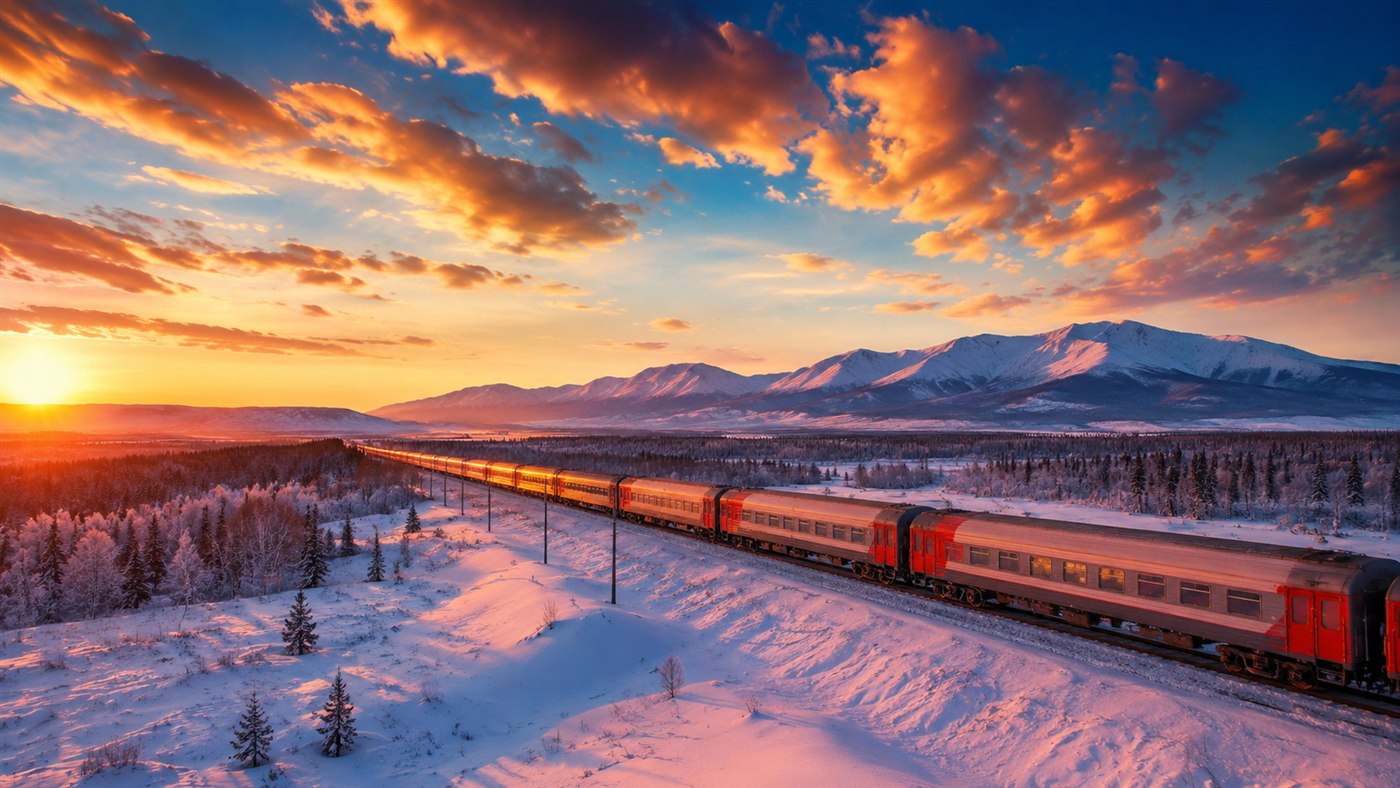

Eli from Russia’s record travels the Trans-Siberian Railway from Vladivostok to the Caucasus, shows the BAM line opened in the frozen land of Siberia, and explains why crossing 9,300 km of tracks in 8 time zones turned into an entire month of travel
Crossing an entire country by train, spanning eight time zones without feeling jet lag, is an experience that only a handful of railways in the world offer. According to the channel Eli from Russia, in a record published in January 2026, the Russian traveler Eli traveled the Trans-Siberian Railway starting from Vladivostok, in the far east, on a journey that took exactly one month to reach the south, in the Caucasus region.
The scale of the line is what impresses. The Trans-Siberian Railway is the longest in the world, with about 9,300 km between Moscow and Vladivostok and the crossing of 8 time zones, and it is precisely this size that turns the complete journey into an entire month by train, with stops to explore the cities along the way, as Eli from Russia shows. And this gigantic line still has an even more extreme sister opened in the ice of Siberia.
9,300 km and 8 time zones: the largest railway in the world
The number that opens the account is the distance. According to Eli from Russia, the Trans-Siberian Railway connects Moscow to Vladivostok over approximately 9,300 km, making it the longest on the planet, although the traveler took a unique route, ending in the southwest instead of Moscow.
-
180-Year-Old Bridge Disappears from Brazilian Farm, Found 180km Away, Sparks Investigation into Illegal Sale of Historical Heritage

-
Brazil’s Defunct Railway Network Leaves Over 100,000 Properties Abandoned for Nearly 30 Years, Facing Neglect and Safety Risks as Government Struggles to Regulate Assets Amid Degraded Stations and Unlawful Use

-
Belo Horizonte’s Beltway Project Risks Losing $5 Billion to Metro Expansion if Court Doesn’t Act Soon; State Government Plans New Lines with IDB Support

-
Brazil to Auction 9,000 km of New Railways, Aiming to Attract $28 Billion by 2026



The size changes the very notion of travel. Traveling through 8 time zones by train makes the clock go back hour by hour, so gradually that there is no jet lag from a flight, and even in stops of only 40 to 50 minutes you can get off, run to the center and get to know the city before the next train, as Eli from Russia describes. It’s the difference between the train as a way of life and the airplane as a mere shortcut, a trait that the Trans-Siberian Railway carries for the Russian passenger.
The BAM, the extreme sister embedded in the permafrost
Next to the main line runs an even bolder project. According to Eli from Russia, the traveler swapped a section of the Trans-Siberian Railway for the BAM, the Baikal-Amur Mainline, which runs for more than 4,300 km through Siberia and the Far East, about 700 km north of the main line and parallel to it.
The reason for BAM’s existence is geographical and strategic. The BAM was built in the 1970s and 1980s to open access to resources and settlements that the Trans-Siberian Railway did not reach and to create a more direct route to the Pacific, crossing some of Siberia’s toughest terrains, with seismic zones, mountain ranges, and permafrost soil, as Eli from Russia records. It is this combination of terrain that made BAM one of the most challenging and expensive railway projects in the world.
A month of travel and 10,465 km from Vladivostok to the Caucasus
Eli’s route was not the standard tourist itinerary. According to Eli from Russia, the goal was to visit the lesser-known parts of Russia, those that tourists usually skip, which led to stops in places like the Jewish Autonomous Oblast, created in 1934 as a Soviet project and today with less than 1% ethnic Jewish population.
Each stop became a lesson in geography and history. The journey passed through regions that completely change in landscape, from the Far East to Siberia, from the Ural Mountains that divide Russia between Asia and Europe to the steppe and the Caucasus mountains, in a journey that the traveler sums up as a whole month in motion through the Trans-Siberian Railway and its branches, as Eli from Russia recounts. Even the Chara Desert, pointed out as the northernmost in the world, was part of the route, proving the extreme variety of the territory crossed by the tracks.
Why the project becomes so expensive in permafrost and seismic zones

Building tracks on frozen ground is an engineering nightmare. According to Eli from Russia, it is precisely the permafrost, along with the mountains and seismic zones, that explains why the BAM became so expensive and difficult, as the ground that thaws and refreezes shifts the foundation and threatens the stability of the track.
The technical challenge is ongoing, not just during construction. A railway embedded in permafrost requires special foundations so the ground does not sink when the ice melts, and the seismic zones require the track to withstand tremors, two problems that made the BAM much more expensive than a line on solid ground like much of the Trans-Siberian Railway, as the Eli from Russia YouTube channel explains. Keeping the line operational in extreme cold is a battle that repeats every season of the year.
The train as a way of life, not just transportation
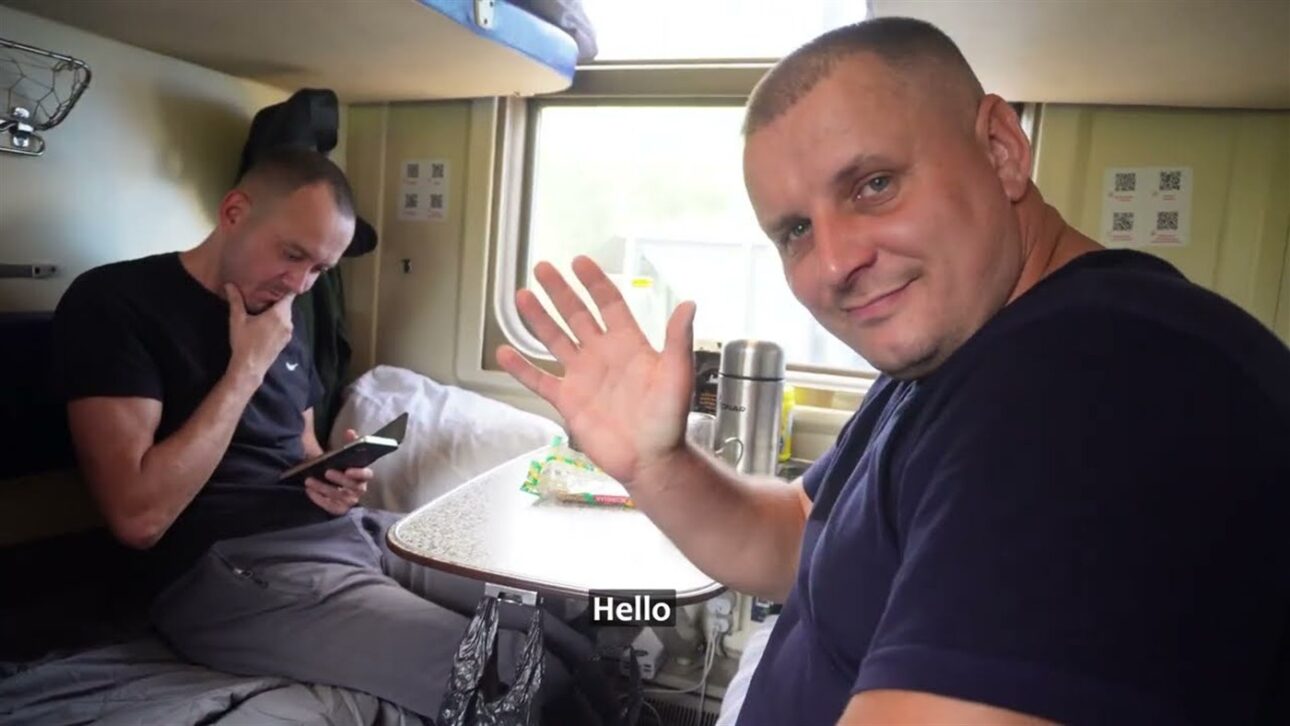
In Russia, the train is not the last resort, it is the means. According to Eli from Russia, trains are always crowded because they are the way to get around the country, and the American companion who joined the trip was impressed with the punctuality, comparable to that of Switzerland and Japan, despite the vastness of the territory.
Life on board feels like a movie. In the third-class carriage, the platzkart, people play board games, cook, knit, and chat throughout the journey, while the second-class carriage, the coupé, offers larger beds and an onboard restaurant, two worlds that coexist within the same Trans-Siberian railway train, as Eli from Russia shows. It is this train culture, more than the landscape, that makes the trip worth the entire month it lasts.
The stops that reveal the lesser-seen Russia
The charm of the route lies in what is off the tourist map. According to Eli from Russia, cities like Korgan, which almost no one recommends visiting, hold surprises, such as a scientific center famous for a Soviet method of bone lengthening created by doctor Ilizarov, used to treat complex orthopedic problems.
Each region adds a cultural layer to the journey. From the local newspaper in Hebrew in the Jewish Autonomous Oblast to the mare’s milk drink of the Bashkirs, passing through the wooden architecture of Tomsk and the rock pillars of the Krasnoyarsk park, the Trans-Siberian railway functions as a thread that stitches dozens of cultures into one country, as Eli from Russia records. It’s the kind of discovery that only appears to those who get off the train instead of flying over the country.
What the Trans-Siberian teaches about railways in Brazil


The topic echoes an old Brazilian debate. Brazil, with similar continental dimensions in extent, practically has no long-distance passenger rail transport, and major projects like the North-South Railway and the Transnordestina are primarily aimed at cargo, in direct contrast to the Russian passenger network.
The comparison sheds light on a country’s choice. While the Trans-Siberian Railway moves people and goods over 9,300 km and has become part of the Russian identity, Brazil has invested in road and air transport for long distances, and the railways under construction prioritize grains and minerals, a widely debated infrastructure context in the country, a notable parallel for the Brazilian reader. From the Siberian steppe to the cerrado, the lesson is the same: long-distance railway is a strategic decision for decades, expensive to build and transformative when it exists.
The video travels the Trans-Siberian Railway from Vladivostok to the Caucasus, the BAM line in the permafrost, the stops in the less-visited cities, and life inside the Russian trains.
The month-long journey proves that the Trans-Siberian Railway is much more than a track: it is an entire country in motion. Tell us in the comments: would you take on a month-long train ride to cross Russia from end to end?