Portuguese
  Spanish


The RFFSA estate gathers more than 100,000 properties and remains stalled due to documentary failures, abandonment, and irregular occupations, while the Union and public agencies attempt to unlock the regularization of a railway heritage spread across the country.
Almost 30 years after the beginning of the transfer of railway assets to the Union, the estate of the former RFFSA continues to accumulate abandonment, risk, and disputes over use in thousands of areas spread across the country. The assets include stations, land, locomotives, and railway sections that remain without a defined destination, while some have not even been formally incorporated into the federal government.
The problem is particularly evident in São Paulo, where degraded structures, unfinished viaducts, and areas occupied irregularly have become part of a difficult inheritance to manage. The result is an extensive, poorly mapped heritage, often lacking complete documentation to advance regularization.
According to folha.uol, the list of assets from the former RFFSA totals more than 100,000 properties and reveals the scale of the impasse: while some have been incorporated, others remain stalled due to notarial failures, lack of plans, and difficulties in locating exact addresses.
-
Belo Horizonte’s Beltway Project Risks Losing $5 Billion to Metro Expansion if Court Doesn’t Act Soon; State Government Plans New Lines with IDB Support

-
Brazil to Auction 9,000 km of New Railways, Aiming to Attract $28 Billion by 2026

-
Brazil Plans $160 Billion Investment to Revitalize Railways and Reduce Reliance on Long-Distance Trucking
-
Retired Railway Workers in Brazil Preserve Locomotive for 52 Years, Now See It Donated by the Government


More than 100,000 properties and a stalled railway heritage
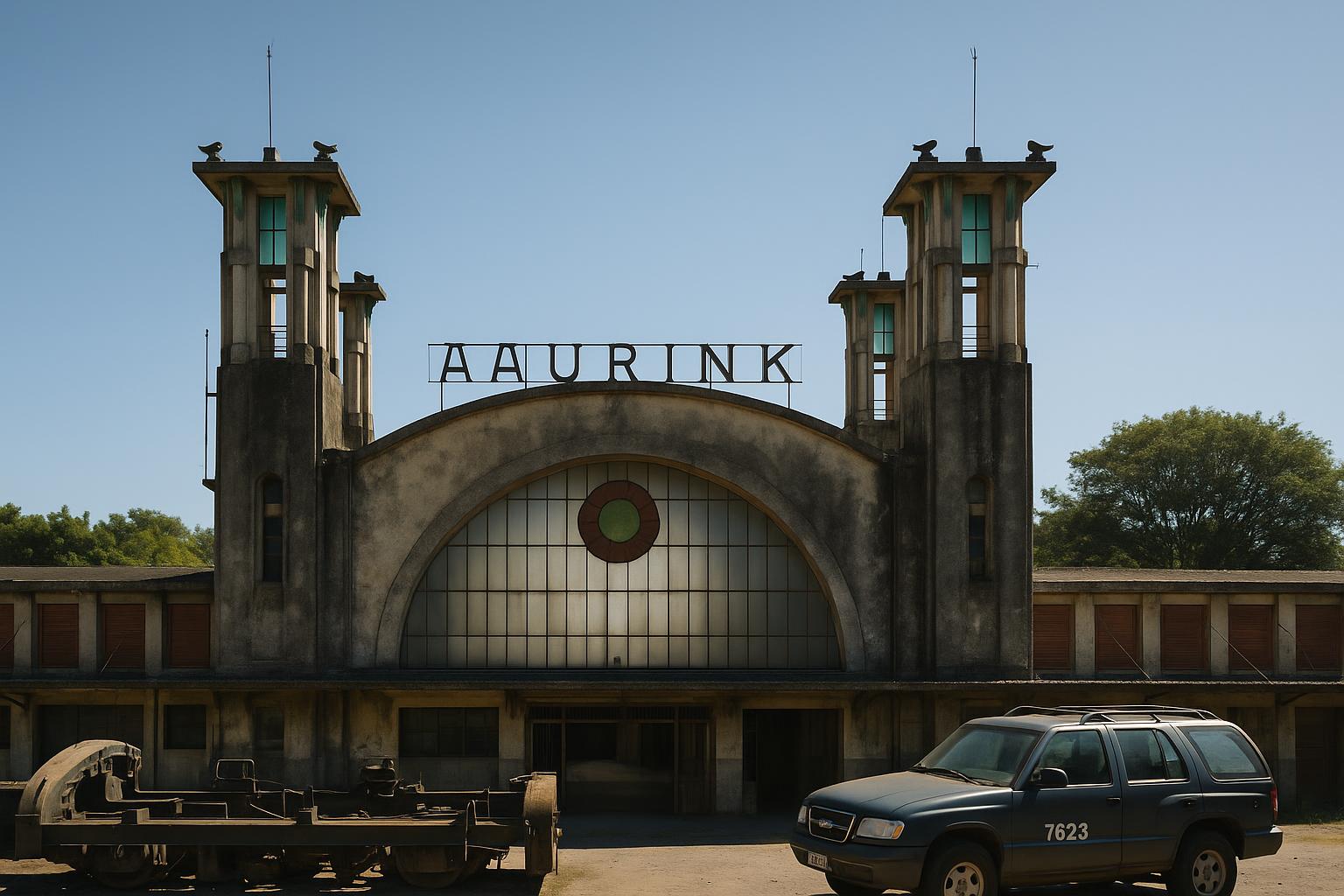
The RFFSA estate gathers 103,851 properties, in addition to 35,190 kilometers of railway network, 45,155 operational rolling stock, 82,653 non-functional movable assets, and 7,240 tons of tracks. Within this set, there are historical stations, land, villages, and forest nurseries, many of which no longer have a defined railway use.
The data helps to understand why the regularization has dragged on for so long. The transfer began back in the 1990s, amid the fragmentation of the former railway companies, and encountered a documentary fragility that, to this day, still complicates the life of the Secretariat of the Union’s Heritage.
São Paulo concentrates part of the impasse and still has 2,500 properties outside incorporation
In the state of São Paulo, 2,500 properties had not yet been incorporated by 2025, according to the published material. The phase depends on inspection, evaluation, and registry regularization, in a scenario where some registrations never left the names of private individuals and the properties are scattered across different regions.
The SPU itself acknowledges that the management capacity is very low given the number of pending areas, which keeps many assets abandoned or vacant for use. In several cases, the exact location is not even known precisely, because there are no plans, records, and basic documentation to complete the process.
Old reports also indicate that the delay was further aggravated by a lack of manpower and technology. A 2011 document cited in the report mentions, for example, only one server to handle the processes in São Paulo.
Degraded stations, invasions, and risk to the population become the most visible face of abandonment
The harshest effect of the paralysis appears in abandoned and easily accessible structures, even when they pose a risk. There are cases of irregular use for fishing, sports activities, and unauthorized occupations, as well as episodes of theft, land grabbing, and contamination in areas linked to the old railway system.
Among the examples cited are the old Mairinque station in the interior of São Paulo and the Esqueleto bridge between Limeira and Cordeirópolis, which gained notoriety after the death of a young woman thrown from the unfinished railway viaduct. In another location, a viaduct in Itanhaém became a frequent access area despite the degradation.
There are also cases where the area became a legal dispute. In Anápolis, in the interior of Goiás, the Dnit requested repossession after a sentence recognized the use of 439,000 m² of RFFSA by Porto Seco Centro-Oeste. In another case, Serra Verde Express was ordered to compensate the Union with R$ 10.5 million, in 2018 values, for the use of a warehouse.
Union tries to unlock concessions and return social use to railway heritage
Despite the slowness, the government has been trying to advance with concessions, donations, and regularizations. In 2025, the Dnit made the concession of 48 railway properties and donated 51,346 movable assets, in an attempt to allocate part of the collection that was left behind after decades of management changes and concessions.
In the interior of São Paulo, the old Mairinque station is among the most visible symbols of this heritage. The city hall requested authorization from the SPU to occupy the space and prevent further degradation, with the promise of recovering the property and the future implementation of a railway technology center.
The problem is that, while the cycle is not completed, the country continues with a huge heritage, expensive to preserve and difficult to regularize. And, in the midst of this, halted railways, empty properties, and irregularly occupied areas remain exposed to time, risk, and abandonment. If you follow the topic, it’s worth continuing the debate and sharing the report with those interested in transportation, heritage, and public management.