Portuguese
  Spanish


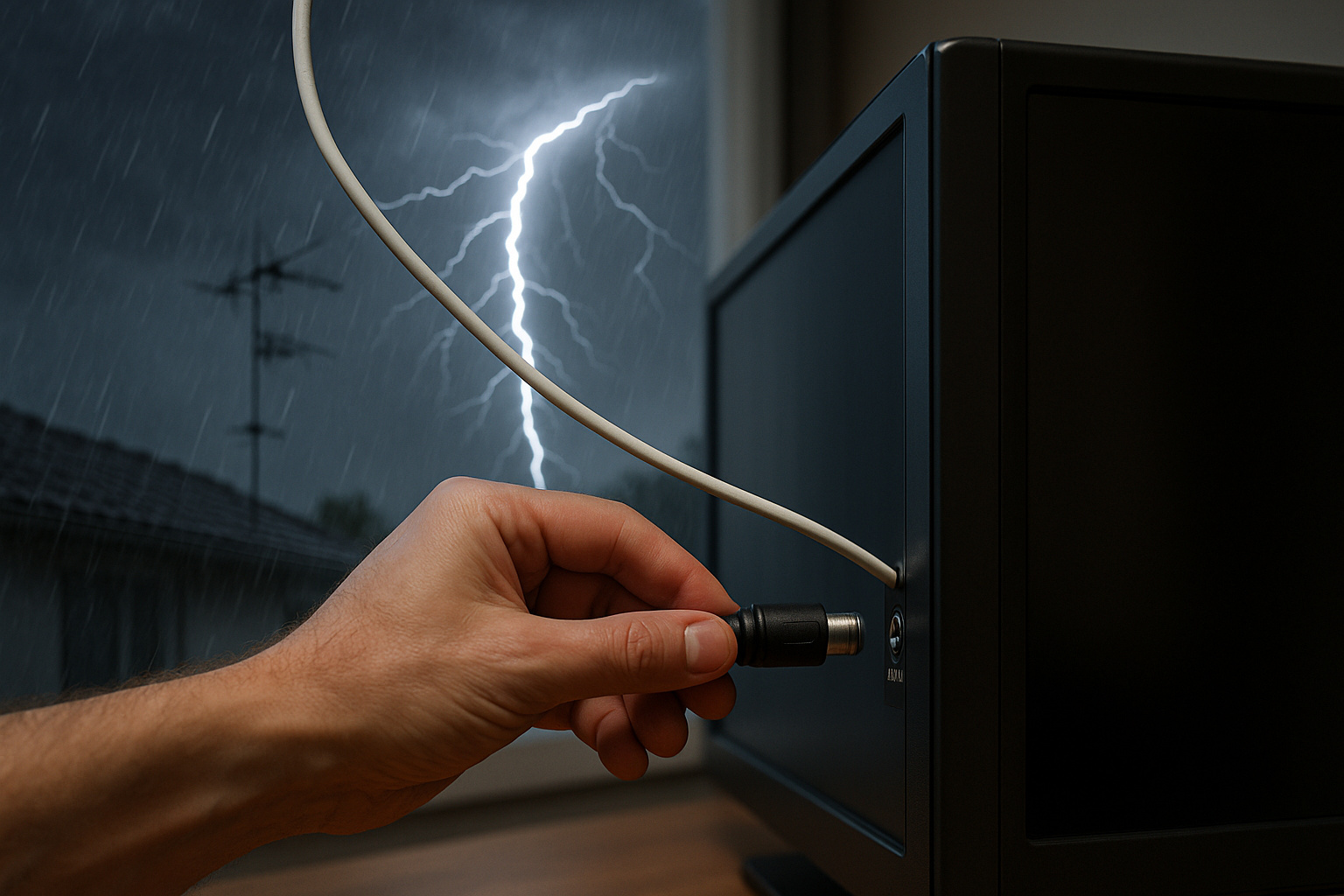


Internal Risks Receive Increased Attention During Rainy Periods, With Guidelines Highlighting the Importance of Disconnecting Antennas and Electronics to Avoid Domestic Accidents
Disconnecting the antenna cable and turning off electronic devices during storms has become a widely reinforced guideline by experts, as this practice prevents fires, reduces damage, and protects residents. Even with installations that use lightning rods, the antenna cable remains vulnerable due to its elevated position, making it a pathway for electrical discharges capable of reaching televisions and causing domestic accidents.
Risks Posed by the Antenna Cable During Storms
The antenna cable remains exposed to lightning even in homes with lightning rods because the elevated installation facilitates contact with atmospheric discharges. Thus, the energy can travel through the cable and reach the television, causing serious damage or even fires. Furthermore, the risk increases in areas with a higher incidence of storms, especially rural regions with less protective infrastructure than large urban centers.
Immediate Actions to Protect the Home During Storms
Experts recommend the immediate disconnection of the antenna cable whenever signs of heavy rain appear, as this simple action reduces damage to equipment and minimizes the likelihood of accidents. Additionally, other important measures include:
-
Green Roofs on Homes Gain Popularity for Reducing Heat, Noise, and Rain Impact in Brazil

-
Brazilian promises his children to save a river, creates an eco-barrier in his backyard, has already removed more than 40 tons of trash from the water, and even inspires the idea in other states of the country.

-
How a Brazilian company created a system that transforms broken pallets of any brand into new assets, recycles 80 tons of plastic per month, and found a profitable solution to a problem that challenges industries across the country.
-
Invasive bullfrog capable of devouring other amphibians and laying up to 20,000 eggs is found in Florianópolis, raising an alert about the threat to native fauna.



• Turning off televisions, computers, and other electronics at the outlet
• Disconnecting internet routers and modems
• Avoiding the use of any equipment during intense storms
These precautions work in a complementary manner and, therefore, prevent financial losses and reinforce the protection of the residence.
Why Disconnect Other Devices Besides the Antenna
Disconnecting all devices from the outlet prevents irreversible damage caused by electrical discharges and also avoids loss of information stored in sensitive devices like computers. Thus, simple and immediate actions reduce the risks of domestic fires and protect essential equipment that is frequently directly affected by sudden power fluctuations.
Protection Systems and Limitations During Storms
Surge protection systems serve as reinforcement for electrical devices because they absorb energy spikes caused by lightning. However, these systems do not replace the need to disconnect electronics on stormy days, as the risk remains high as long as there is the incidence of atmospheric discharges. Therefore, adopting preventive measures ensures greater safety for the property and avoids more severe disruptions.
Situations Requiring Special Care with Electrical Devices
During storms, experts recommend that residents avoid using televisions, computers, and any other equipment because electrical discharges can cause direct accidents. In some cases, damage occurs even without the active use of the device, reinforcing the need to disconnect all equipment whenever possible.
Frequently Asked Questions About Protecting Devices During Storms
What to Do If Not Home When the Storm Begins?
If there is a forecast for heavy rain and the resident knows they will be away from home, the ideal is to leave antennas and devices disconnected before leaving, as this reduces the risk of internal damage.
Do Surge Protectors Protect Against Lightning?
Surge protectors only offer basic protection against small fluctuations and, therefore, are not effective against discharges caused by lightning. Thus, the recommendation remains to use specific surge protective devices (SPD), without replacing the manual disconnection of devices.
Is It Necessary to Disconnect Appliances like Refrigerator or Microwave?
During very intense storms, it is recommended to disconnect these appliances, especially in areas with a higher incidence of electrical discharges, as this increases the margin of safety.
Can I Use TV or Computer During the Storm?
The use should be avoided, as electrical discharges can hit the equipment and pose a direct risk to the user.
What to Do After the Storm?
Before reconnecting the equipment, it is essential to check for signs of electrical damage, such as a burnt smell or hot outlets. If there are any abnormalities, the recommendation is to seek help from an electrician.