






 Portuguese
  Spanish
  3 min of reading
  0 comments


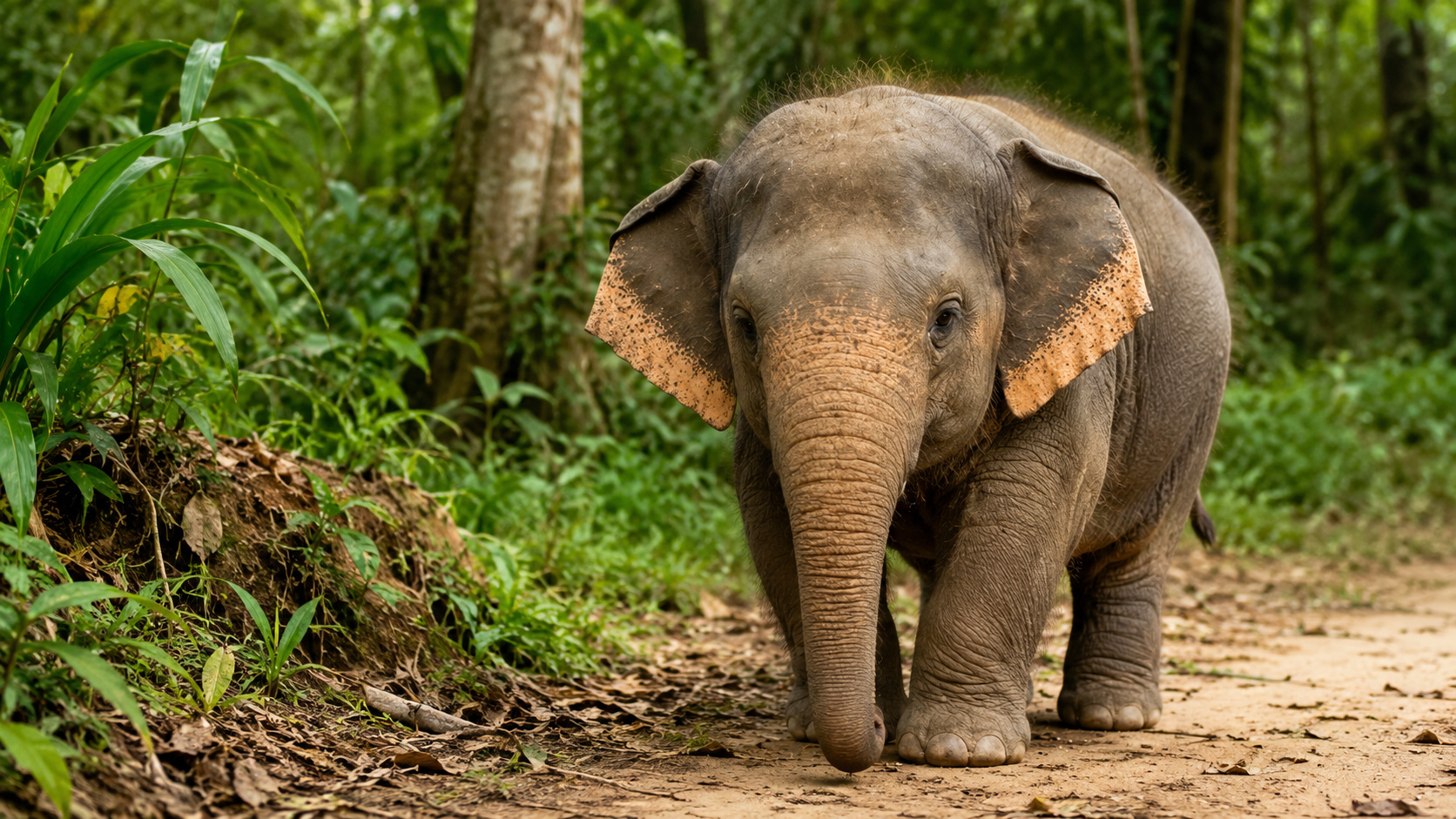
Meet the Borneo pygmy elephant, an animal found mainly on the island of Borneo and recognized for its small size, large ears, and generally docile behavior.
One of the most unique animals of Southeast Asia draws attention for an unusual characteristic. Found mainly on the island of Borneo, the Borneo pygmy elephant is smaller in size compared to other Asian elephants.
Additionally, the animal has relatively large ears and a behavior generally described as more docile. Because of these characteristics, many observers believe they are looking at a calf.
However, appearances can be deceiving. Even during adulthood, the Borneo pygmy elephant retains physical traits reminiscent of younger animals.
-
As historic droughts threaten crops and cities, Morocco accelerates a billion-dollar plan to transform ocean water into drinking water, build Africa’s largest desalination plant, and supply millions by 2030.

-
Rare phenomenon in the North Atlantic cools while the planet warms and reignites fear of abrupt climate changes in Europe
-
The most profitable tournament in history may have an invisible climate cost, and the 2026 World Cup is already surrounded by environmental doubts.

-
Underground fungal network spans 110 quadrillion kilometers and reveals an invisible infrastructure larger than previously imagined.




Currently, this population faces threats caused by deforestation, agricultural expansion, and loss of natural habitat. Consequently, its preservation has become an important mission for environmental organizations.
Meet the Borneo pygmy elephant
The Borneo pygmy elephant lives mainly in the natural areas of the island of Borneo, located in Southeast Asia.
Although often called a pygmy elephant, the animal does not remain small like a calf. In reality, it is an adult elephant with a reduced size compared to other Asian elephants.
Its proportionally large ears also help create this distinctive appearance. At the same time, the body shape reinforces the impression that the animal is still in an early stage of development.
Behavior is another characteristic that arouses curiosity. Generally, these elephants are considered more docile compared to other Asian populations.
Thus, the combination of reduced size, large ears, and calm temperament has made the animal one of the most well-known creatures of Borneo.
According to the International Union for Conservation of Nature, known as IUCN, approximately 1,000 Borneo elephants remain in the wild.
The estimate was presented on June 27, 2024, when the animal was included in the organization’s Red List as an endangered species.

Why the Borneo pygmy elephant is threatened
The reduction of forests represents one of the greatest threats to the survival of these animals. As deforestation advances, areas used as habitat are destroyed or fragmented.
In addition, the expansion of agricultural activities occupies regions previously covered by natural vegetation. As a result, the elephants find less space to live.
The loss of habitat also reduces the areas available for movement. Consequently, the population remains concentrated in increasingly smaller regions of the island of Borneo.
According to the IUCN, the World Wildlife Fund, known as WWF, and the Natural History Museum of London, the situation requires environmental attention.
Preservation depends on the protection of Borneo’s forests
Currently, environmental organizations are working to protect the Borneo pygmy elephant and the natural areas where it lives.
The conservation of forests has become essential to prevent further habitat loss. Moreover, the protection of these areas helps to preserve a population considered rare.
Thus, the Borneo pygmy elephant impresses not only with its resemblance to a calf. The animal also symbolizes the challenges faced by species dependent on threatened natural environments.
Therefore, preserving the forests of Borneo means protecting one of the rarest and most enchanting elephants on the planet.






Be the first to react!