






 Portuguese
  Spanish


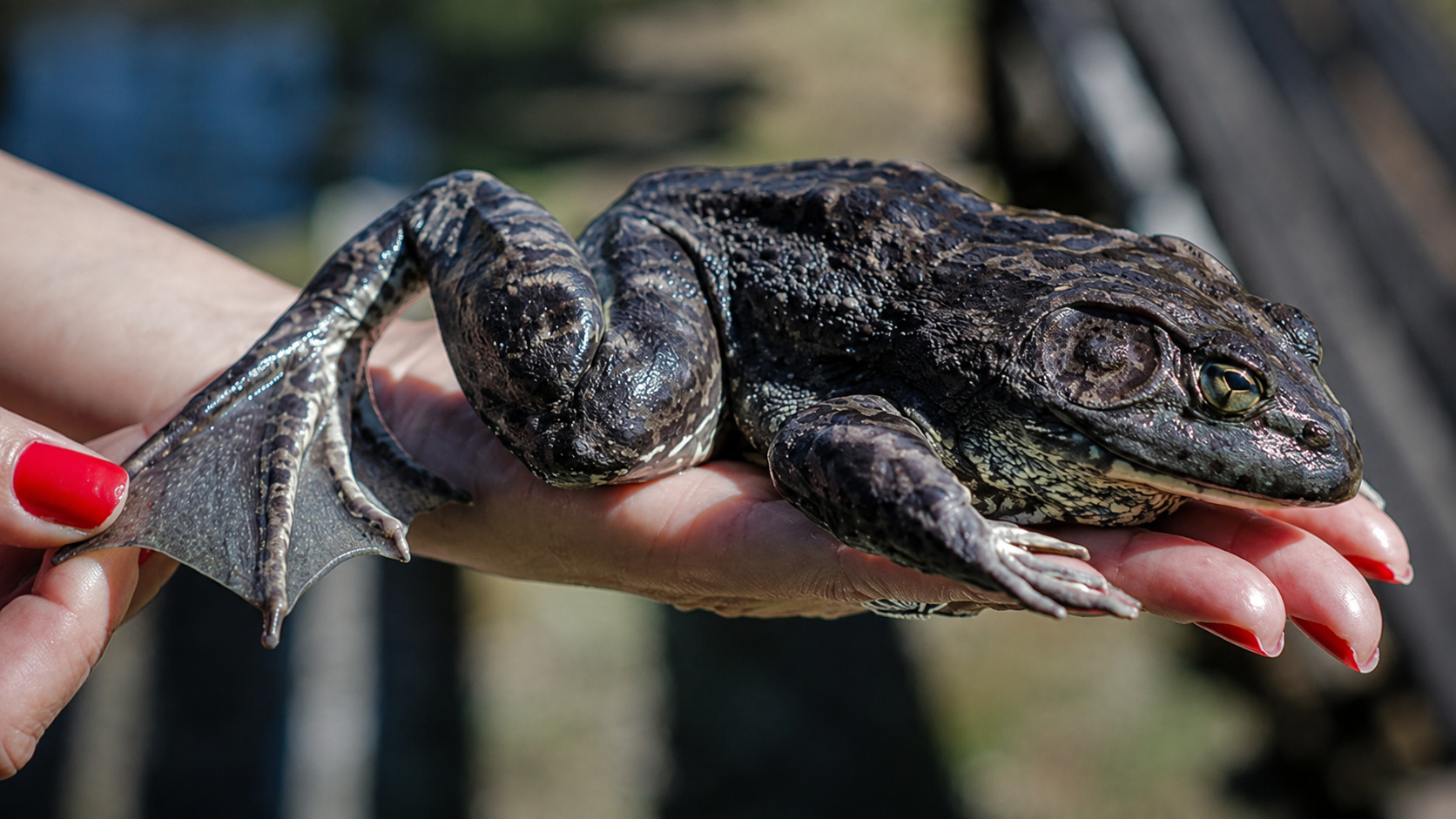

Learn about the monitoring operation initiated after the identification of the bullfrog in Ratones, where 11 animals were captured between November 2025 and March 2026.
An invasive species originating from North America has begun to concern researchers and environmental authorities in Florianópolis. In October 2025, the bullfrog (Aquarana catesbeiana) was officially identified for the first time in the Ratones neighborhood, in the capital of Santa Catarina.
According to the Florianópolis Municipal Environmental Foundation, Floram, the confirmation led to the immediate start of mapping, monitoring, and capture actions. The work aims to prevent the amphibian from spreading and causing impacts on native species.
The operation brings together professionals from Floram, the Federal University of Santa Catarina, Ibama, and the Chico Mendes Institute for Biodiversity Conservation.
-
Farmer Revives Arid, Abandoned Land in Brazil’s Bahia into Thriving Forest, Demonstrates How ‘Syntropic Agriculture’ Can Transform Rural Futures

-
Study Reveals 40% of Brazilians Unaware of Circular Economy, Highlighting Challenges in Sustainable Transition and Recycling Expansion
-
Brazilian Startup Converts Rain into Potable Water Without Chemicals, Surpasses 10 Million Liters, Joins $1.2 Million Project to Bring Simple Technology to Drought-Stricken Areas in Northeast Brazil
-
Brazilian Company Innovates with Treated Water Billing Model, Surpassing 10 Billion Liters and Offering Up to 40% Savings for Large Industries



Between November 2025 and March 2026, 11 bullfrogs were captured. The presence of the species was also confirmed on three properties, while reports indicate that it may have been in Ratones for a longer time.
Meet the invasive bullfrog
The bullfrog is among the largest anuran amphibians originating from North America. Its popular name arose because the deep croak produced by the animal resembles the bellow of a bull.
Besides its size, the species draws attention for its feeding behavior. Considered an opportunistic and voracious predator, it consumes practically any smaller animal it can capture.
Fish, crayfish, small mammals, and other amphibians are part of its diet. Cannibalism also occurs frequently and, in some situations, can represent up to 80% of its diet.
The bullfrog arrived in Brazil in 1935, brought for commercial farming in frog farms and meat production. However, the closure of several farms favored escapes and releases in different regions.
Over time, populations of the amphibian began to appear outside breeding locations. Thus, the species came to be classified as exotic and invasive in Brazilian territory.
Besides Brazil, the bullfrog has also established itself in countries such as Uruguay, Venezuela, France, Colombia, China, and Japan.
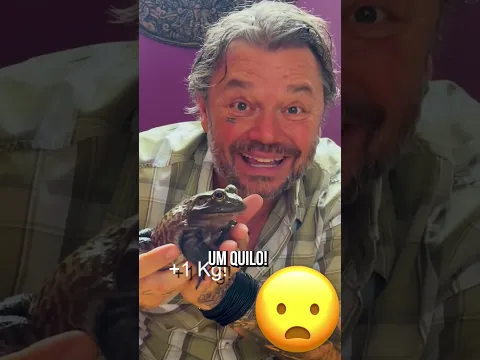

How monitoring began in Florianópolis
After the first official record, made in October 2025, teams began mapping areas where the species might be present.
According to Floram biologist Priscilla Tamioso, actions were taken preventively to reduce impacts and prevent the animal’s dispersion throughout the region.
The first capture operation took place in November 2025. On that occasion, professionals found ten specimens, three juveniles and seven adults.
Later, in March 2026, a new monitoring phase located only one more bullfrog. Thus, the total recorded in the two actions reached 11 individuals.
According to Floram president Fábio Henrique Machado, the work follows a strategy of early detection and rapid response.
The identification of the species at the beginning of the invasion allows understanding the situation, locating occurrence points, and defining measures with the support of institutions and the community.
Why the bullfrog threatens native fauna
Reproductive capacity represents one of the main risks associated with the species. A single female can lay up to 20,000 eggs in shallow waters.
During the breeding period, males also exhibit aggressive territorial behavior. Thus, they defend nesting sites and hinder the presence of other animals.
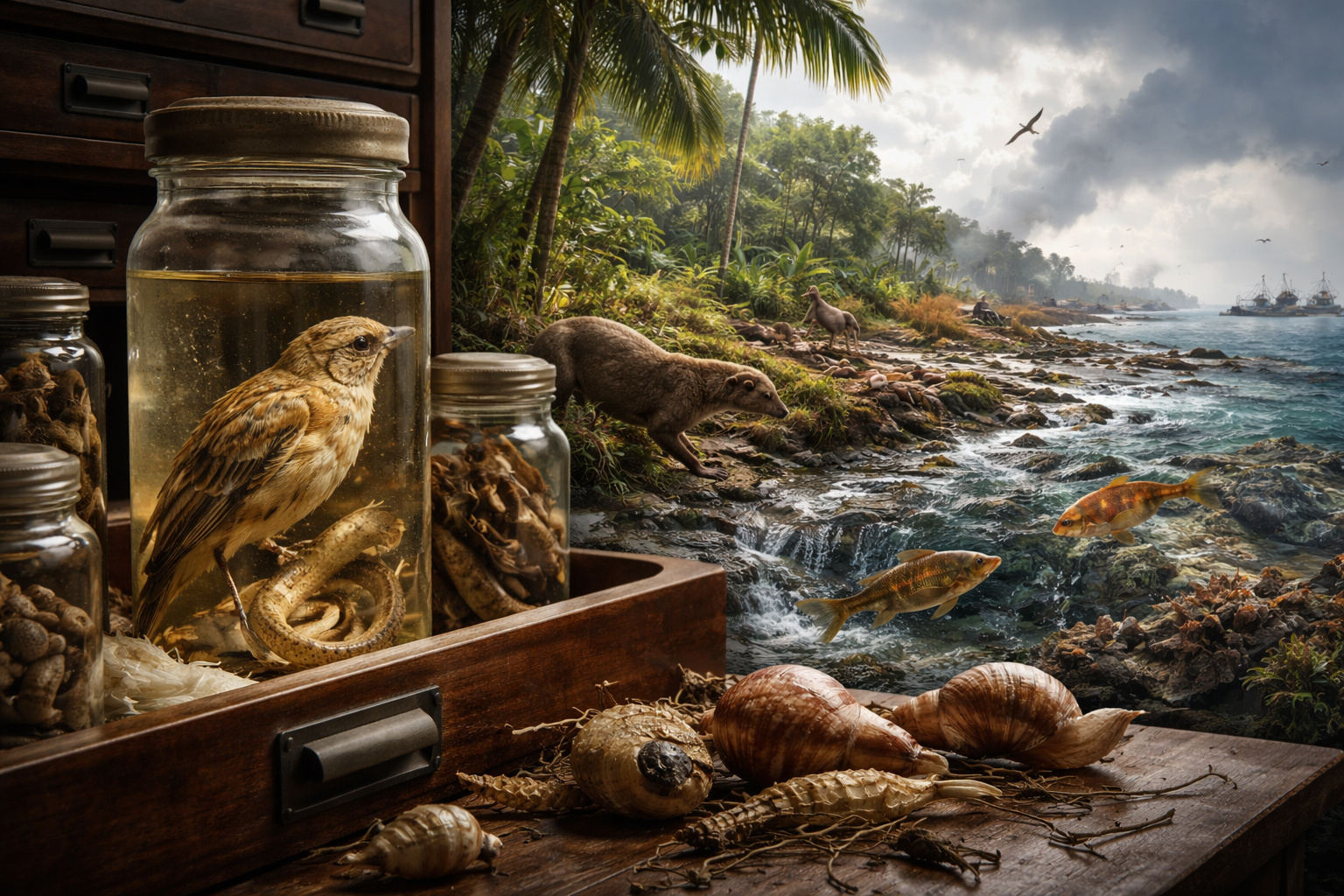
Where it establishes itself, the bullfrog can become dominant. Consequently, it occupies habitats, competes for resources, and contributes to the decline of native amphibians.
The animals captured in Ratones are being sent to the UFSC Herpetology Laboratory. There, the specimens undergo analyses to detect ranavirus and chytridiomycosis.
Chytridiomycosis is caused by the fungus Batrachochytrium dendrobatidis, known as Bd. The disease has already affected and decimated hundreds of amphibian species in different parts of the world.
How residents can help control the species
Community participation will be important to locate other possible bullfrog hotspots in Florianópolis.
According to Floram environmental educator Maria Aparecida Cabral de Sá, awareness activities will be promoted to help residents recognize the animal and its croak.
The information provided by the population can enhance mapping and allow environmental teams to act with greater precision.
In case of sighting or sound identification, the guidance is not to capture or handle the animal on your own.
The occurrence should be reported to Floram and the Department of Conservation Units via email at fdepuc.floram@gmail.com or via WhatsApp (48) 3237-5660.
Thus, the collaboration of residents can help prevent the bullfrog from spreading and compromising the environmental balance in Florianópolis.


