Portuguese
  Spanish


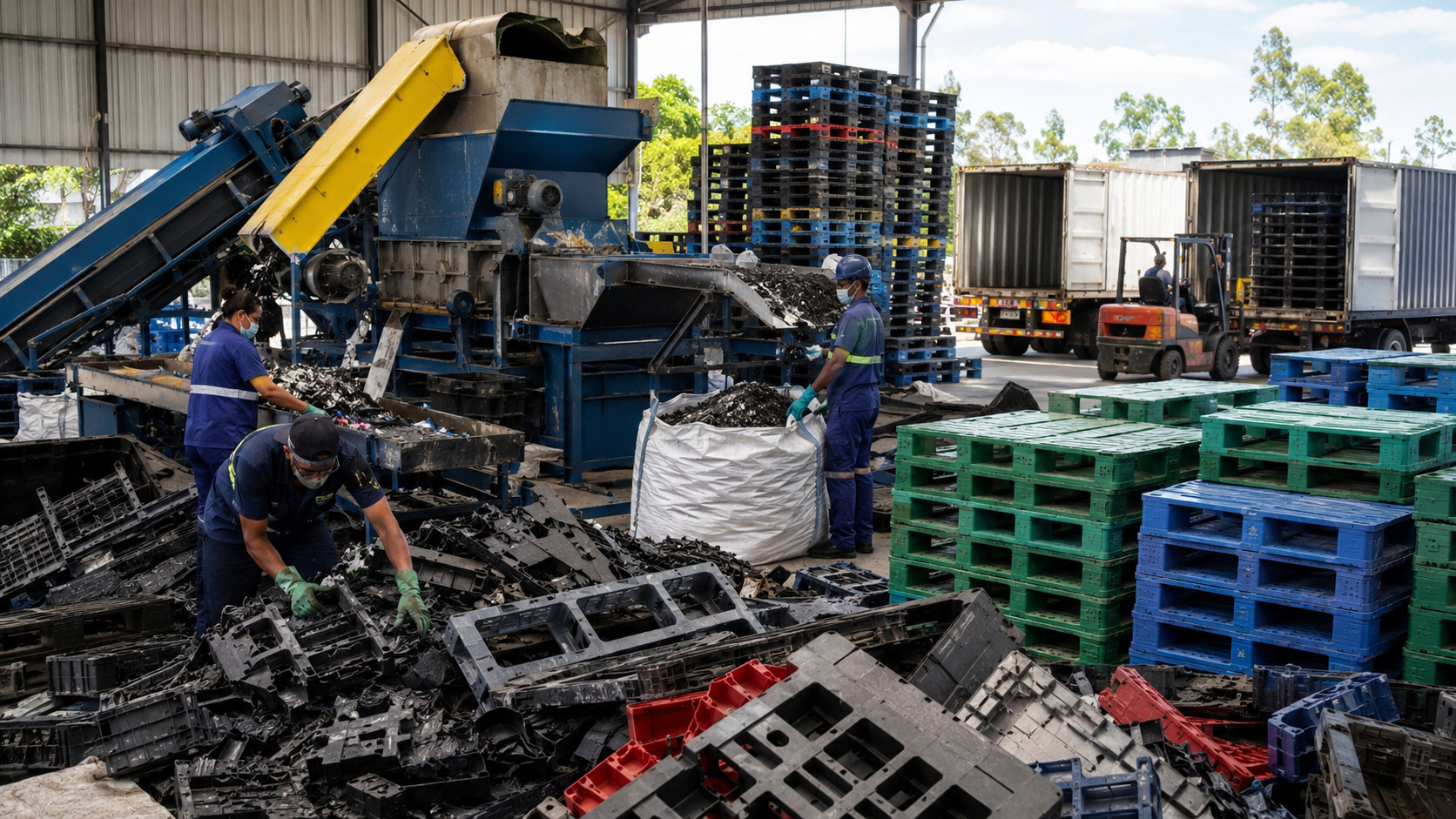

Program created by national manufacturer transforms industrial waste into new products, reduces logistical costs, strengthens the circular economy, and shows how sustainability can generate real economic value for companies in various sectors.
While governments, industries, and large corporations seek alternatives to reduce the environmental impact of their operations, a Brazilian company has developed a reverse logistics model that has been attracting attention for combining sustainability, operational efficiency, and economic viability.
The manufacturer EkoPalete created a system capable of transforming broken plastic pallets of any brand into new industrial assets, preventing the improper disposal of tons of plastic and significantly reducing waste in the logistics chain. According to information published by the specialized magazine EmbalagemMarca, the initiative started in 2017 and now processes about 80 tons of plastic per month.
The proposal, known as the “Exchange 7:1” program, was born from a practical need observed within industrial operations and ended up becoming one of the most interesting examples of circular economy applied to the packaging and cargo handling sector in Brazil.
-
Farmer Revives Arid, Abandoned Land in Brazil’s Bahia into Thriving Forest, Demonstrates How ‘Syntropic Agriculture’ Can Transform Rural Futures

-
Study Reveals 40% of Brazilians Unaware of Circular Economy, Highlighting Challenges in Sustainable Transition and Recycling Expansion
-
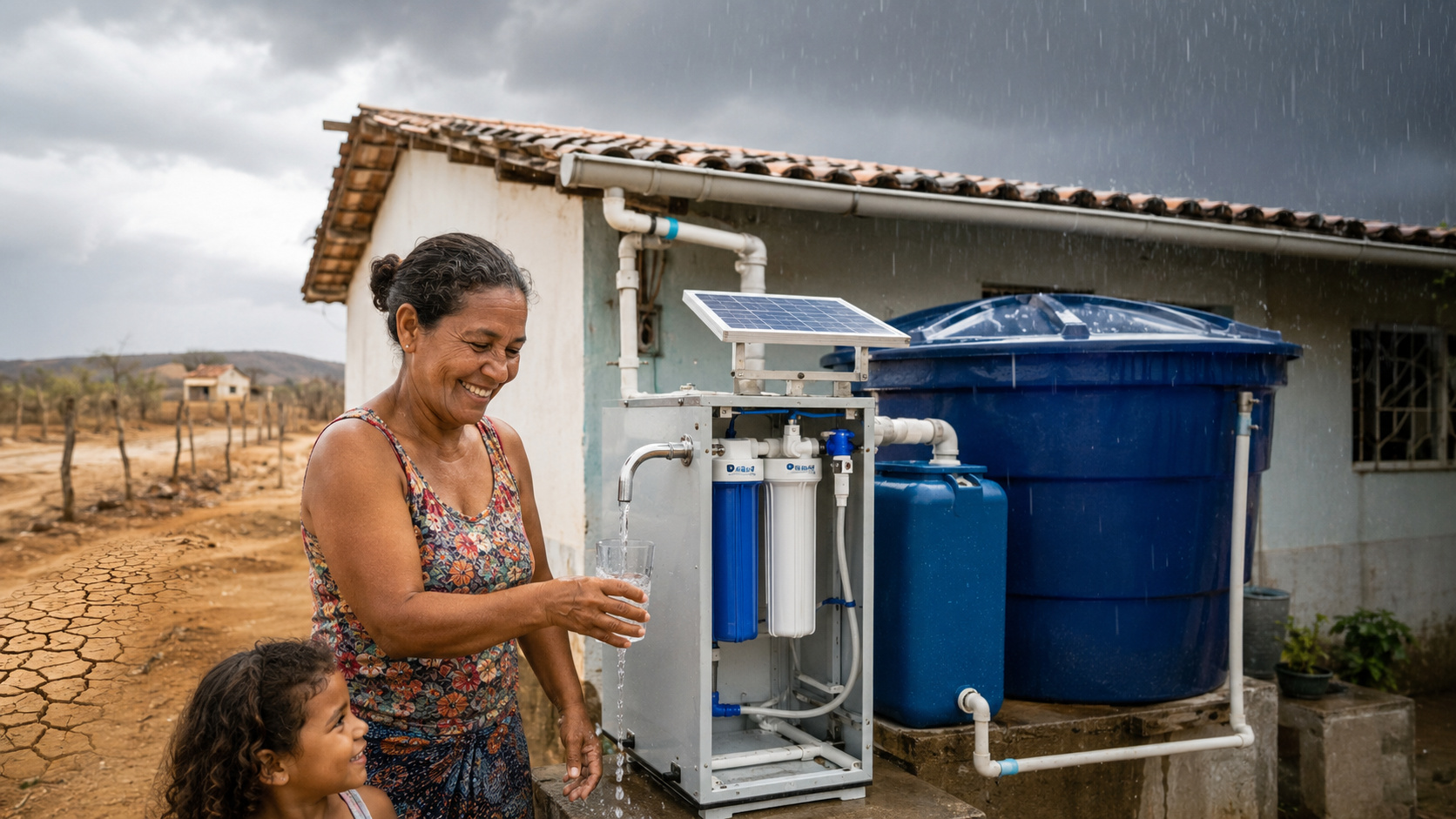
Brazilian Startup Converts Rain into Potable Water Without Chemicals, Surpasses 10 Million Liters, Joins $1.2 Million Project to Bring Simple Technology to Drought-Stricken Areas in Northeast Brazil
-
Brazilian Company Innovates with Treated Water Billing Model, Surpassing 10 Billion Liters and Offering Up to 40% Savings for Large Industries

How the Exchange 7:1 program started and why it became a reference
According to Cassio Drudi Junior, CEO of EkoPalete, the idea did not originate in a strategic meeting or in a sustainability project planned by specialized consultancies.
It all started when a client facing high pallet breakage rates asked the company if it would be possible to repurchase the damaged materials.
The question led EkoPalete to see a different opportunity.
Instead of simply buying the unusable pallets, the company created an exchange model. The rule is simple: for every seven broken plastic pallets delivered by the client, regardless of the original brand or manufacturer, the company provides a completely new pallet.
According to the executive, the ratio of seven to one was not defined randomly.
It represents the economic balance necessary to cover all stages of the process, including collection, sorting, grinding, regranulation of the plastic, manufacturing of the new pallet, and operation maintenance.
In practice, the system allows materials considered worthless to return to the production chain, transforming an environmental liability into reusable raw material.
Additionally, the client gains a solution for a recurring disposal problem while renewing part of their logistical assets.
How the company manages to recycle pallets from different manufacturers
One of the most challenging aspects of the program is the ability to receive pallets from different manufacturers and composed of various materials.
According to the company, approximately 90% of the pallets received come from clients who already have a commercial relationship with EkoPalete. This allows for greater control over the origin of the materials and significantly reduces the risks of contamination.
The initial sorting is done manually by trained professionals to identify different types of polymers used in the manufacturing of the pallets.
When there are doubts about the composition of the material, the company uses portable equipment capable of identifying polymers such as polypropylene (PP), polyethylene (PE), and high-density polyethylene (HDPE).
After this stage, the materials proceed to recycling and industrial reuse.
According to Cassio Drudi Junior, a significant part of the raw material used in the manufacturing of new pallets also comes from the return of imported semi-new pallets that have already gone through the clients’ operational cycle.
The result is a system with higher traceability and strict control over the quality of the recycled material.
The company states that the manufacturing of the pallets follows the technical parameters established by the NBR 16242:2020 standard, used as a reference for the finished product.
Circular economy without increasing logistical costs
One of the main challenges faced by reverse logistics programs worldwide is related to the cost of transporting returned materials.
Often, the return freight makes the operation economically unfeasible.
According to the CEO of EkoPalete, it was precisely this problem that led the company to develop a different strategy.
Instead of creating an exclusive structure to collect broken pallets, the company started using existing logistical routes.
In Greater São Paulo, for example, the trucks that make deliveries also collect the pallets destined for recycling during the same route.
Thus, the additional cost of collection becomes practically nonexistent.
For clients located in other regions of the country, reverse logistics is usually carried out through the transport companies used by the industries themselves.
This avoids the need to create a specific fleet for the return of materials.
According to the company, the intelligence of the model lies precisely in leveraging existing structures, eliminating operational waste, and making the program financially sustainable.
Strict sectors also adhere to the recycling model
The use of recycled materials often raises doubts, especially in highly regulated segments such as the food and pharmaceutical industries.
However, according to EkoPalete, the use of recycled pallets does not compromise the sanitary requirements of these sectors.
This is because the pallets act as secondary logistics elements, meaning they transport packaging that already protects the marketed products.
Furthermore, the recycling process undergoes controlled stages of grinding and regranulation that preserve the quality of the material used in the manufacture of new pallets.
The company highlights that it has maintained clients from these segments operating within the program for several years without records of sanitary issues related to the use of recycled products.
This history has helped increase the confidence of large companies in adopting the system.
Customer loyalty and long-term value generation
Although the program has a strong environmental appeal, the main business benefit identified by EkoPalete is related to the long-term relationship with customers.
According to Cassio Drudi Junior, the exchange operations do not cause radical changes in the company’s cash flow, as each new pallet continues to be marketed within the traditional operational margin.
The difference lies in creating a continuous bond.
By joining the program, the customer starts to see the company not only as a pallet supplier but also as a destination for damaged materials generated in their operation.
This relationship tends to increase loyalty and create recurring business cycles.
Currently, according to the company, there are large industrial groups that have participated in the program for consecutive years, using the exchange as a permanent part of their sustainability and logistics asset management strategies.
At a time when the circular economy is no longer just corporate rhetoric but a market requirement, initiatives like EkoPalete’s demonstrate that environmentally responsible solutions can simultaneously generate operational efficiency, reduce waste, and strengthen long-lasting commercial relationships.
The information was released by EmbalagemMarca magazine in an interview with Cassio Drudi Junior, CEO of EkoPalete, presenting details about the operation of the 7:1 Exchange program and the results achieved by the company since its creation in 2017.
The question remains: could initiatives like this serve as a model for other Brazilian industrial sectors that still face difficulties in implementing economically viable reverse logistics programs?