






 Portuguese
  Spanish




An Innovation Fueled by Human Power Promises to Desalinate Sea Water Efficiently, Sustainably, and Affordably
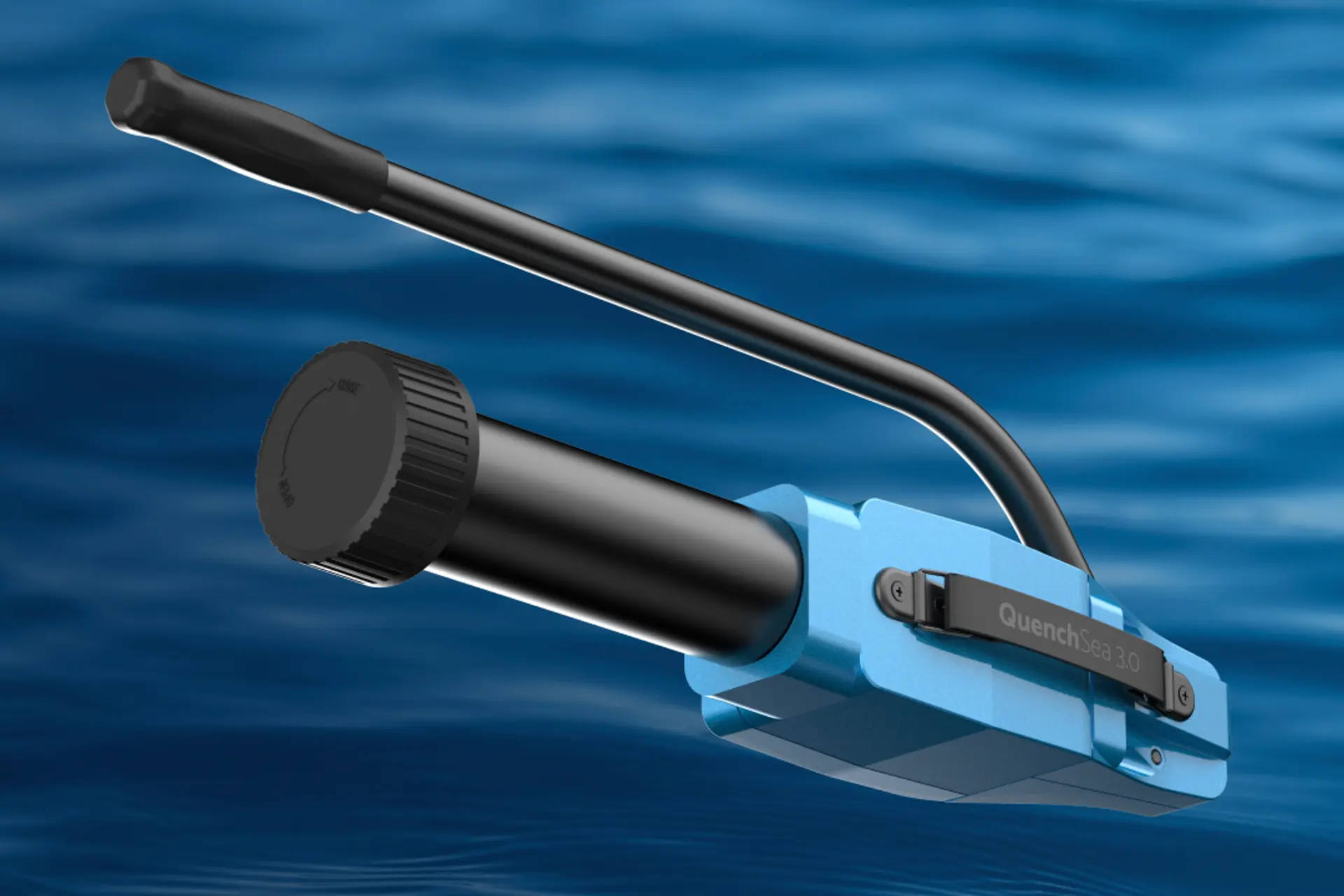
It is hard to imagine a more paradoxical situation than being lost at sea, surrounded by water, yet dying of thirst. However, this is a distressing reality that can happen. With this in mind, Hydro Wind Energy, a British company, created the QuenchSea 3.0, a portable desalination device that promises to solve this problem without relying on electricity, only on the user’s arm strength.
Currently running a campaign on Kickstarter, the QuenchSea 3.0 is the evolution of a device first launched in 2020. The initial model, powered by human energy, was equipped with a lever that, when pumped, forced seawater through a triple filtration system and a reverse osmosis membrane.
This process allowed sailors to produce up to 3 liters of drinking water per hour. The resulting water was free of salt, viruses, bacteria, microplastics, and other contaminants, meeting the stringent standards of the World Health Organization (WHO).
-
Brazilian Researcher Develops Protein Supplement from Tilapia Waste, Combining Innovation and Sustainability with Economic Potential

-
Women in São Paulo Unknowingly Tracked by Coin-Sized Tags Hidden in Cars and Belongings, Raising Stalking Concerns
-
Near a $750 million AI data center in Brazil, a resident’s well runs dry, leaving her unable to afford the $25,000 needed for repairs.

-
16-Year-Old from Brazil’s Sertão Wins Young Scientist Award for AI Predicting Rainfall with 94.5% Accuracy to Aid Farmers


Advanced Technology and Improved Efficiency
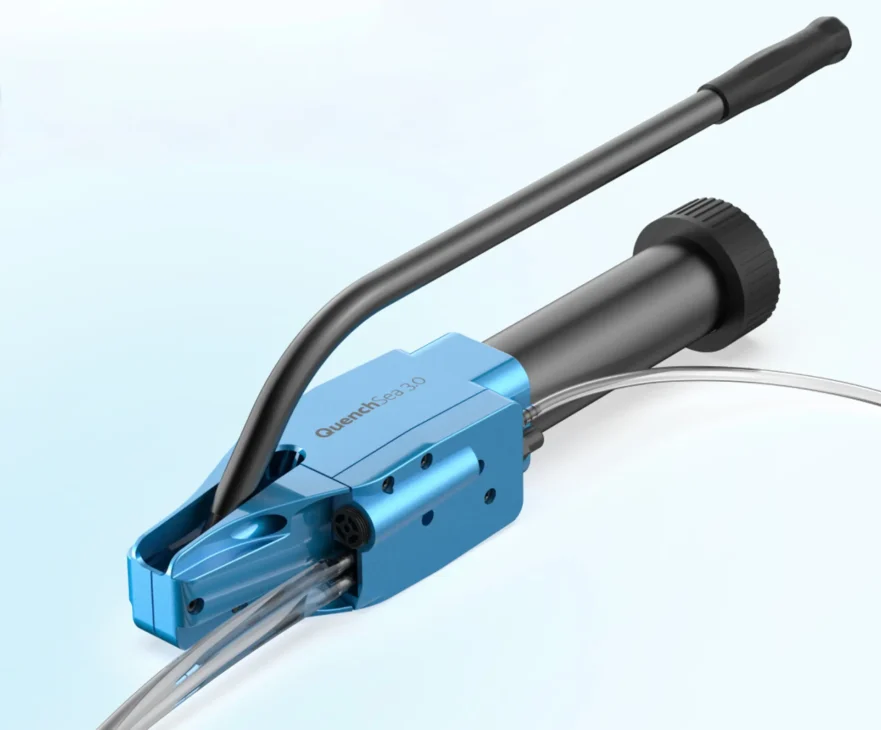
Now, the QuenchSea 3.0 enhances this system by adding a pressure-boosting mechanism and an energy recovery system. This means that, in addition to being easier to pump, the new model can filter water more quickly, producing 6 to 8 liters of drinking water per hour — double the capacity of the previous model. This increase in efficiency is a significant advantage in emergency situations, when every drop of water counts.
The QuenchSea 3.0 maintains the promise of providing purified water with less than 1,000 milligrams of total dissolved solids (TDS) per liter, meeting WHO requirements.
In practice, the device can reduce TDS levels to around 300 to 500, ensuring good quality drinking water. Additionally, the activated code present in its filtration system removes unpleasant odors and tastes, making the water not only safe but also more enjoyable to consume.

It is important to note that both the reverse osmosis membrane and the filter cartridges will need to be replaced periodically. The lifespan of a membrane is about 300 liters of drinking water, depending on seawater conditions such as salinity and temperature.
With the campaign funding, the QuenchSea 3.0 can be purchased for US$ 250, with a future retail price of US$ 500. The membrane refills will be sold for US$ 30 per pair, while the filter cartridges will cost US$ 20 per pair.
This device is a practical and affordable solution for those venturing out to sea, offering an efficient way to obtain drinking water in extreme situations. The QuenchSea 3.0 represents a significant advancement in portable desalination technology, helping to prevent a problem that until now seemed obvious.





Não é “código ativado” e sim Carvão Ativado. Por esse preço só vai servir pra quem estiver participando de Largados e pelados na praia.🤭
Pelo que entendi o custo é de 500 dolares para produzir 300 litros de água correto? Entao sai a quase 10 reais por litro, isto não o torna economicamente inviável para uso continuado, sendo útil somente em caso de emergência.?
Opa, ele produz até 300 litros mas por troca da membrana e da osmose, aí depois mais trezentos.. e assim sucessivamente.
Pelo que entendi o custo é de 500 dolares para produzir 300 litros de água ccorreto? Entao sai a quase 10 reais por litro, isto não o torna economicamente inviável para uso continuado, sendo útil somente em caso de emergência.