





 Portuguese
  English
  Spanish
  5 min of reading
  0 comments


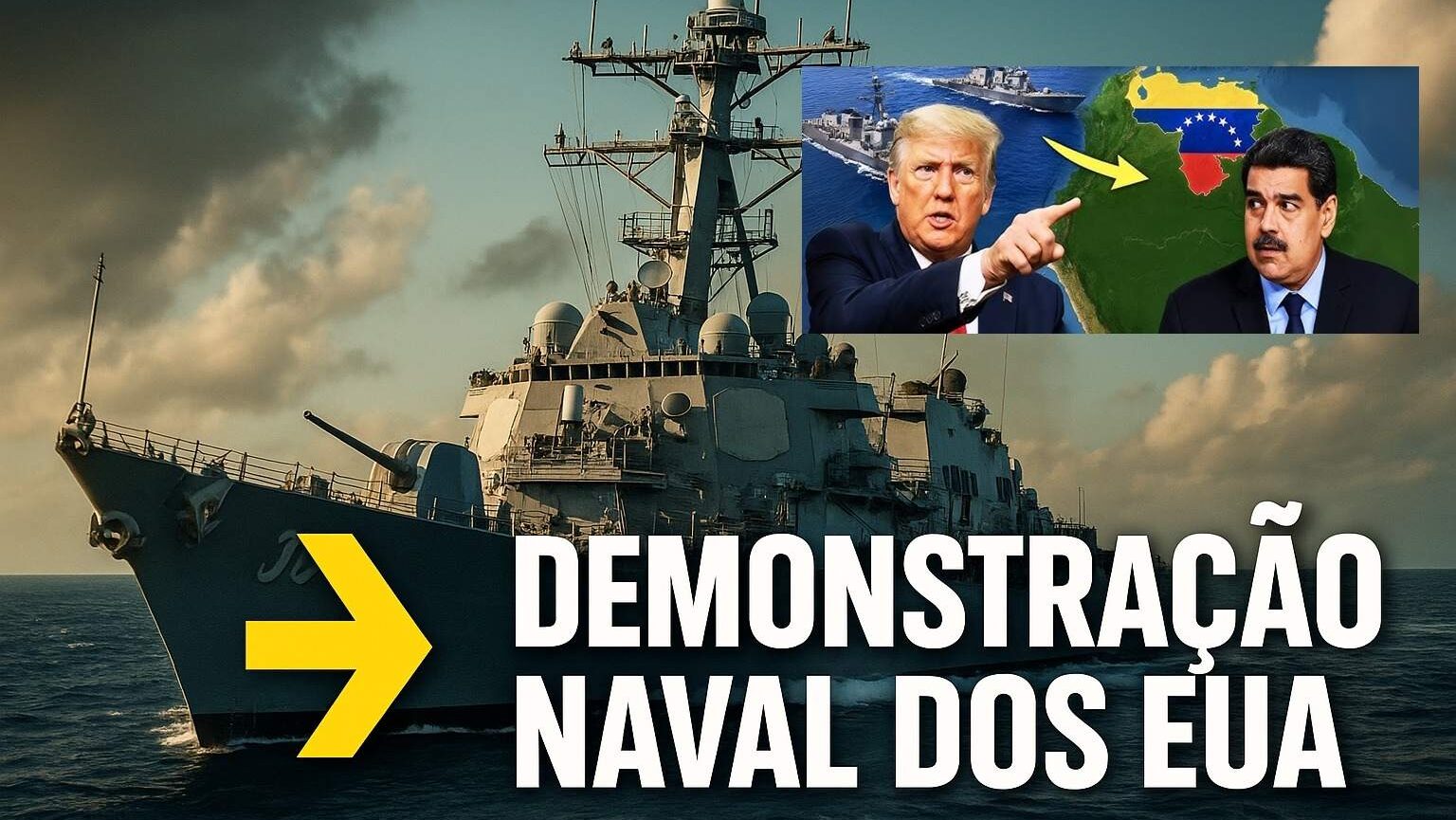
Three Destroyers of the United States Navy Were Sent to the Coast of Venezuela Under Orders from Donald Trump. Equipped with the Advanced Aegis System, Seahawk Helicopters, and Tomahawk Missiles, They Represent One of the Largest Demonstrations of Naval Power in the Region in Recent Years
The decision of President Donald Trump to send wars ships to the coast of Venezuela marked a new chapter in the tense relationship between Washington and Caracas.
The U.S. government justified the measure as part of an offensive against Latin American drug cartels classified as global terrorist organizations.
Within this effort, three Arleigh Burke-class destroyers stood out: the USS Gravely (DDG-107), the USS Jason Dunham (DDG-109), and the USS Sampson (DDG-102).
-
More than 100 Chinese ships are surrounding Taiwan, warns the head of the country’s National Security Council.

-
Trump’s announcement about sending 5,000 American soldiers to Poland was received with relief by European allies, but it also raised doubts within NATO about the United States’ strategy, the permanence of the troops, and the division of defense costs on the continent.

-
Yesterday, on the 21st, President Lula stated that he fears an incursion by Donald Trump into the Amazon: while the Brazilian Army advances in a transformation policy that includes troop reorganization, use of technology, and 20% of the forces in a high state of readiness.
-
The war that doesn’t appear on the front: the silent bomb of demographic collapse threatens Russia as Putin loses young people in Ukraine, babies in statistics, and talents in exile.

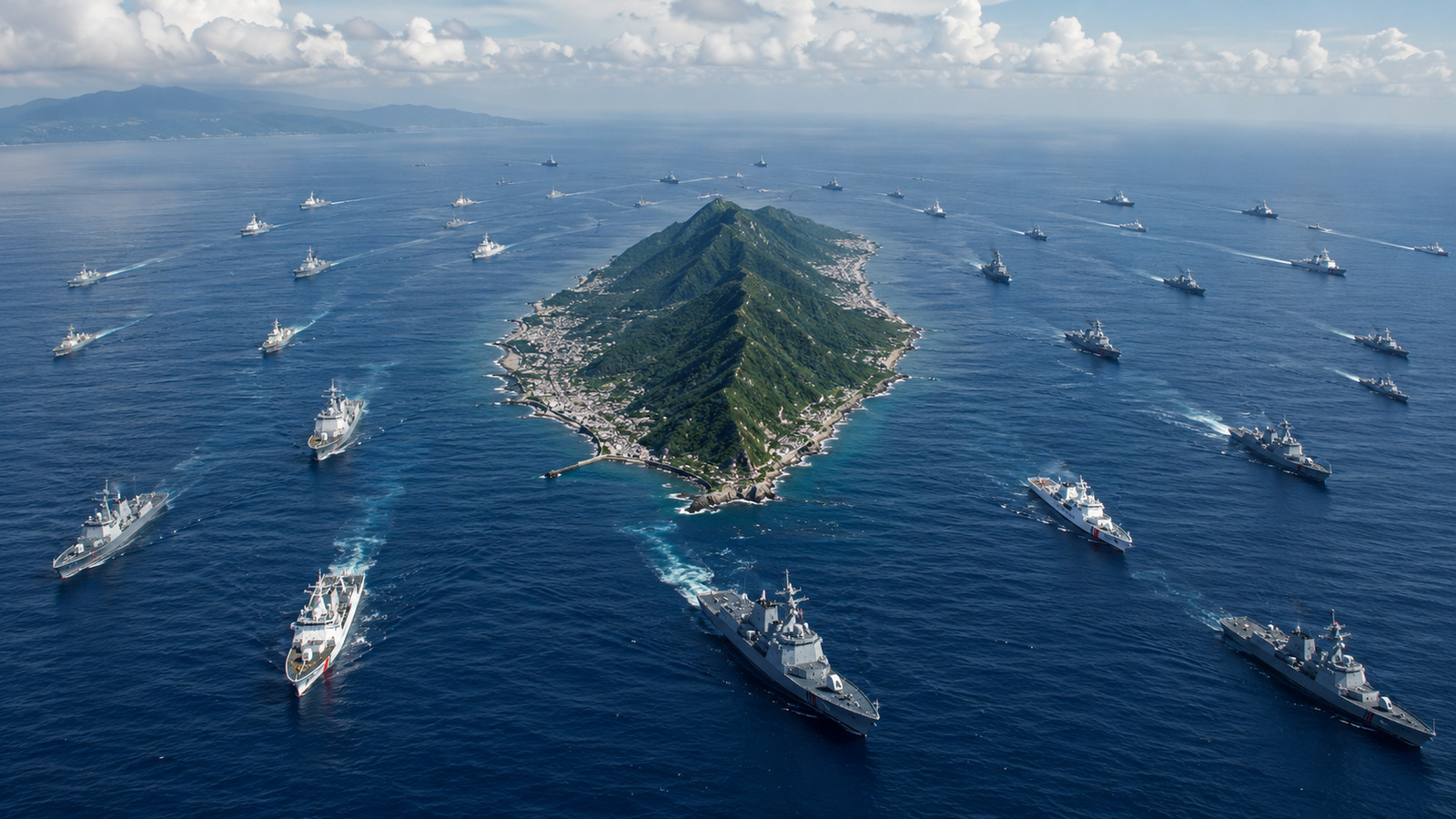


Modern, heavily armed, and equipped with the Aegis system, they symbolize the United States’ ability to project naval power anywhere in the world.
The Operation Planned by Trump
Sources linked to the Department of Defense stated that the three ships would arrive off the Venezuelan coast within 36 hours as part of a mission expected to last for months.
In total, about 4,000 sailors and marines would be mobilized, including P-8 surveillance aircraft, additional ships, and at least one attack submarine.
The declared objective was to combat the activities of cartels such as the Sinaloa Cartel in Mexico and the Venezuelan group Tren de Aragua, both classified by the Trump administration as terrorist organizations.
For the White House, the crackdown on drug trafficking was directly linked to controlling migration and protecting the southern border of the United States.
The ships would not only serve as intelligence and surveillance platforms but could also, if authorized, launch surgical strikes against specific targets.
This made clear the flexible nature of the operation: both deterrence and direct action were on the table.
Reaction of Venezuela
President Nicolás Maduro reacted strongly to the announcement.
Without directly mentioning the warships, he stated in a speech that the country “will defend our seas, our skies, and our lands.” He called the maneuver an “absurd threat from a declining empire.”
Caracas did not officially respond to requests for comment, but Maduro’s rhetoric followed the well-known line: presenting the American military presence as external interference and a attempt at intimidation.
The Power of the Arleigh Burke Class
The three ships sent—Gravely, Jason Dunham, and Sampson—belong to the Arleigh Burke class, the backbone of the U.S. Navy’s destroyer fleet.
- Displacement: about 9,200 tons.
- Propulsion: four gas turbines, allowing speeds over 30 knots.
- Crew: approximately 300 officers and sailors.
- Armaments:
- Tomahawk missiles for land attack.
- Standard Missile (SM-2, SM-3, SM-6) for air defense and anti-missile.
- ASROC missiles for anti-submarine warfare.
- A 127 mm gun, machine guns, and a close-in weapon system Phalanx CIWS.
- Capability to operate MH-60R Seahawk helicopters.
What differentiates them is the Aegis system, a complex of radars and computers capable of tracking hundreds of targets simultaneously and coordinating missile defenses. This system places the destroyers at the center of American naval strategy.
USS Gravely (DDG-107)
Commissioned in 2010, the USS Gravely honors Admiral Samuel L. Gravely Jr., an African American pioneer in the U.S. Navy who broke barriers by assuming command of a ship, squadron, and fleet.
Based in Norfolk, Virginia, the ship has already participated in patrols in the Mediterranean, Black Sea, and anti-piracy operations.
Its presence in the Venezuela mission reinforced the symbolism: a ship that carries the memory of overcoming is now projecting power in one of the most tense regions of the continent.
USS Jason Dunham (DDG-109)
Also commissioned in 2010, the USS Jason Dunham is named after a modern hero. Corporal Jason Dunham posthumously received the Medal of Honor after sacrificing his life in Iraq in 2004 by jumping on a grenade to protect his fellow Marines.
The destroyer also operates from Norfolk. Its history includes missions in the Mediterranean, Persian Gulf, and Red Sea.
In 2016, it was involved in actions after Houthi missile strikes against ships in the Middle East.
Off the coast of Venezuela, its role would be to serve as part of the maritime shield, ready for both surveillance and combat missions if necessary.
USS Sampson (DDG-102)
The oldest of the three, the USS Sampson entered service in 2007. It is named after Rear Admiral William T. Sampson, who led the American fleet to victory over the Spanish fleet in Cuba in 1898.
Based in Everett, Washington, it is typically employed in operations in the Pacific.
It gained notoriety for participating in the search for flight MH370 of Malaysia Airlines, which disappeared in 2014, and for humanitarian operations in Fiji after Cyclone Winston in 2016.
Its presence in the Caribbean showed the Navy’s flexibility in deploying units from different commands to reinforce strategically important areas.
Political and Strategic Context
Trump made the crackdown on cartels one of the cornerstones of his security policy.
By classifying them as global terrorist organizations, he created a legal basis for using military means beyond U.S. borders.
The presence of modern destroyers near Venezuela sent multiple messages:
- To the cartels, a demonstration that the U.S. would use its naval power to restrict operations in the Caribbean.
- To Venezuela, political and military pressure against the Maduro government, accused by Washington of allowing or even favoring the activities of criminal groups.
- To regional allies, a message of commitment to hemispheric security.
The use of the Navy in a mission of this nature was not unprecedented, but it drew attention for its scale and emphasis on high-value strategic assets.
Additional Resources in the Operation
In addition to the three destroyers, the operation involves:
- P-8 Poseidon maritime patrol aircraft, specialized in long-range surveillance.
- An attack submarine, whose type has not been revealed, capable of launching missiles and conducting covert operations.
- Other warships, forming a flexible force suited for varied missions.
This set allowed monitoring trafficking routes, collecting intelligence, and being prepared for military escalation if decided by the White House.





-

2 people reacted to this.