Portuguese
  Spanish


Archaeologists found in Hippos, an ancient city near the Sea of Galilee, a Byzantine treasure with 97 pure gold coins, jewelry with pearls, and rare pieces linked to 7th-century emperors
A Byzantine treasure with 97 pure gold coins and dozens of pieces of jewelry was discovered in Hippos, an ancient city on the slopes of the Golan Heights, near the Sea of Galilee. The find, nearly 1,400 years old, is considered one of the largest of the period found in the region.
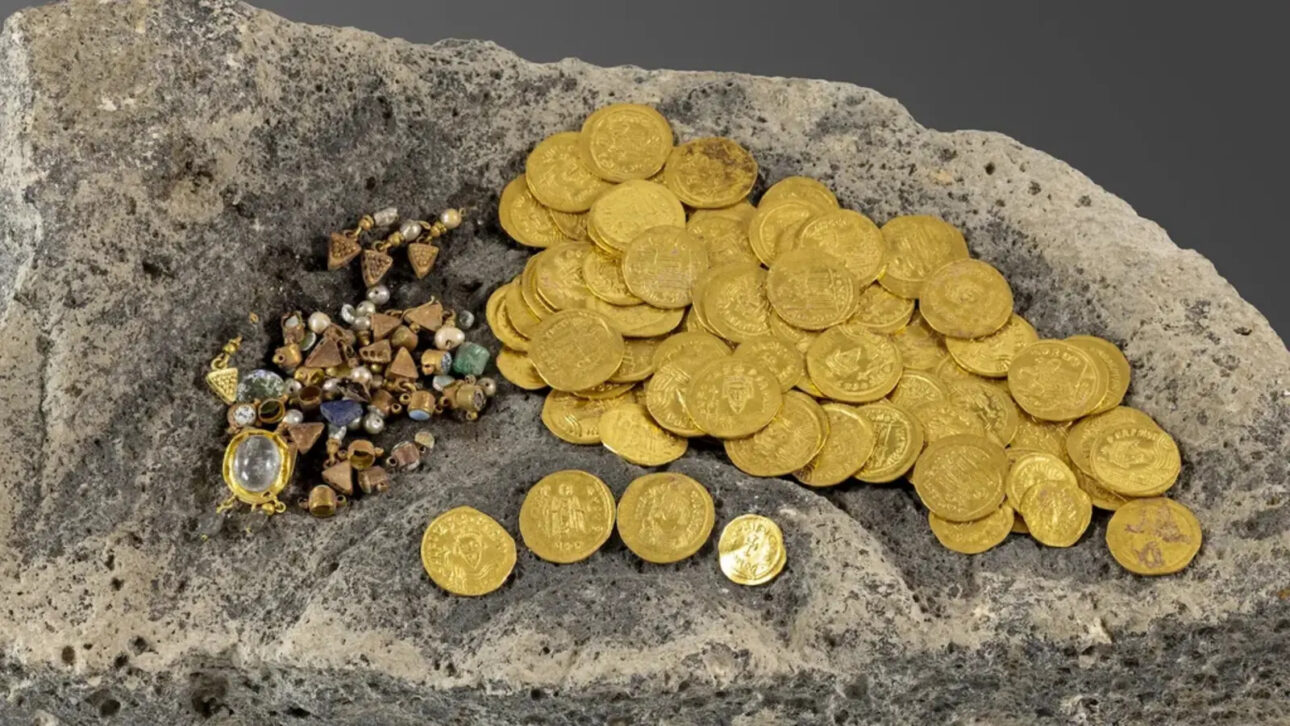
(Image credit: Michael Eisenberg)
Found during investigation in Hippos
Archaeologists investigating the ancient city of Hippos, also known as Sussita, found a rare collection of coins and jewelry dating from the Byzantine era. The site is near the Sea of Galilee, on the slopes of the Golan Heights.
The treasure was discovered in July 2025 by Edie Lipsman, a metal detectorist, while walking near a large stone and two ancient walls.
-
Archaeologists Discover Nearly Intact 1,500-Year-Old Byzantine Mosaic with Greek Inscriptions, Including a Message to “Burst with Envy”

-
California Student Develops AI-Powered System to Detect Elderly Falls at Home, Even in the Dark, Earning Title of America’s Top Young Scientist

-
Workers Discover Ancient Sanctuary with Temples and Roman-Era Inscriptions While Clearing Bomb Debris for Highway Construction

-
Scientists Discover Over 600 Meteorite Glass Fragments in Northern Brazil, Evidence of a 6.3-Million-Year-Old Cosmic Impact with Unfound Crater


According to the statement cited by Live Science, the equipment reacted intensely before the coins began to appear.
The collection includes 97 pure gold coins and dozens of pieces of jewelry. Among the items are earrings studded with pearls, semi-precious stones, and glass, as well as coins of different values used in the Byzantine Empire.
Coins span reigns of Byzantine emperors
The coins found range from the reign of Byzantine Emperor Justin I, between 518 and 527, to the beginning of Heraclius’s reign, between 610 and 613. Heraclius remained in power until 641.
The collection includes solidi, large coins with a high gold content; semisses, equivalent to half a solidus; and tremisses, which were worth a third of a solidus. Some pieces showed traces of fabric, indicating that the treasure was wrapped in cloth.
For Michael Eisenberg, an archaeologist at the University of Haifa and co-director of the excavation, the find is among the five largest gold treasures of this period ever found in the region.
He highlighted that the joint presence of jewelry and smaller coins increases the numismatic importance of the collection.
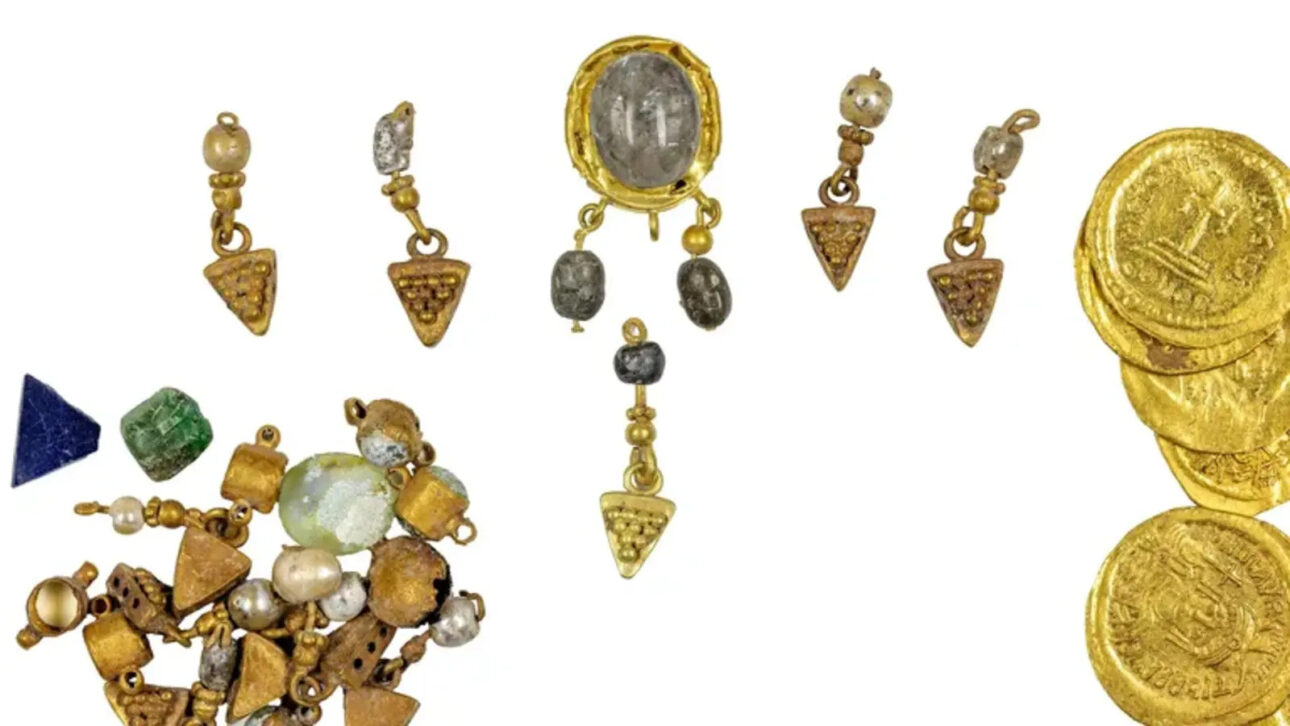
Rare coin may be linked to the rise of Heraclius
One of the tremissis coins caught the special attention of researchers. According to the released material, it was probably minted in Cyprus in 610 by General Heraclius the Elder and his son.
The two revolted against Emperor Phocas. The young Heraclius won the conflict and established the Byzantine Heraclian dynasty, which ruled from 610 to 711.
Danny Syon, numismatist of the excavation, stated in a communiqué that the discovery adds an important layer to the understanding of the political and economic history of the period. The rare coin reinforces the historical value of the treasure beyond the weight of the gold.
Burial may reflect a period of conflicts
It is still unknown why the Byzantine treasure was buried. However, Hippos went through a turbulent period in the 7th century, marked by invasions, military disputes, and changes of control in the region.
In 614, armies of the Sassanian Empire invaded Byzantine Palestine. According to the communiqué, residents of Christian cities in the region, including Hippos, hid wealth as foreign soldiers advanced.
Jerusalem fell during the 614 attack. About 15 years later, the Byzantines regained the area. In 636, Muslim armies conquered it again.
According to Eisenberg, the first half of the 7th century concentrates the largest number of emergency treasures of gold and bronze coins. For him, the Sassanian and Muslim conquests created a scenario of fear and instability.
Hippos declined during this period and was eventually abandoned after an earthquake hit Galilee in 749.
Now, researchers intend to analyze the treasure, read the coins, document the jewelry, and deepen the study on the regional origin of the pieces.
This article was prepared based on information from Live Science and statements from the excavation in Hippos, with data, numbers, and declarations preserved as per the consulted material.