Portuguese
  Spanish


In a forgotten city over the Mediterranean Sea, the floor of an ancient elite residence held a sharp message against envy, proof that provoking the neighbor is not an invention of social networks
The Byzantine mosaic found in the ancient city of Syedra, Turkey, is almost 1,500 years old and has a surprisingly current humor. Besides the geometric and floral patterns, the floor features a phrase in Greek that, in good English, tells those who are envious to simply explode with rage.
The find impresses for two reasons: the almost perfect preservation of a millennium and a half old work and the modernity of the message. Long before online indirects, a homeowner was already using their own floor to jab at the envious.
An elite house in a city over the sea
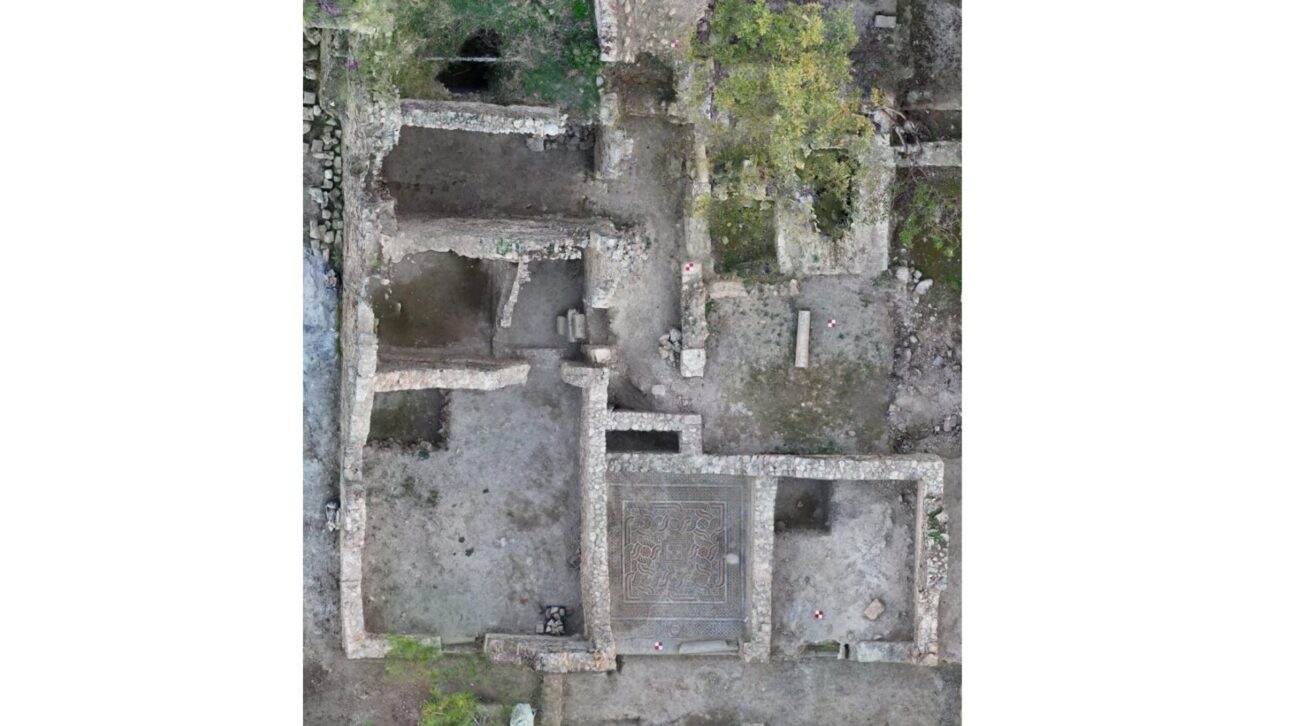
The setting of the find is postcard-worthy. According to The Archaeologist, the ancient city of Syedra is located on a hill about 20 kilometers east of Alanya, on the Mediterranean coast of Turkey, with views of the sea and the Taurus Mountains.
-
California Student Develops AI-Powered System to Detect Elderly Falls at Home, Even in the Dark, Earning Title of America’s Top Young Scientist

-
Workers Discover Ancient Sanctuary with Temples and Roman-Era Inscriptions While Clearing Bomb Debris for Highway Construction

-
Scientists Discover Over 600 Meteorite Glass Fragments in Northern Brazil, Evidence of a 6.3-Million-Year-Old Cosmic Impact with Unfound Crater

-
Philosophy Student Invents Self-Moving Wheelchair Controlled by Body Weight Using Pressure Sensors


The mosaic was not in just any dwelling. According to Arkeonews, the piece was part of a large residence that underwent continuous modifications and was occupied from the 2nd century until around the 7th century AD.
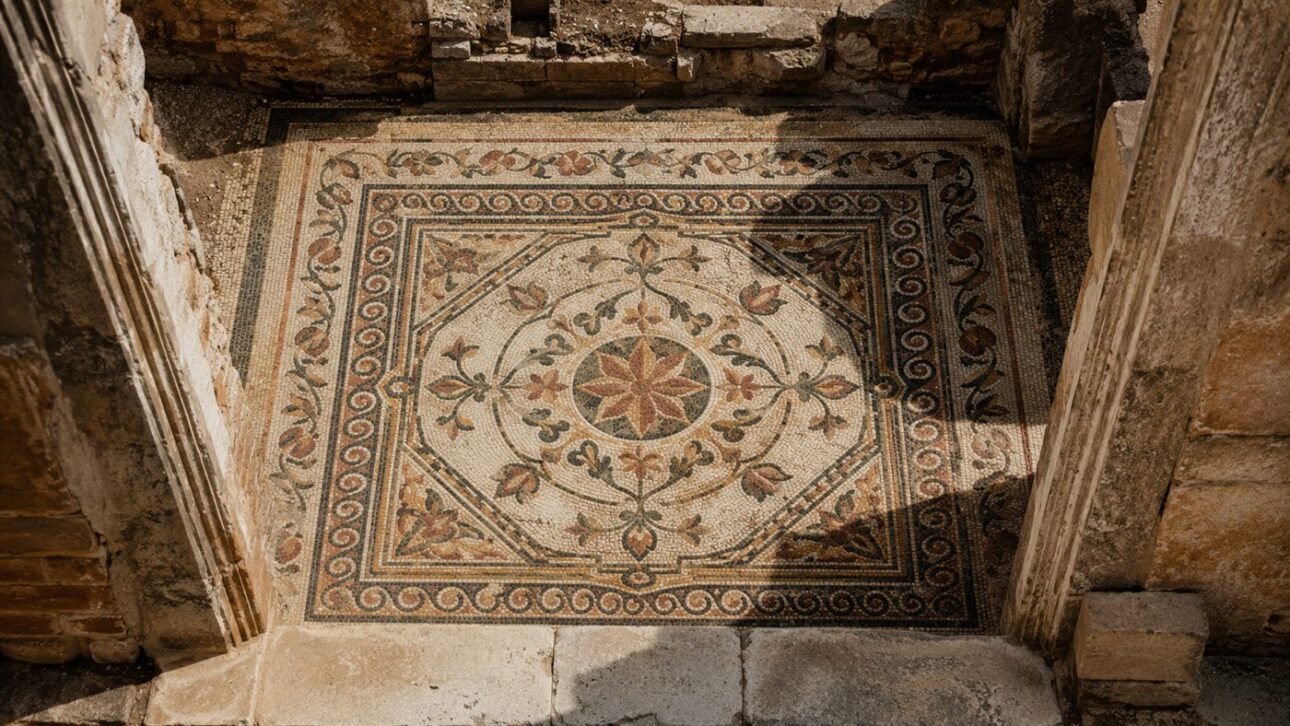
This historical discovery was revealed to the world in October 2021. The context reveals status. Having a floor decorated with mosaic and inscriptions was a luxury for the wealthy, also serving to display social position. The house, used for centuries, was a prestigious address in the city.
A 4.5-meter mosaic at the entrance
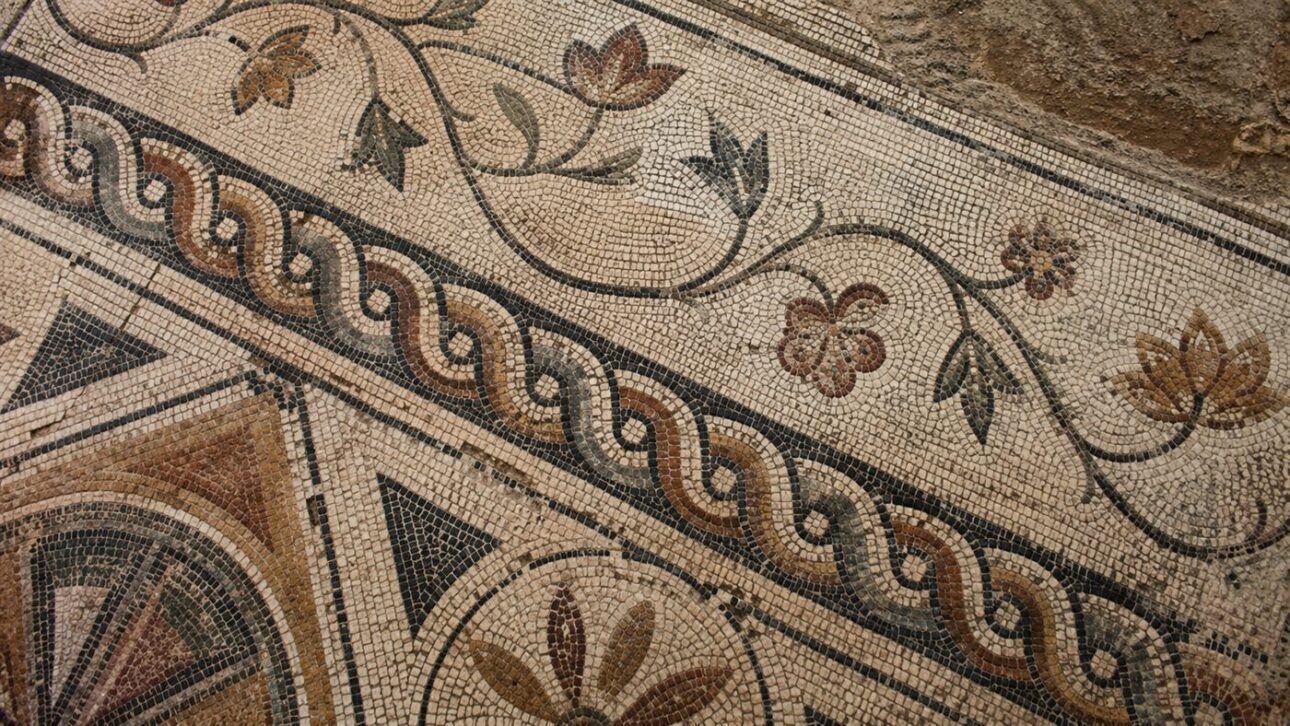
The dimensions and state of preservation are surprising. According to The Archaeologist, the mosaic measures approximately 4.5 by 4.5 meters, is remarkably intact, and has been dated to the 5th or 6th century AD.
The position of the work was no accident. According to The Archaeologist, the floor was near the entrance of the building, a mandatory passage point for any visitor, the perfect place for a message to be read by all who arrived.
The design combined beauty and message. According to Arkeonews, the Byzantine mosaic brought together geometric patterns, plant motifs, and two inscriptions in Greek, uniting art and communication in one floor.
“Use with joy” and “may the envious explode”
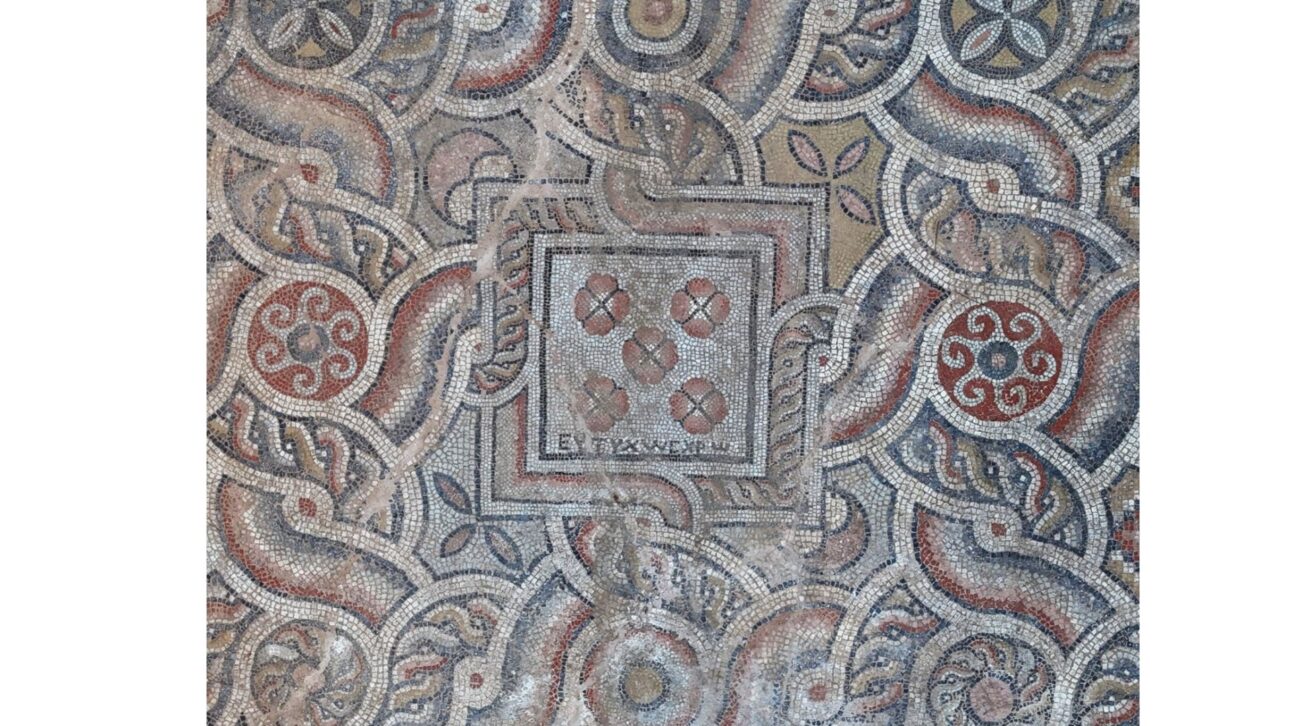
The pair of phrases is the heart of the discovery. According to The Archaeologist, the inscription on the central panel says something like “use with joy,” a friendly greeting typical of residences of the time.
The second message steals the scene. According to The Archaeologist, the section on the southern part of the mosaic can be translated as “may those who are envious explode with jealousy,” a direct and humorous message against the envious.
The contrast between the two phrases is intentional. On one side, warm hospitality; on the other, a sharp warning to those who arrive with bad feelings. It’s welcome and provocation side by side, on the same floor.
Why an ancient house cursed envy

The message was not just a joke, it had an almost magical function. According to Arkeonews, this type of phrase served as a good-humored protection against ill will, a reaction to the ancient fear of the evil eye.
Envy was taken seriously in the Late Antiquity. According to The Archaeologist, such messages reflected hospitality, pride in property, and protection against jealousy, common themes in mosaic inscriptions of that period.
In other words, the homeowner mixed faith, status, and humor. Placing a light spell against envy on the floor was both a display of wealth and a shield against the evil eye of others. The belief in the power of the envious gaze crossed cultures.
Who lived there and what the message reveals
The residence tells a story of continuity. According to Arkeonews, the house was used from the 2nd to the 7th century AD, with successive renovations, indicating a family or lineage established for generations at that point in the city.
The human detail is what brings the finding closer to us. According to The Archaeologist, by combining a welcoming phrase with a bold comment on envy, the resident sought to emphasize both hospitality and their own prestige. It was a carefully constructed self-image, fifteen hundred years before social networks.
This type of clue turns stone into people. Each inscription returns the voice of someone who lived, received visitors, and, of course, had their adversaries.
Who unearthed it and the project behind it
The discovery was not a work of chance, but of an official effort. According to The Archaeologist, the project was led by Ertuğ Ergürer, associate professor at Alanya Alaaddin Keykubat University, within the excavations in ancient Syedra.
The effort has institutional support. According to The Archaeologist, the work is supervised by the Ministry of Culture and Tourism of Turkey and is part of a national initiative to value heritage. It’s not treasure hunting, it’s science with method and public funding.
According to Arkeonews, for the excavation director, the mosaic combines geometric patterns, plant motifs, and the two Greek inscriptions, with the message against envy being what most captures the public’s attention.
Why a Byzantine mosaic still speaks to us
The case of Syedra shows that human feelings change little over the centuries. A Byzantine mosaic that provokes envy proves that pride, hospitality, and vanity have guided people’s lives long before any screen.
The lesson is both amusing and profound. If 1,500 years ago someone was already telling the envious to explode with rage on their own floor, perhaps the desire to show off what one has and to respond to those who covet is simply part of being human. Technology changes; the nature of people, not so much.
Here’s a provocation for you: if a fifteen-hundred-year-old mosaic still sounds like a neighbor’s indirect remark, what will our objects today say about us fifteen centuries from now?