






 Portuguese
  Spanish


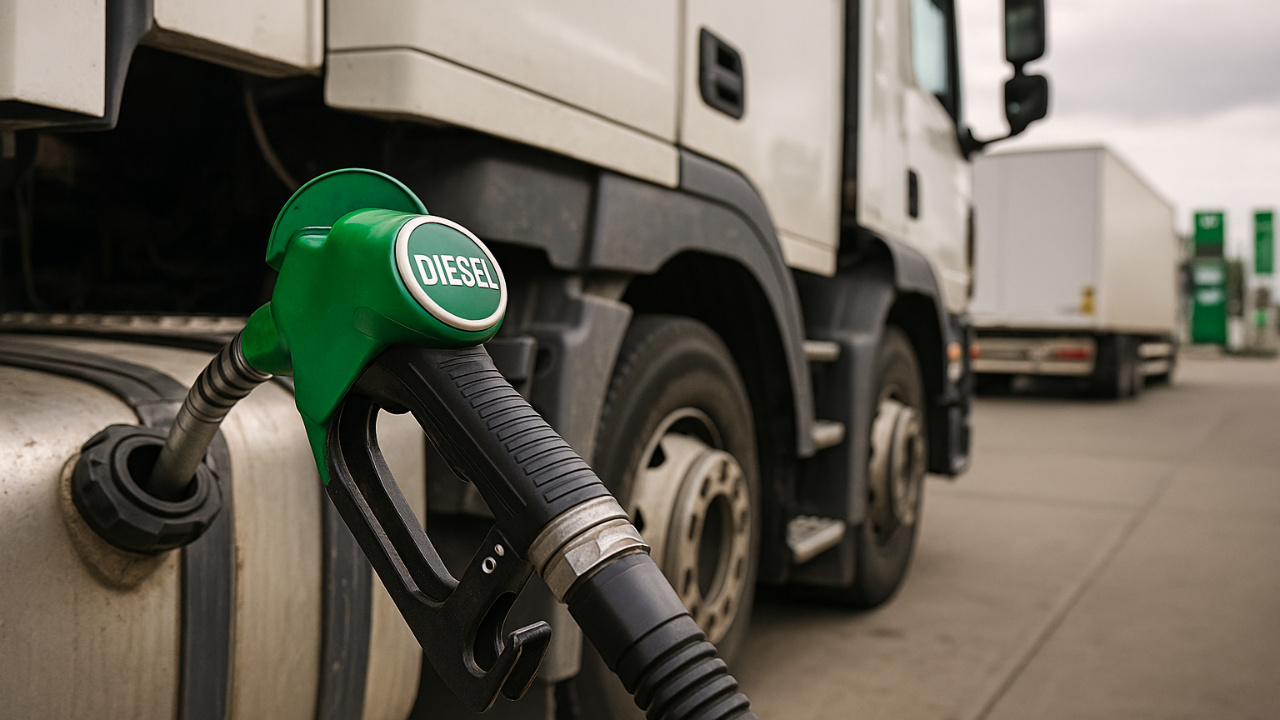
Understand How Diesel Is Supplied in Brazil, the Role of Imports, Petrobras, and the PPI in Price Formation.
Diesel in Brazil is one of the most strategic fuels in the national economy, as it fuels cargo transportation, agricultural production, and part of the railway and waterway systems.
Produced at Petrobras refineries but also supplemented by diesel imports.
The fuel’s balance is determined by diesel supply, pricing policy, and the import parity price (PPI), a mechanism that directly influences the product’s competitiveness in the domestic market.
-
Drivers are falling for these scams without realizing: operation reveals closed gas stations, adulterated fuel, and hidden losses when refueling.

-
New Fiat EV, priced at R$ 77,000, will bring a reinterpretation of the 147 and a consumption equivalent to 70 km/l.

-
Petrobras surprises the market by cutting diesel by R$ 0.35 per liter, and the decision may ease the tax impact for drivers and transport companies.
-
Gasoline at R$ 4.99 makes drivers wait more than an hour at Havan gas stations in Santa Catarina, during a “zero tax” promotion with a limit of 15 liters per car and 25,000 liters available across five units of the network.





Present in practically all Brazilian logistics, diesel affects freight costs, food prices, and industrial competitiveness.
Therefore, understanding how supply works and the role of Petrobras is essential to comprehend price fluctuations and the country’s external dependence.
The Importance of Diesel in Brazil for the Economy
The diesel is a petroleum derivative used in high-compression engines, widely employed in heavy transportation.
Trucks, harvesters, river vessels, and diesel trains support a large part of the circulation of goods in the national territory.
As a consequence, any variation in the price of the fuel spreads quickly throughout the economy. Therefore, diesel supply has become a central issue for governments, companies, and consumers, especially in a country with a strong reliance on road transport.
National Diesel Production and Refining Limits
Data from the National Agency of Petroleum (ANP) show that national diesel production grew from 41 million cubic meters in 2010 to around 49 million cubic meters in 2024.
Despite this progress, domestic supply is still not sufficient to meet all the demand.
The Paulínia Refinery (Replan) in São Paulo is the main production hub, with approximately 10.6 million cubic meters in 2024. In addition to it, units like Replan, Repar, RPBC, Rlam, Refap, Revap, Regap, and Reduc ensure over 80% of the national supply.
Still, diesel in Brazil structurally depends on diesel imports to close the supply balance.
Diesel Imports and Supplier Diversification
External dependence has led the country to diversify its suppliers over the years.
Historically, the United States has consolidated itself as the main exporter to Brazil, with volumes exceeding 9 million cubic meters between 2018 and 2020.
India had significant participation until 2014 but lost ground afterward. Gulf countries, such as the United Arab Emirates, reported sporadic operations between 2021 and 2022.
The recent highlight, however, is Russia, which went from a minimal presence until 2012 to volumes exceeding 7.2 million cubic meters in 2023 and about 9.3 million in 2024.
This change shows that diesel imports follow commercial opportunities, global availability, and price fluctuations in the international market.
What Is the Import Parity Price (PPI)
The import parity price (PPI) represents the total cost of bringing diesel from abroad to Brazil. It considers the international price of the derivative, the exchange rate, maritime freight, insurance, and port expenses.
Distributors use the PPI as a reference to assess whether it is more advantageous to import or purchase the diesel produced by Petrobras.
When the PPI is above the domestic price, imports become less attractive. On the other hand, when the PPI falls or approaches the price practiced in the domestic market, the so-called “import window” arises.
Relation Between PPI and Diesel Supply
This dynamic can be observed at the Port of Itaqui in Maranhão, the main entry point for imported diesel.
Periods of positive disparity, when the PPI exceeds the internal price, indicate less incentive for imports. When this disparity decreases or becomes negative, the volume imported tends to grow.
Thus, diesel supply in Brazil fluctuates according to this relationship between domestic price and import cost, even when demand remains stable.
The Role of Petrobras in Imported Diesel
Even when the PPI makes imports unattractive for private companies, the supply cannot be interrupted.
In these moments, Petrobras diesel takes on the responsibility of carrying out complementary imports.
Between 2017 and 2024, Petrobras’s average share of imports was 33.8%, reaching a peak of 52.3% in 2022. This movement reinforces the strategic role of the state-owned company in ensuring national supply.
Why the Price of Diesel Fluctuates in Brazil
The formation of the price of diesel in Brazil results from the combination of national production, imports, exchange rates, maritime freight, and Petrobras’s commercial policy.
Even with stable demand, these variables can cause significant fluctuations.
Therefore, monitoring the import parity price (PPI), the origin of imports, and national refining capacity is essential to understand market behavior and its impacts on logistics and inflation in the country.





Be the first to react!