





 Portuguese
  English
  Spanish
  6 min of reading
  0 comments


Graffitied carts began to circulate on Brazilian streets in actions that unite urban art, recycling, social technology, and professional appreciation of waste pickers, transforming work tools into public communication vehicles about income, safety, and recognition in the collection of recyclable materials.
Carts used by recyclable material collectors began to circulate as pieces of urban art and professional appreciation instruments with Pimp My Carroça, a movement created by graffiti artist and activist Mundano to give visibility, safety, and better working conditions to those working in recyclable collection in Brazilian cities.
The initiative brings together structural reform, painting by artists, installation of safety items, and care actions aimed at workers, according to information released by the organization.
According to Pimp My Carroça, access to new or refurbished carts increases safety, improves working conditions, and can raise the income of individual waste pickers by at least 50%.
-
Under pressure from nearly 10,000 people sleeping rough in King County, Seattle created a village with 90 microhouses of 8.9 m², equipped with a bed, electricity, heating, air conditioning, kitchen, showers, and laundry to take families off the streets with support from Microsoft and Starbucks.

-
Rejected by property owners and without a fixed store at the beginning, Maggie created a café where money doesn’t decide who eats: in Raleigh, customers can pay full price, pay $3, exchange 1 hour of volunteering for a meal, and support the model that has already served over 350,000 meals.

-
Curitiba ‘swallows’ up to 218 million liters of sewage per day: a Sanepar giant uses activated sludge in a carousel, returns cleaner water to the Iguaçu River, and sends waste to become biogas.
-
Robin Greenfield faces the freezing winter of Wisconsin in a tiny house without running water, electricity, or insulation, heats the bed with hot stones, and goes viral by turning radical simplicity into an extreme routine that made millions rethink comfort, consumption, and happiness.


Urban art to increase the visibility of waste pickers
Pimp My Carroça emerged in São Paulo from an action initiated by Mundano in 2007, when the artist began painting the carts of waste pickers he found on the streets.
As the actions progressed, the intervention began to organize as a social, cultural, and environmental movement, with programs aimed at waste pickers in different regions of the country.
The proposal is to transform a work tool often associated with precariousness into a safer, more visible, and identified vehicle on urban roads.
Through colors, phrases, and drawings, the carts start to attract the attention of drivers, pedestrians, companies, and public authority representatives during the daily circulation of workers.
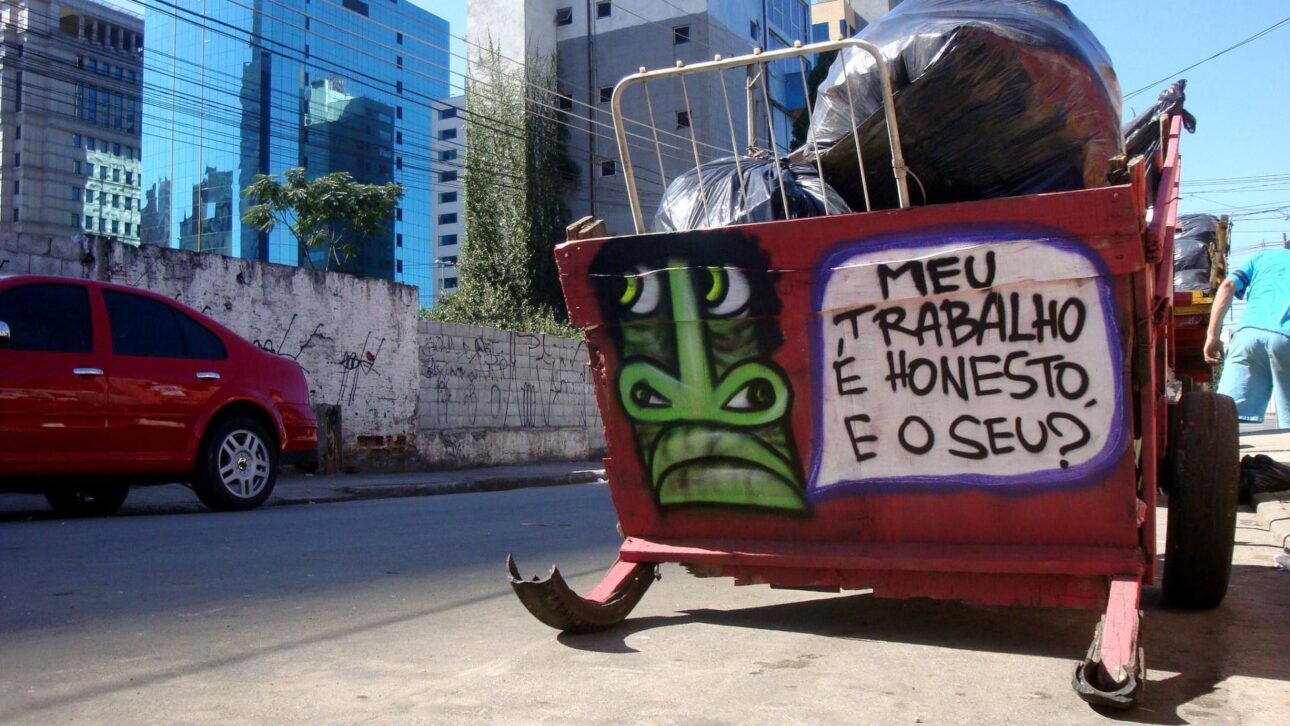
Besides the painting, the refurbishment seeks to improve the daily use of the equipment and reduce risks associated with the transportation of recyclable loads through the streets.
The so-called “pimped” can include repairs, custom paintings, and safety items, such as rearview mirrors, reflective tapes, and horns, according to the description of actions supported by BrazilFoundation.
Cart Repair and Professional Appreciation
At Pimp My Carroça Circuit events, collectors hand over their vehicles for repair and participate in activities while waiting for the carts to be returned.
The program can include health services, wellness actions, workshops, cultural presentations, and community mobilization, according to the formats disclosed by the organization itself.
At the end of the actions, the vehicles return to the streets graffitied by local artists and adapted to continue being used as work tools.
This dynamic also seeks to change the way part of the population perceives those who collect, separate, and forward recyclable waste daily in cities.
The recognition of collectors appears as one of the central axes of the institutional action of the movement.
In the registry maintained by the federal government, Pimp My Carroça is linked to the mission of developing creative and collaborative actions to positively impact the recognition and fair remuneration of collectors before civil society, public authorities, and the private sector.
Social Technology Expands the Project’s Reach
Another front of the movement is Pimpex, presented as a social technology that allows people, companies, schools, colleges, and groups to directly support collectors.
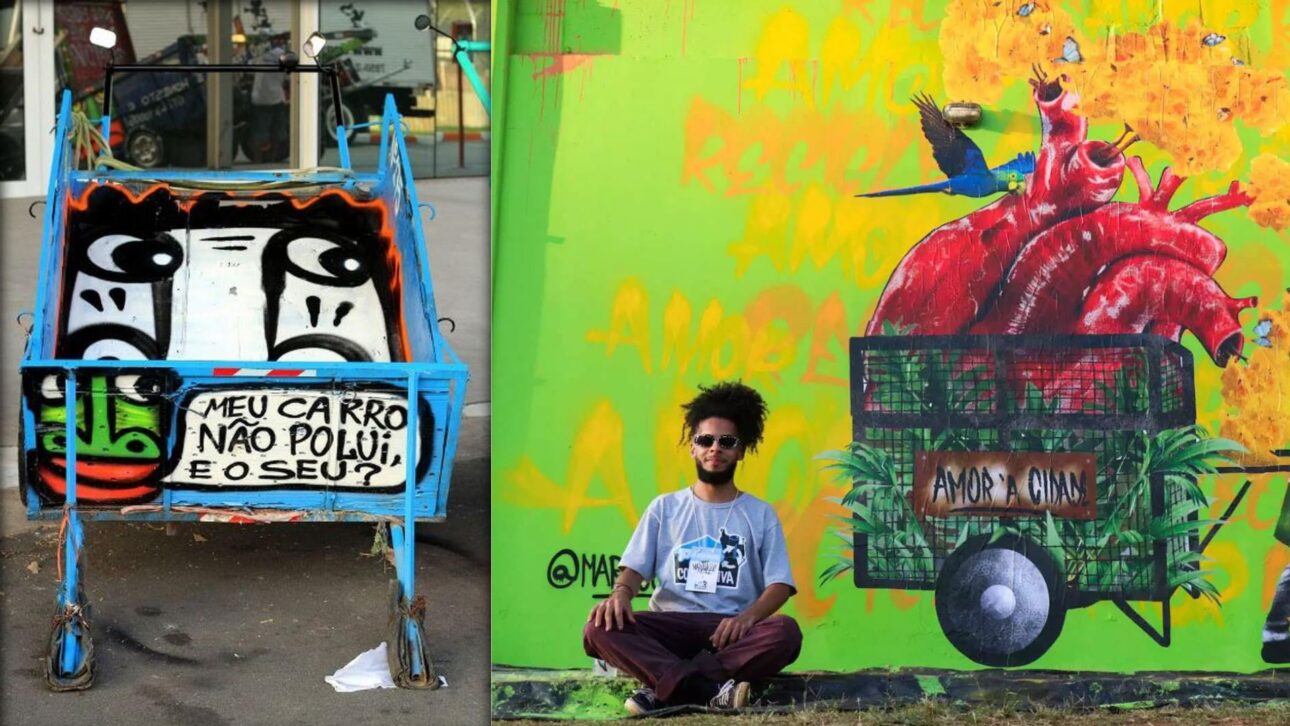
Through this model, collaborative campaigns can fund new or refurbished carts and enable the replication of actions in different locations.
The organization also works with cooperatives through Pimp Nossa Cooperativa, an initiative aimed at collective workspaces linked to recycling.
In this front, walls and circulation areas are transformed with art, while collectors, families, and surrounding residents can access health, culture, and wellness activities.
The intervention in collective spaces reinforces a central piece of information about the recycling chain: the reuse of materials also depends on workers responsible for collecting, separating, and forwarding waste for new uses.
Cataki connects disposal and collection of recyclables
The movement’s activities expanded with Cataki, an app developed by Pimp My Carroça to connect recycling professionals with waste generators.
The tool allows the location of waste pickers, cooperatives, and other sector agents, facilitating contact between those who need to dispose of materials and those who work with collection.
According to Cataki’s official website, the platform aims to strengthen the work of waste pickers and contribute to the environmentally appropriate disposal of recyclables.
Before requesting a collection, the user is advised to separate, sanitize, and properly package the materials, a procedure that facilitates the service performed by the professional.
The platform follows the same line of appreciation present in the graffiti carts, by making the contact between consumers, companies, and recycling workers more direct.
With this connection, waste disposal becomes more visibly involving the professionals who depend on collection to generate income.
Environmental education with waste pickers
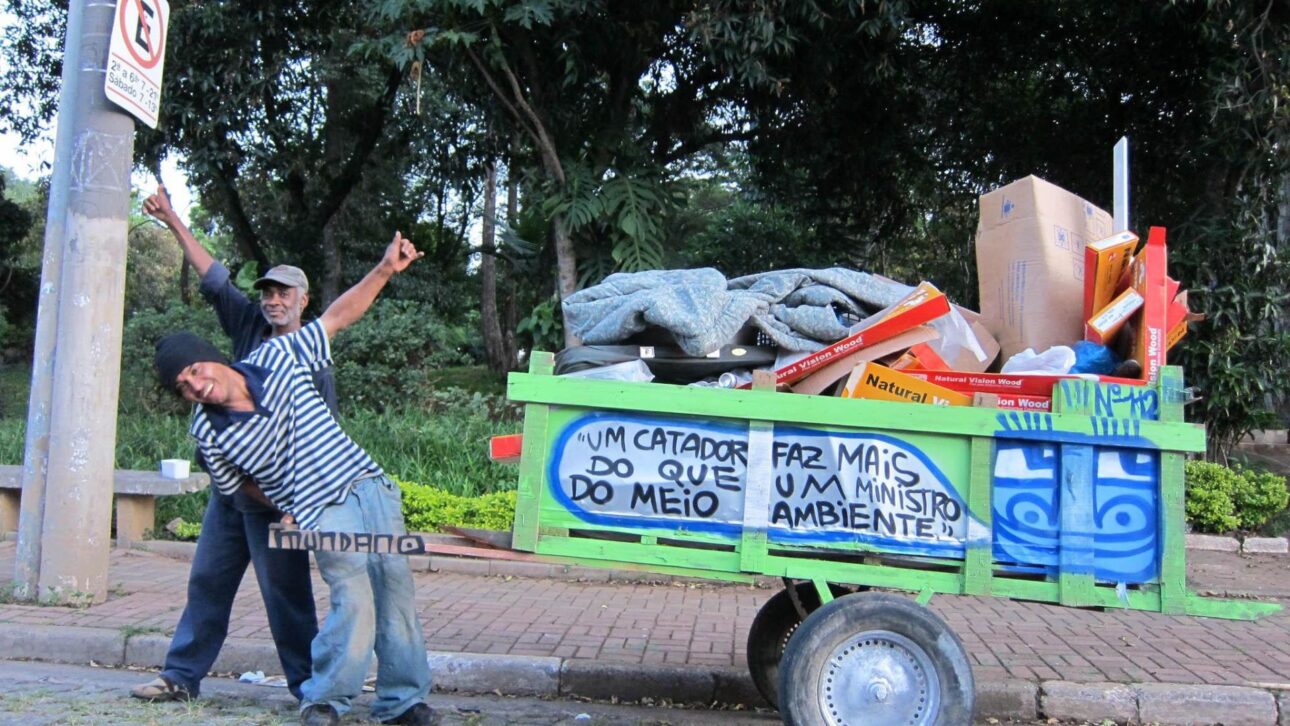
Pimp Educa takes waste pickers to schools and other educational spaces, recognizing these professionals as people with practical experience in the recycling chain.
Participation in educational activities brings students closer to the routine of those who follow, in daily work, the destination of part of the materials discarded by the population.
In this format, the waste picker ceases to appear only as a collection worker and starts participating in environmental education actions.
With the presence of these professionals, students can understand recycling stages from those who deal directly with paper, plastic, metal, glass, and other waste collected on the streets.
Also linked to the organization, Pimp Lab develops socio-environmental and artivist projects based on technology and innovation.
Among the initiatives disclosed are the Carroças do Futuro, with prototypes designed to reduce physical damage at work, improve usage conditions, and strengthen the self-esteem of waste pickers, according to the organization.
Graffiti carts in the cities
The effect of the graffiti carts depends on the circulation of these vehicles through the streets, where the workers collect and come into contact with different audiences.
When they appear on avenues, intersections, and sidewalks, the carts carry messages about recycling, work, and income to the same space where waste is produced and discarded.
The strategy transforms the cart into a medium of urban communication and expands the public presence of professionals who often work with little infrastructure.
Although it does not replace public policies on recycling, income, and work safety, the intervention gives visibility to an essential activity for the material reuse chain.
In cities, the collection done by waste pickers connects the environment, popular economy, and urban cleanliness by removing recyclable materials from common disposal and driving reuse chains.
This activity also supports families who rely on recycling as a source of income, although many workers face discrimination, financial instability, and lack of appropriate equipment.
By refurbishing carts, providing assistance, and using art as a communication tool, Pimp My Carroça organizes actions aimed at valuing waste pickers in the urban environmental debate.
The experience brings together social organization, technology, collective participation, and artistic intervention to modify the relationship between the worker, their work tool, and the city that utilizes the service they provide.


Be the first to react!