





 Portuguese
  English
  Spanish
  6 min of reading
  0 comments


Cafeteria in Raleigh adopts flexible payment model and equal service for all, bringing together paying customers, volunteering, donations, and affordable meals in an operation created by Maggie Kane after initial resistance from owners and gradual growth in the city center.
The cafeteria A Place at the Table, in Raleigh, North Carolina, operates with the appearance of a conventional restaurant but adopts a different format at the checkout: the customer pays the suggested price, contributes less, or exchanges volunteer work for a meal.
Created by Maggie Kane after her graduation from North Carolina State University, the project emerged with the goal of offering hot food without separating customers based on their ability to pay, combining restaurant, non-profit organization, and community gathering point.
In the model known in English as pay-what-you-can, the value of the meal is not solely dependent on the menu, as people with financial means pay the full price and customers with less income can donate at least $3.
-
Curitiba ‘swallows’ up to 218 million liters of sewage per day: a Sanepar giant uses activated sludge in a carousel, returns cleaner water to the Iguaçu River, and sends waste to become biogas.

-
Robin Greenfield faces the freezing winter of Wisconsin in a tiny house without running water, electricity, or insulation, heats the bed with hot stones, and goes viral by turning radical simplicity into an extreme routine that made millions rethink comfort, consumption, and happiness.

-
In Texas, former homeless individuals leave shelters and bridges to live in a planned community with 25 houses of 51 m², kitchen, living room, laundry, daily meals, future clinic, chapel, and even ponds on a 280-acre plot to restart with dignity.

-
Old house in Serra da Canastra holds axe-cut wood, family heirlooms, artisanal cheese, and clothes washed on stone: woman keeps alive a rural routine that seems frozen in time and sparks curiosity about the past of Minas Gerais.


There is also the possibility of working for an hour at the café in exchange for the meal, according to the rules published by the organization, which maintains service in the same environment for paying customers, volunteers, and people in vulnerability.
The initiative has been mentioned in local reports for addressing food insecurity without resorting to separate lines, public screenings, or differentiated service, according to information released by Axios and A Place at the Table itself.
Within the space, customers choose at the same counter, sit in the same dining area, and receive the meal with the same operation as a breakfast and lunch café, regardless of the chosen payment method.
How the cafeteria in Raleigh works
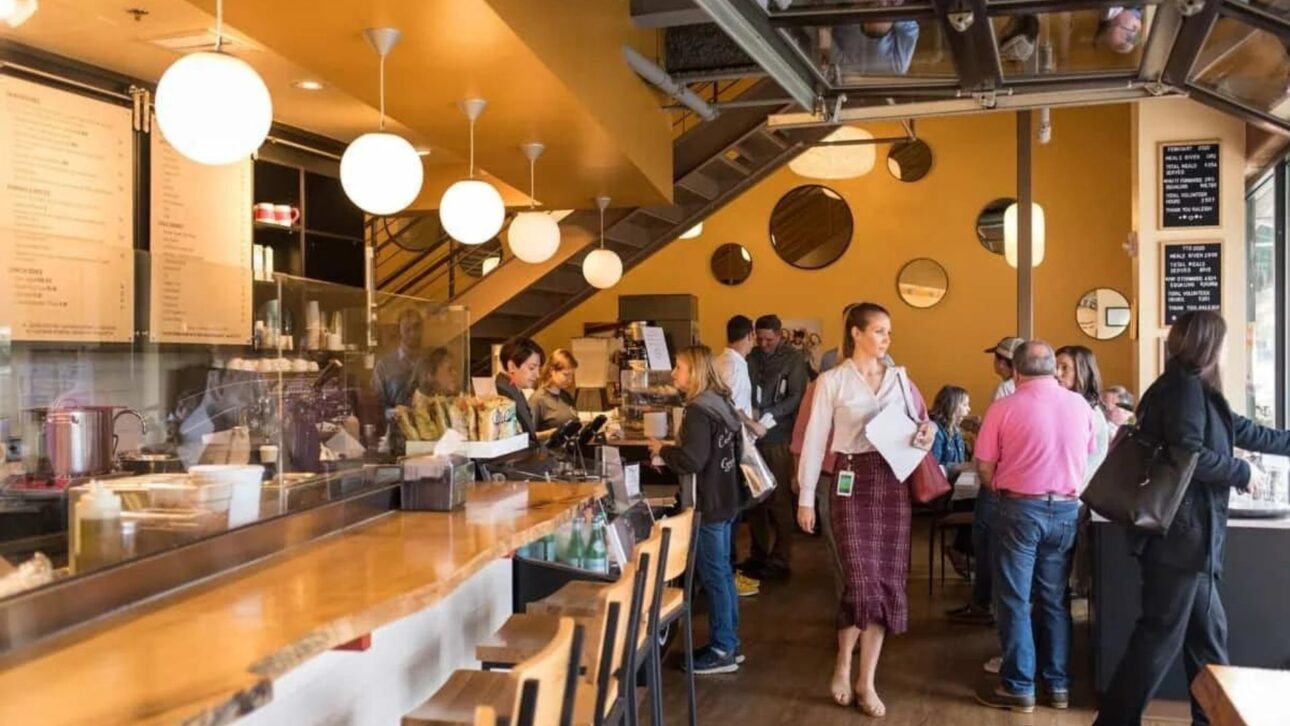
The dynamic of A Place at the Table begins with a suggested price for each order, but the system allows the person to define the possible contribution that day, between full payment, reduced amount, volunteering, or helping others.
According to the rules provided by the organization, those who cannot pay the full amount can donate at least $3, while another alternative is to work as a volunteer in exchange for a meal, within the weekly limits set by the café.
Families can also eat for free once a week, according to the policy disclosed by the establishment, and customers with financial means can leave tips, make online donations, or purchase support cards for distribution in the community.
The menu follows the format of a breakfast and lunch café, with prepared dishes, sandwiches, coffee, and table service, a characteristic that brings the dining experience closer to the operation of other commercial restaurants.
This setup is part of the proposal described by the organization itself, which claims to seek an environment with choice and dignity for all customers, without creating visual markings between those who pay the full price and those who use access alternatives.
Maggie Kane faced resistance before the fixed location
Before reaching the current address on West Hargett Street, in downtown Raleigh, Maggie Kane faced resistance from property owners, according to a report published by Axios about the café’s early operations.
According to the report, some property owners expressed discomfort with the idea of opening a restaurant that also served vulnerable people, which made it difficult to find a fixed location in the early years.
Unable to secure a store immediately, the founder took the concept to temporary events around the city, in a pop-up format, until gathering the conditions to establish a permanent operation, inaugurated in January 2018.
The café advanced from a simpler initial structure to a nonprofit café with regular service, while it began to rely on different sources of revenue to sustain daily operations in downtown Raleigh.
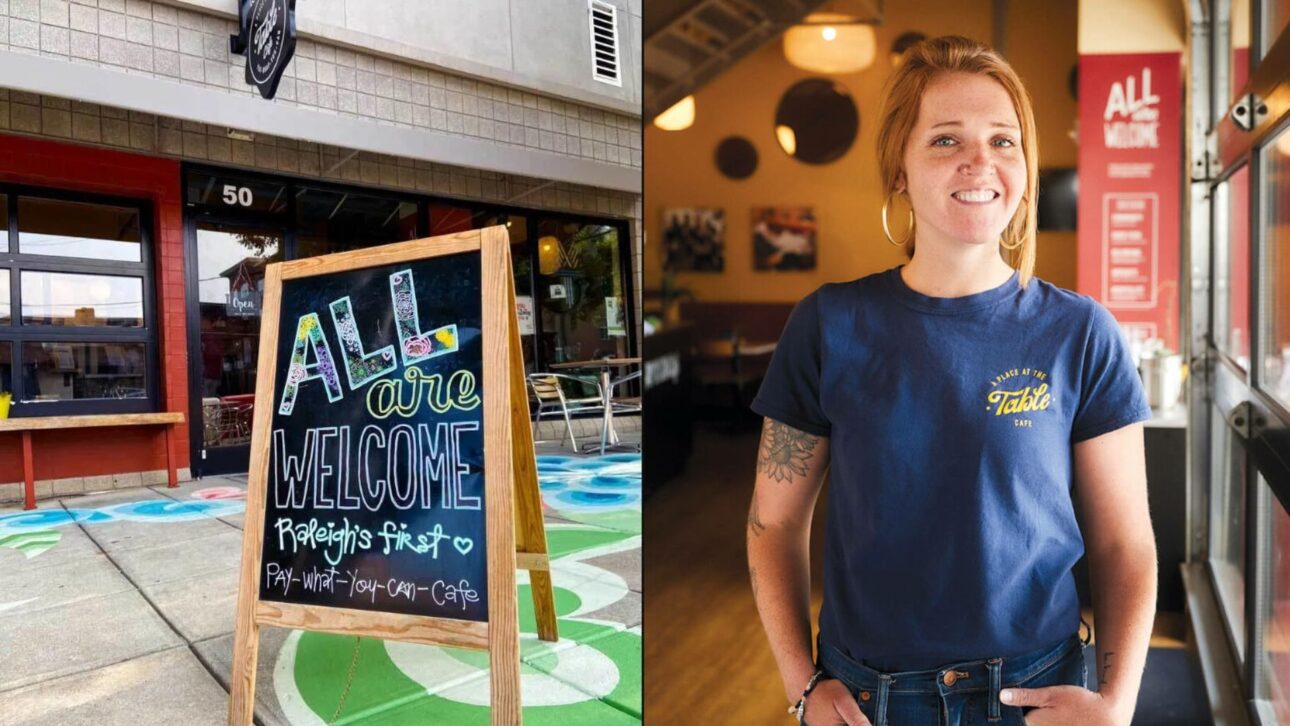
Currently, besides the movement in the dining area, the operation involves donations, volunteering, customers who pay the full price, and catering services, a combination that helps cover costs in an operation with part of the meals subsidized.
The reach of the project has also increased since its opening, according to data released in reports and by the organization itself, which provide different numbers depending on the criteria used to measure total meals and meals provided to people in need.
Axios reported that A Place at the Table has served more than 350,000 meals since its inception, while the official website highlights over 255,000 meals offered to people in need since January 2018.
Sustainability depends on who pays
The operation requires constant financial balance because some customers pay less or contribute with volunteer work, while another portion needs to pay the full price to help cover general costs of food, staff, and operations.
Initially, the distribution was more favorable to direct revenue from the dining room, according to Maggie Kane, who told Axios that about 70% of customers paid the full price and 30% paid less or volunteered in exchange for the meal.
Over the years, this proportion has changed significantly, according to the founder, and the café has seen a larger share of people paying less, volunteering, or using alternatives to the full value.
This scenario indicates an increase in the demand met by the project, as reported by Kane to Axios, but also reinforces the dependence on paying customers, donors, and complementary services to keep the operation running.
To remain open, the café needs higher-income customers to choose to dine there not only for the menu but also because the full payment helps fund access for others to the same environment.
Donations from residents, companies, and supporters are part of this equation, while the catering service has taken on a significant role in revenue composition, as described by Axios when addressing the café’s financial sustainability.
Dignity as part of the meal
The proposal of A Place at the Table is not limited to delivering food to people in food insecurity, according to the organization itself, which presents the café as a space also focused on community and choice.
By allowing someone to work for an hour in exchange for food, the model creates a form of access that does not rely solely on direct donation, as the customer participates in the routine and contributes to the establishment’s activities.


For those who pay the full price, the experience also has an operational effect on the model because the amount spent helps keep the restaurant open and allows other people to be served in the same dining room.
The relationship between customers, volunteers, and donors sustains the café’s daily proposal, which depends on the participation of different audiences to keep meals accessible without creating an explicit separation between payment methods.
Raleigh faces challenges related to food insecurity and homelessness, points mentioned by local news coverage, and the café fits into this context as a community initiative without replacing public policies.
Social model escapes traditional logic
In a sector normally based on fixed prices and immediate payment, A Place at the Table adopts a format that combines consumption, reduced contribution, volunteering, and donations to enable serving different customer profiles.
Those who come in for coffee or lunch find a system where one person’s payment can help cover another’s meal, according to the operation described by the organization in its official materials.
Volunteering is also part of the model’s operation and does not appear only as an occasional action, as the organization reports having more than 2,000 individual volunteers per year to support the café’s activities.
Maggie Kane’s journey went from temporary events to a permanent operation in downtown Raleigh, with regular operation from Tuesday to Sunday, serving breakfast and lunch throughout the day.
Without relying on a single source of revenue, the project remains structured on the combination of full payment, reduced contribution, volunteering, donations, and paid services, a model that keeps the café open to customers with different payment capacities.





Be the first to react!