Portuguese
  Spanish


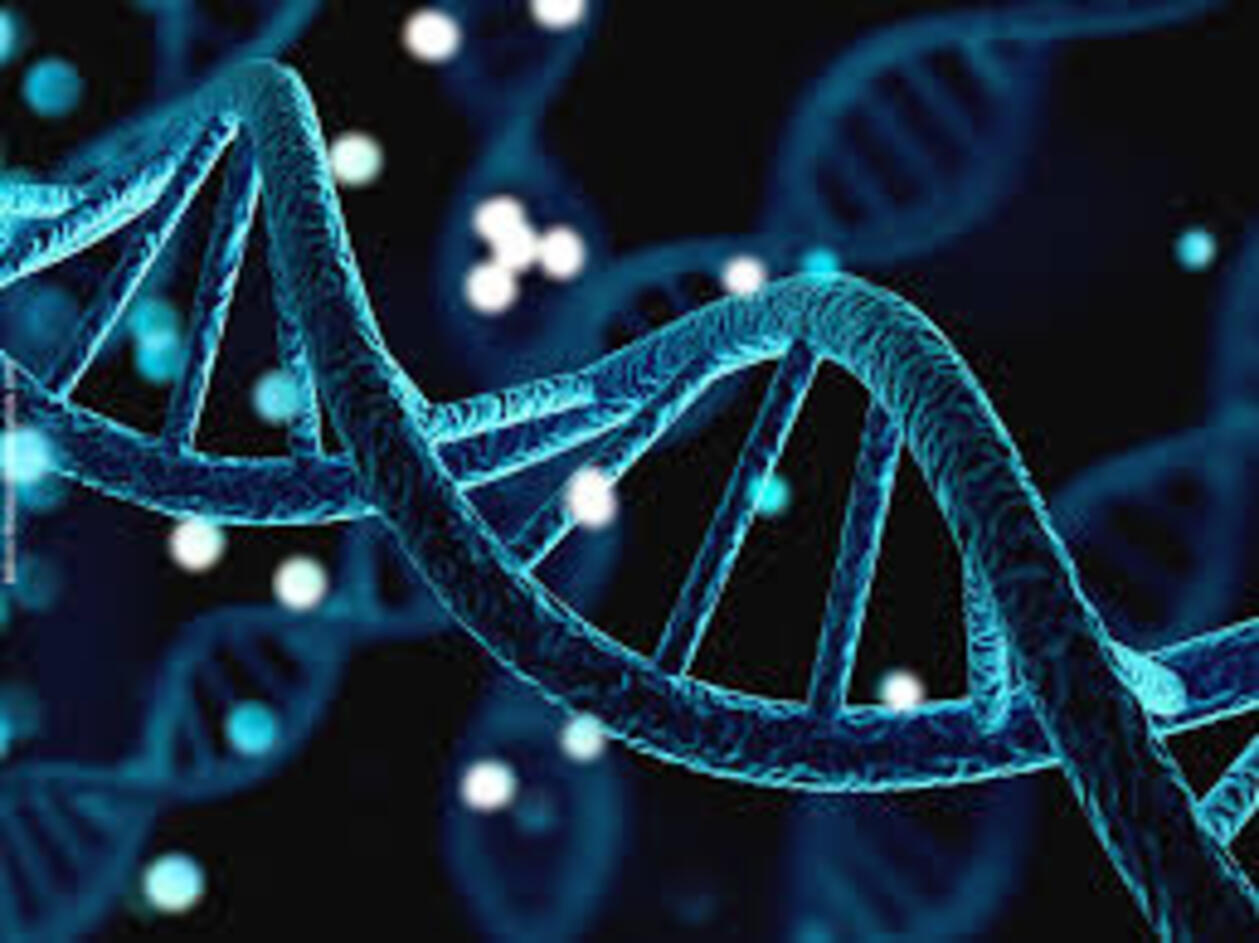

Scientists Take First Step to Build Human DNA From Scratch. Bold Project with Potential to Cure Diseases and Create Synthetic Life.
In a groundbreaking scientific milestone, a group of British researchers has launched an ambitious project to create parts of human DNA from scratch in a laboratory.
The initiative, announced in July 2025, is being led by the Molecular Biology Laboratory of the Medical Research Council (MRC) in Cambridge, with initial funding of £10 million (about US$ 12 million) from the Wellcome Trust, the world’s largest health charity.
The idea is to develop ways to synthesize complete blocks of DNA to unravel the mysteries of human life, improve medical treatments, and eventually rewrite the pathways of global health.
-
Couple buys 1905 colonial house, plans to tear down walls to unite three rooms, but finds hidden service staircase and rethinks the entire renovation to preserve details that have survived for over a century.

-
Couple receives a quote of $50,000 to install a built-in refrigerator, decides to do the work themselves, spends $6,000, and claims to have saved over $100,000 by renovating the house.
-
At 77 years old, an elderly woman lives alone in an almost ghost village in the French Alps, at an altitude of 1,000 meters, where there is a town hall, a mayor, and an entrance sign, but only she lives there every day in a place destroyed by a landslide and almost erased from the map.

-
India excavates a 28 km artificial lake in the Thar Desert, lines the bottom with a giant plastic sheet to prevent 1.41 million tons of water from disappearing into the sand, and attempts to supply 5 million people throughout the year.


The research, considered a “revolutionary leap” by the scientific community, will be conducted in phases, adhering to strict ethical and scientific guidelines. It takes place 25 years after the completion of the Human Genome Project, which mapped all human genes, and promises to inaugurate a new era in artificial biology.
Artificial DNA: The New Chapter of Modern Biology
DNA, the main genetic code that constitutes human life, is made up of four chemical letters — A, T, C, and G — repeated in sequences that shape everything we are physically.
The new project, called “Synthetic Human Genome,” aims to go beyond reading this code: it intends to build it from scratch, molecule by molecule.
According to Julian Sale, a researcher at the MRC, this initiative “is the next big leap in biology.” The team plans to initially manufacture synthetic chromosomes, which can be tested and manipulated in the lab.
With this, scientists hope to understand how genes act in vital processes and how specific mutations are linked to diseases.
From Reading to Creating: The Power of Assembling Life from Scratch
The Human Genome Project, completed in 2001, allowed scientists to read the complete genetic code. Now, the proposal is to build, like Lego pieces, snippets of this code to experiment with combinations, study genetic functions, and, over time, propose solutions for rare or incurable diseases.
Matthew Hurles, director of the Wellcome Sanger Institute, explains: “Building DNA from scratch allows us to test how it really works and validate new theories. Today, we can only achieve this by tweaking existing DNA in living organisms.”
This capability opens doors for more effective genetic therapies, new medications, and even the prevention of hereditary genetic diseases, which could transform how we care for our health.
Between Promises and Dilemmas: The Ethics of Artificial Creation
Although innovative, the research also raises ethical alarms. Critics fear that genetic engineering may advance towards the creation of “designer babies” or irreversible hereditary alterations.
Pat Thomas, director of the Beyond GM group, warns: “We like to think that all scientists are here for good, but science can be repurposed to cause harm or even be used as a weapon.”
The Wellcome Trust, however, states that the goal is collective benefit, focusing on scientific discoveries that respect ethical and human principles. According to the organization, “there is more potential to do good than harm.”
The Future of Health Rides on Synthetic DNA
As the project progresses, the impact on human life could be profound. If scientists can assemble functional chromosomes and test them in cells, it will be possible to analyze mutations that cause cancer, autoimmune diseases, neurological disorders, and genetic conditions with unprecedented accuracy.
Moreover, the project opens doors to better understand how our bodies function at the cellular level, representing a leap not only for medicine but also for the understanding of the biological nature of life.
Synthetic DNA, far from being a futuristic concept, is becoming a reality that could transform how we view the human body, disease, and the very concept of existence. And, although the path is complex, what is at stake is nothing less than the future of our species.