





 Portuguese
  English
  Spanish
  4 min of reading
  0 comments


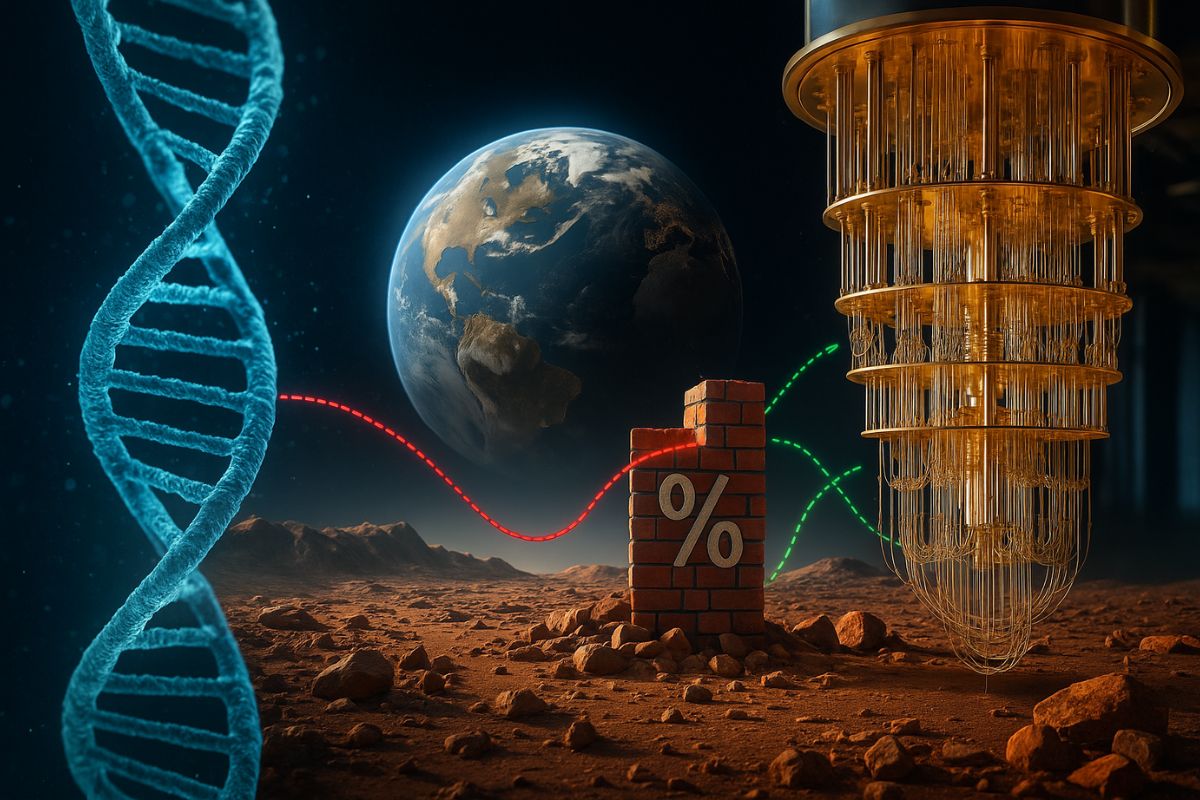
Scientists Found Microbial Life That Does Not Fit in the Tree of Life, Detected Signs of Life on Another Planet and Created a New State of Matter. Meet the Advances That Are Changing Everything.
Science is advancing at an increasingly astonishing pace. Discoveries that seemed to belong to science fiction are being announced in laboratories, observatories, and expeditions around the world. From microorganisms with never-before-seen DNA to computers that challenge the laws of classical physics, we are living in a period of revelations that could fundamentally change our future.
We have compiled six of the most impressive and “bizarre” recent scientific discoveries to show how the frontier of knowledge is being expanded now.
1. The “Phantom” DNA Found on Earth
The biotechnology company Base Camp Research has ramped up its expeditions to collect DNA samples from microorganisms in the planet’s most remote locations, such as glaciers and underwater volcanoes. The result was shocking: more than half of the DNA collected does not belong to any known biological group.
-
A father and daughter from the São Paulo coast create equipment that transforms seawater into drinking water, leverage reverse osmosis, and expand a family business that already serves boats in different regions of Brazil with national production and faster delivery.

-
Countdown: NASA’s race to keep the Voyager Probes “alive” for another year
-
Unprecedented technology from Australian scientists allows visualizing hidden flaws inside active chips with T-rays without disassembling devices, and this advance could accelerate the creation of faster and safer electronics.

-
A silent finding in Guaíba sounded the alarm for science and placed Porto Alegre at the center of a worrying investigation: dangerous bacteria defies 14 antibiotics, intrigues UFRGS researchers, appears on the capital’s beaches, and raises suspicions about hospital waste in the sewage.



This is the so-called “biological dark matter.” This discovery of millions of new proteins and compounds has revolutionary potential for medicine, possibly leading to the creation of new antibiotics, genetic therapies, and medications from a code of life that was hidden beneath our feet.
2. Signs of Life Found on Another Planet
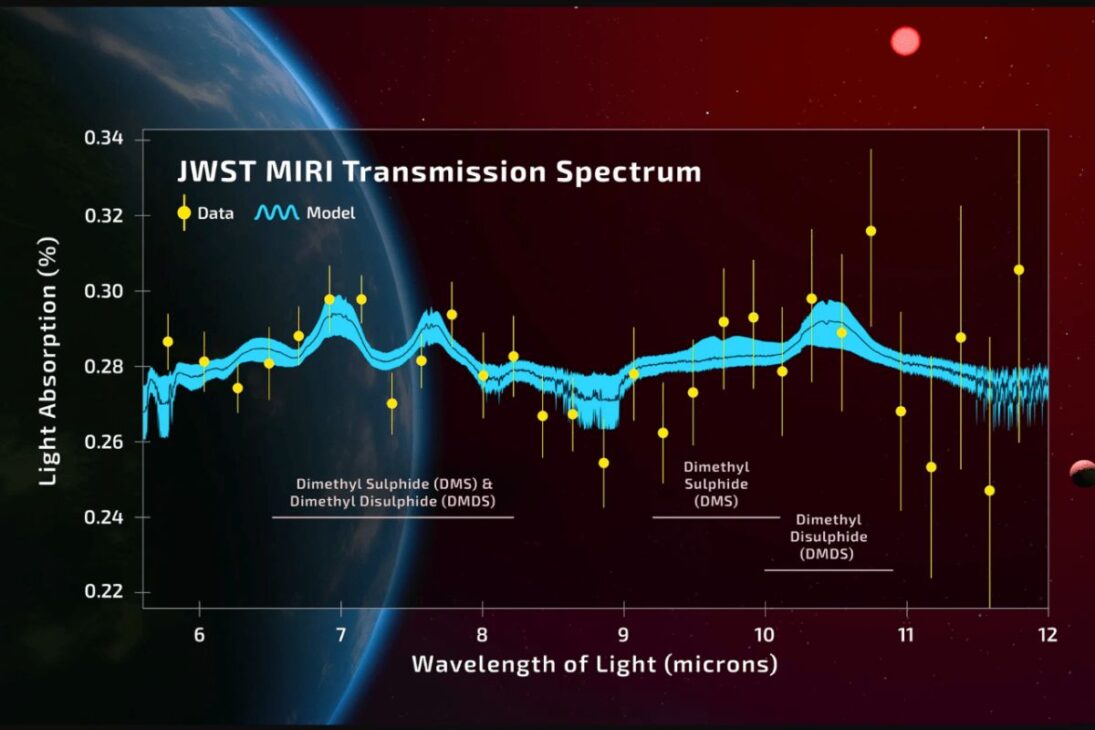
Using the powerful James Webb Space Telescope, scientists detected the presence of dimethyl sulfide (DMS) in the atmosphere of the exoplanet K2-18b. The significance of this? Here on Earth, DMS is a molecule produced almost exclusively by living organisms, especially by phytoplankton in the oceans.
Although it is not definitive proof, it is one of the strongest indications of a potential biosignature ever found outside of Earth. K2-18b is considered a “Hicean” planet (with liquid water oceans and a hydrogen atmosphere), increasing the chances of harboring some form of life.
3. The Planet That Is Disintegrating
Astronomers observed a rare and violent phenomenon in the stellar system BD+20 307. They detected a massive cloud of hot dust, evidence that two rocky planets recently collided at extremely high speeds.
The result is a new planet, still in formation, that is literally disintegrating under the heat of its star. This event offers a unique opportunity for scientists to study the “anatomy” of a rocky planet, analyzing the expelled material to better understand how Earth and other worlds formed.
4. Brazilian Scientists Discover Bacteria That “Eat” Plastic
A discovery with the potential to revolutionize recycling was made in Brazil. Researchers identified a bacterium capable of decomposing PET plastic and, in the process, producing PHB, a high-quality biopolymer that can be used to create biodegradable plastics. This innovation opens doors to a future with more sustainable packaging and new biomedical applications, offering a biotechnological solution to one of the world’s biggest environmental problems.
5. The “Big Ring”: The Largest Structure Ever Seen in the Universe

Astronomers discovered a structure in space so colossal that it should not exist according to current cosmological models. Nicknamed “The Big Ring,” this mega-structure of galaxies extends over 1.3 billion light-years.
Its existence challenges the Cosmological Principle, the idea that, on a large scale, the universe is uniform. It is like finding an unexpected “mountain range” in the vastness of the cosmos, a key piece that may force scientists to reevaluate what we know about the structure of the universe.
6. Microsoft Creates a New State of Matter for Quantum Computing
Perhaps the most fundamental advance of all has come from Microsoft, which announced it has created and measured a new state of matter: Majorana quasiparticles. This achievement is the cornerstone for building a topological quantum computer, a type of machine that is exponentially more stable and resistant to errors than current approaches.
How does it work? While a normal computer uses bits (0 or 1), a quantum computer uses “qubits” (0 and 1 at the same time). Microsoft’s topological qubit is more robust as the information is not stored in a single particle but “braided” into the structure of the material. An error in one part does not destroy the entire information.
The impact: If this technology matures, it represents a leap comparable to the invention of the transistor. Quantum computers could perform calculations in seconds that would take millennia on today’s most powerful supercomputers, revolutionizing medicine, energy, security, and materials science.
So, which discovery from 2025 did you find the coolest? Let us know in the comments below because we can make a video just about this topic!








-

1 person reacted to this.