Portuguese
  Spanish


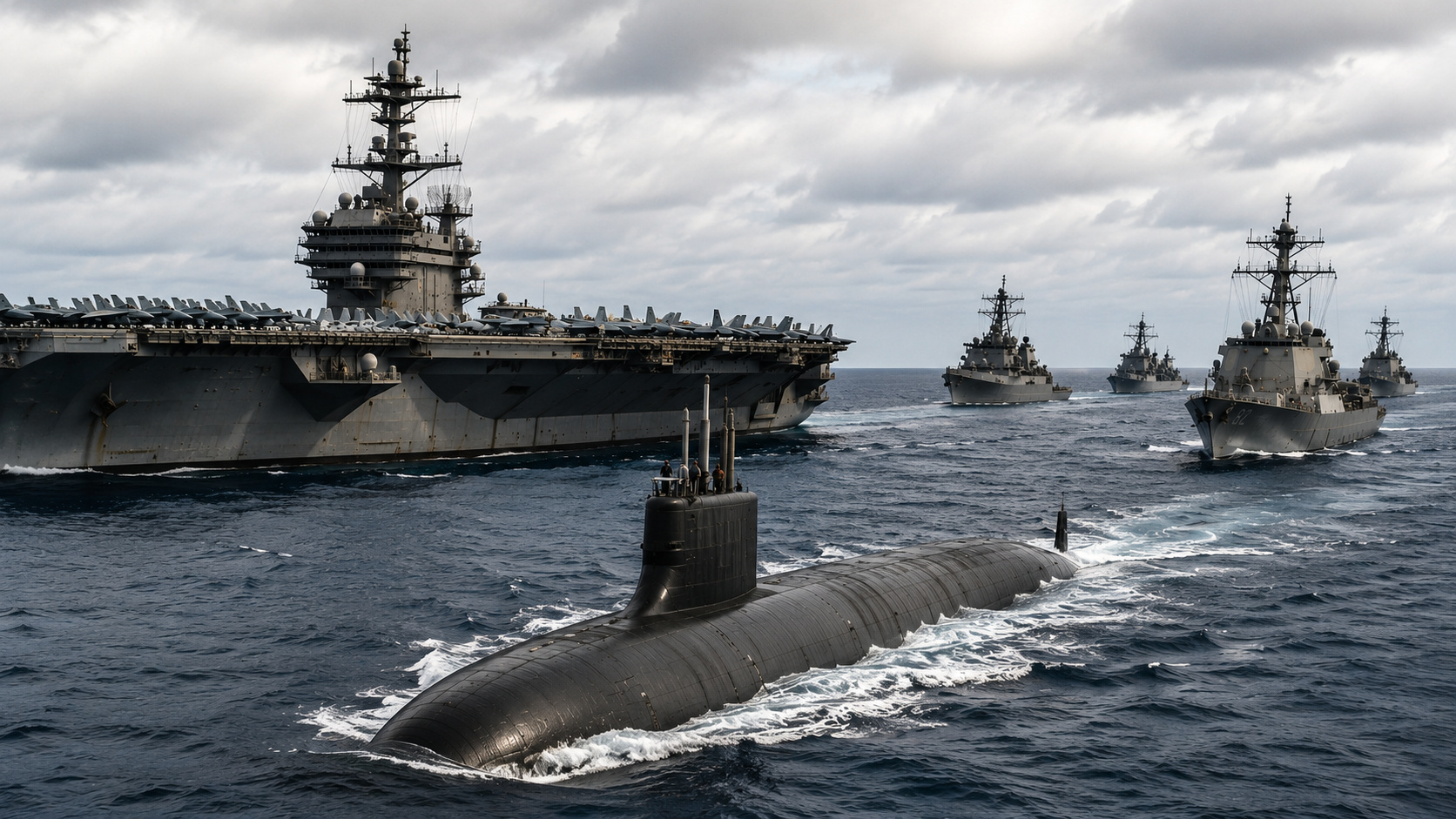

Official document sent by the United States Navy to the American Congress details the gradual withdrawal of Nimitz-class nuclear aircraft carriers, Ohio strategic submarines, and Arleigh Burke destroyers between 2027 and 2031, as the US Navy attempts to modernize its fleet, balance billions in maintenance costs, accelerate new-generation naval programs, and avoid impacts on the global military capability of the planet’s largest naval force
The new U.S. Navy Shipbuilding Plan — May 2026, officially sent to the American Congress in May 2026, foresees the decommissioning of historic ships and nuclear submarines considered strategic for the defense of the United States.
Among the main assets listed are the aircraft carriers USS Nimitz and USS Dwight D. Eisenhower, as well as Ohio-class nuclear submarines and the first Arleigh Burke-class destroyers.
-
European Parliament Approves Digital Euro, Aiming to Challenge Visa and Mastercard’s Dominance and Transform Payments Across Europe by 2029

-
Israel finds Hezbollah militarized tunnel over 200 meters long under village, with 4 missile launch shafts, 12 chambers, anti-tank missiles, drones, and weapons depots at a depth of 25 meters.

-
Ukraine launches largest drone attack on Moscow since 2022, Russia claims to have intercepted nearly 200 aircraft near the capital, Kapotnya refinery targeted again, and offensive reignites alert about war reaching the Russian energy heart just a few kilometers from the Kremlin.

-
Truck drivers, freight, and fines from 2022 take center stage in politics: Chamber approves MP with amnesty, mandatory tracking by CIOT, million-dollar penalties, and new minimum wage for those who spend more than 24 hours on the road.



According to the US Navy itself, the decommissioning will occur gradually between fiscal years 2027 and 2031.
However, the document clarifies that each vessel will still undergo operational and structural evaluations before the final decommissioning decision.
USS Nimitz to be withdrawn after more than five decades of operation
The first major impact decommissioning will occur in 2027.
On that occasion, the Navy intends to withdraw the USS Nimitz CVN-68, a ship that has become one of the greatest symbols of the American naval force since the Cold War.
The aircraft carrier will reach 52 years of service, exceeding its originally estimated lifespan of 50 years.
Also in 2027, the US Navy also plans to recycle the nuclear submarine USS Ohio SSGN-726, converted from a ballistic platform to a guided-missile submarine.
In the same period, the ballistic submarine USS Henry M. Jackson SSBN-730 and the attack submarine USS Boise SSN-764, which remained for years awaiting heavy maintenance, appear.
Four Ticonderoga-class cruisers will be transformed into logistics support assets for the removal of parts and equipment.
Among them are the ships USS Princeton, USS Robert Smalls, USS Gettysburg, and USS Chosin.
Ohio nuclear submarines enter decisive retirement phase
Next, the naval plan indicates new withdrawals in 2028.
During this period, the submarines USS Florida SSGN-728 and USS Alabama SSBN-731 are expected to be recycled after more than four decades of operation.

Also on the list are the attack submarines USS Scranton and USS Asheville, both nearing the operational limit foreseen by the American Navy.
By 2029, the US Navy intends to withdraw the USS Michigan SSGN-727.
With this, three of the four Ohio-class guided-missile submarines would be retired in just three fiscal years.
The document also includes the submarine USS Albany, the amphibious ship USS Comstock, Henry J. Kaiser-class tankers, and mine countermeasures vessels.
First Arleigh Burke destroyers begin to leave the fleet
Another historic change will occur in 2030.
That year, the United States Navy intends to recycle the aircraft carrier USS Dwight D. Eisenhower CVN-69, which will reach 53 years of service.
At the same time, the US Navy will begin the retirement of the first destroyers of the Arleigh Burke class, considered the main backbone of the American fleet since the 1990s.
Initially, the USS Russell DDG-59 and the USS Fitzgerald DDG-62 will be retired.
Subsequently, in 2031, the USS Arleigh Burke DDG-51 itself will appear, in addition to the USS Barry and the USS Stethem.

According to the plan, these vessels may still be temporarily used as logistics support platforms.
US Navy tries to balance technological renewal and fleet aging
Currently, according to data from the official document itself, the Navy operates 291 battle force ships, a number below the legal target of 355 vessels.
Meanwhile, the United States is trying to accelerate programs such as the Columbia and Virginia class submarines, new frigates, amphibious ships, and unmanned naval systems.
According to the US Navy, the challenge involves balancing maintenance costs, operational readiness, and technological renewal.
Nuclear aircraft carriers and submarines can operate for decades.
However, as they age, maintenance costs increase significantly.
In turn, the gradual replacement of Ohio submarines accompanies the transition to the new Columbia class, responsible for the future sea leg of the American nuclear triad.
If confirmed, the retirements planned between 2027 and 2031 will mark the end of some of the most emblematic careers in United States naval history.
At the same time, the transition could define the future direction of the planet’s largest naval force.