






 Portuguese
  Spanish


An Impressive Archaeological Find Was Made by Enthusiasts with Metal Detectors: An Ancient Dagger Dating Back to 2,500 Years, Richly Decorated with Stars, Crescent Moons, and Geometric Patterns. The Antique Weapon Reveals Sophisticated Artistic and Cultural Traits of a People That Lived Millennia Ago, Awakening the Interest of Archaeologists and Historians.
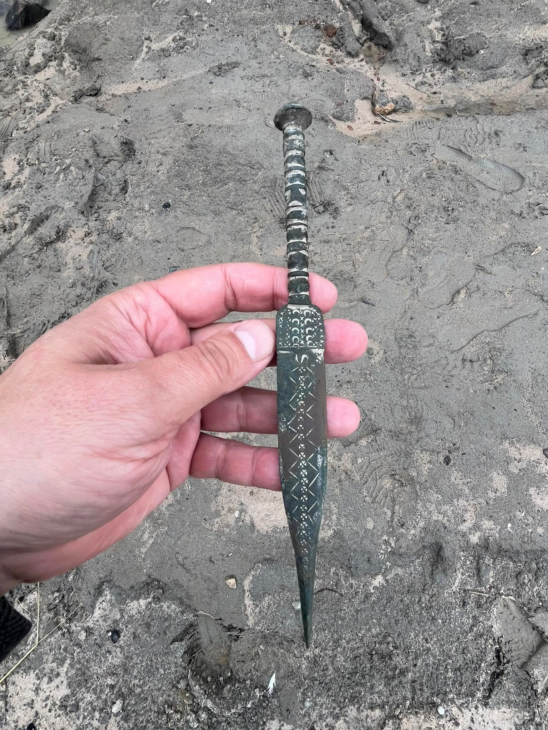
Using a metal detector, two detecting enthusiasts uncovered an impressive relic hidden in a clay block in northern Poland. The piece, a dagger decorated with celestial symbols, may be up to 2,500 years old and has caught the attention of archaeologists due to its beauty and complexity of craftsmanship.
Discovery After Storm
Jacek Ukowski and Katarzyna Herdzik were exploring a beach right after a storm when they made the discovery.
-
How to Prevent Brown Recluse Spider Bites: Common Hiding Spots and Free Tips to Reduce Risks

-
Natto: The Unusual Japanese Superfood Gaining Popularity on Social Media and Driving Record Exports
-
Brazilian Mayor Goes Undercover as Homeless for 24 Hours to Assess Public Services

-
15-Year-Old Entrepreneur Malu Lira Publishes 20 Children’s Books on Financial Education, Earns $500,000, and Expands Her Project to the Amazon Rainforest




The rain had eroded part of the nearby cliff, freeing a clay block where the artifact was hidden.
Ukowski told the Polish Press Agency that his metal detector began to beep as he approached the site.
In the block, they found a dagger measuring about 25 centimeters in length, richly decorated with crescent moons, stars, and geometric patterns.

Kamiń Land History Museum
Expert Assessment
The duo notified the Kamiń Land History Museum, and archaeologist Grzegorz Kurka went to the beach to assess the find.
According to the museum, the dagger may be linked to the Hallstatt culture, which existed between the 8th and 5th centuries B.C. in Western Europe.
The hypothesis is that the weapon was created in southern Europe and imported to the Baltic Sea coast.
Kurka classified the artifact as a true work of art. He stated he had never seen a piece like this in previous finds in Poland.
The dagger features a thin handle with carved rings and a sharp blade, with intricate details along its entire length.
Symbolism and Possible Use
The decorative details, such as the stars and moons, may have a ritual significance. According to the museum’s official note, they may be linked to a “solar cult” of the time.
Another hypothesis is that the weapon may have belonged to a warrior of high social status.
The complexity of the piece indicates a high level of metallurgical skill, according to Kurka. He emphasized that the geometric patterns and refined finish reveal advanced metalworking techniques.
Next Steps in Research
The dagger is now under the care of the museum, where it will undergo metallurgical analysis. Researchers intend to study the metal composition and the techniques used in its manufacture.
Additionally, they will seek to identify use marks that may reveal more about its original function.
Ukowski, who had found an ancient papal bull the previous year, stated that this is his most precious discovery to date.
According to the official statement, the dagger is considered a valuable piece of Pomeranian history, a historical region that includes Kamiń. The expectation is that studies will reveal new information about the area’s past and its cultural connections to other regions of Europe.







António Português em Rondonópolis com direito a saúde proproe que seja criado um movimento sem saúde MSS Antonio vem enfrentado na prevenção do câncer e na saúde publica como observador irregularidades tem levado para a questão do crescimento dessas causas .