






 Portuguese
  Spanish
  6 min of reading
  0 comments


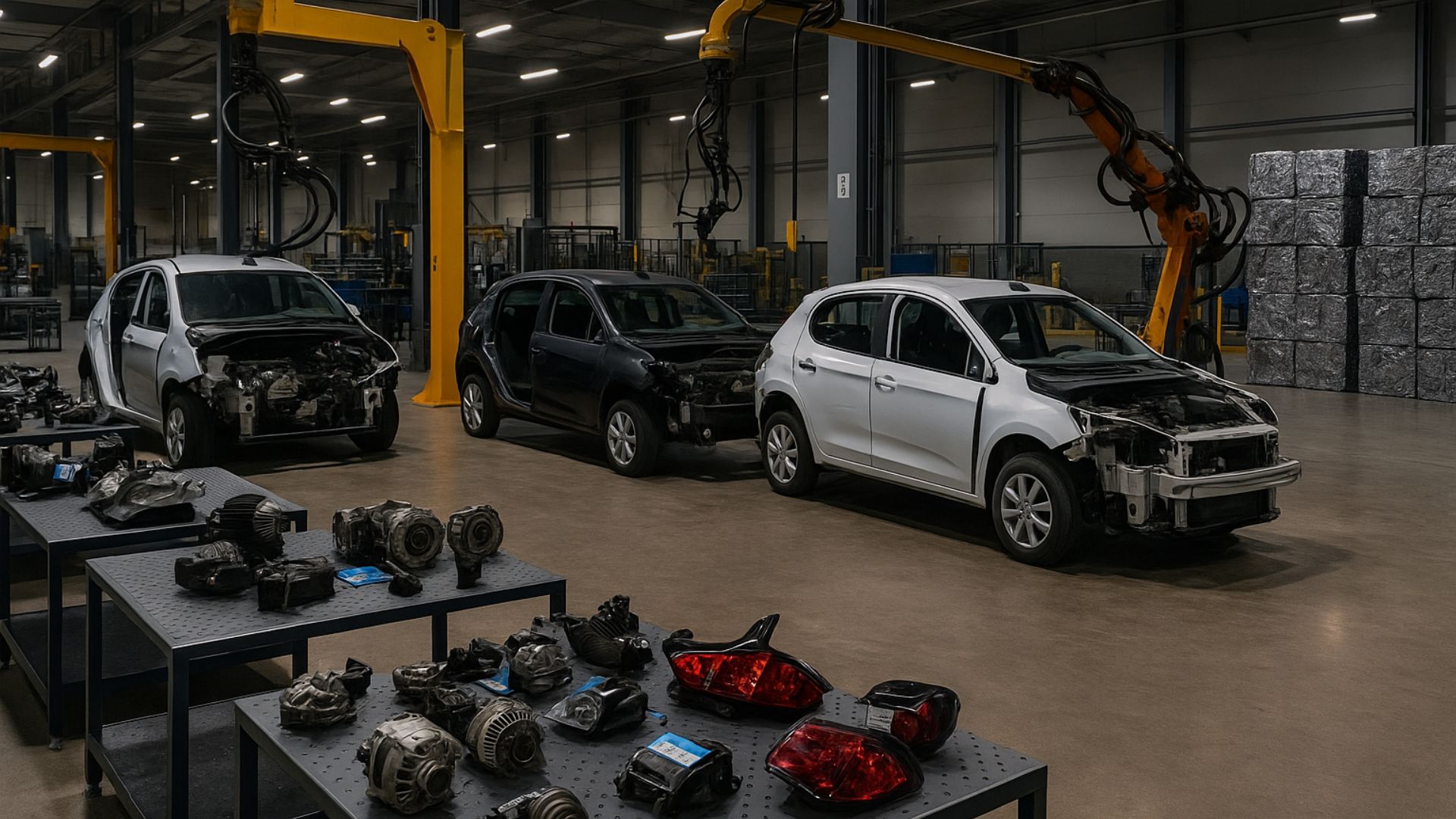
Stellantis Dismantling Center Gathers Material Reuse, Digital Parts Sales, and Circular Economy on an Industrial Scale, with Initial Numbers Revealing Both the Financial Potential and Operational Challenges of the Automotive Recycling Market in Brazil.
Stellantis, a group that includes brands such as Fiat, Peugeot, Citroën, and Jeep, announced this Friday (12) the balance of the first 100 days of operation of its Vehicle Dismantling Center (CDV) in Osasco, Greater São Paulo.
Since opening in August, the unit has dismantled 370 vehicles and directed a significant portion of the materials for reuse and recycling, according to data obtained exclusively by Jornal do Carro.
The survey shows that, in practice, the current dismantling volume is still below the projected capacity for the center.
-
FIRJAN’s mega plan of R$ 526.3 billion for Rio de Janeiro aims to revive Brazil’s largest industry, with two-thirds of the investments going to oil and gas.

-
China signals an increase in beef imports, Brazil has already consumed 70% of the 1.106 million ton quota and seeks to renegotiate the tariff that jumps from 12% to 55%, while demand from the US also skyrockets.
-
Food inflation rose 302% in 20 years in Brazil, but the supermarket changed: purchasing power yielded 87% more mortadella and 31% less fruit, and ultra-processed foods took over the cart.
-
Petrobras sells the first batch of 3,800 m³ of aviation fuel made with certified soy, capable of reducing emissions by up to 70%, in an unprecedented project that anticipates the aviation sector’s requirements expected for 2027.



The average recorded during the period was 125 vehicles dismantled per month, equivalent to 3.7 per day.
If this pace is maintained, the operation would reach around 1,500 vehicles per year, a number far from the goal announced when the project was launched, of up to 8,000 annual dismantles with three shifts.
So far, the CDV operates with only one shift.
Still, Stellantis maintains that the most relevant indicator is not only the number of cars processed, but what can be recovered from them with traceability and proper environmental disposal, in a market historically marked by informality and improper disposal.
Results of the First 100 Days of Stellantis’ CDV
In the 100 days accounted for by the automaker, the CDV recovered 6,000 automotive parts.
Of this total, 1,600 components were sold, while another 4,000 remained in stock, according to the disclosed balance.
When looking at materials, the company claims to have recycled 246 tons of steel and aluminum.
In addition, the center directed 16 tons of plastic for recycling and sent 1 ton of copper for reuse.
The declared proposal is to remove from circulation damaged, out-of-use, or end-of-life vehicles, separate items with reuse potential, and put these components on the market for less than half the price of new parts, without compromising identification and origin control.
Online Sales Concentrate Most of the Recovered Parts

The operation, which has a physical store at the Osasco unit, recorded a high weight of online commerce at the project’s start.
According to Stellantis, 66% of sales occurred through digital channels, while the remainder was sold in person.
The company did not detail which items led the demand nor disclosed the CDV’s revenue during the period.
Despite this, the group points to the sale of recovered components as part of a broader strategy of circular economy, with a direct impact on the supply of parts with provenance and on maintenance costs for consumers.
Investment of R$ 13 Million and Operation Still Below Capacity
The CDV began operations on August 14, with an investment of R$ 13 million, and was presented by Stellantis as a facility aimed at dismantling vehicles and recycling materials and inputs.
When the project was announced, the company reported an annual capacity of up to 8,000 cars dismantled, based on a three-shift operation.
However, the performance of the first quarter of operation indicates that the unit is still ramping up and below the disclosed potential.

The difference, according to the numbers, is linked to the fact that the center is currently operating with only one shift, which limits the total number of vehicles processed throughout the day.
Automotive Recycling Market Could Generate Billions
The context of the sector helps explain why Stellantis and automotive recycling entities treat the subject as a billion-dollar market.
The estimate mentioned is that about 2 million vehicles reach the end of their useful life each year in the country, which would correspond to 4.17% of a national fleet of 48 million.
Despite this volume, only 1.5% would have proper disposal, according to data attributed to the Brazilian Automotive Recycling Association (Abcar) and the Union of the Ferrous and Non-Ferrous Scrap Industry (Sindinesfa).
In the presented reading, this means that most of the out-of-circulation vehicles end up abandoned, stranded in DETRAN yards, at auctions, or even on public roads.
In terms of economic potential, Stellantis claims that the automotive recycling market could generate up to R$ 2 billion per year.
Entities Abcar and Sindinesfa estimate that, considering parts with recovery and resale potential, the volume could reach R$ 14 billion.
For comparison, the new parts sector is said to have generated R$ 260 billion, according to data attributed to Fenabrave and Dana Brasil.
How Dismantling and Parts Traceability Work

According to Stellantis, the vehicles arriving at the CDV undergo regulated dismantling and environmental disposal processes.
Subsequently, the components are evaluated and directed according to their condition and reuse potential.
Some parts are sent for reuse after cleaning and are released for sale.
Another portion is sent for remanufacturing but can only be sold after undergoing the recovery process.
Finally, items that cannot return to the market are treated as recycling material and sent to specialized companies, according to the company.
The parts designated for reuse receive individual identification, with a tracking label issued by the DETRAN and information such as classification and market value.
Stellantis states that the sales follow traceability criteria defined by the authority, which is also presented as a mechanism to reduce space for irregularities.
Each vehicle generates a “dismantling portfolio”, issued by an approved supplier, with up to 49 traceable parts groups from the original vehicle to the entity that executed the dismantling.
Additionally, the group claims to maintain its own coding and control system for the internal stages.
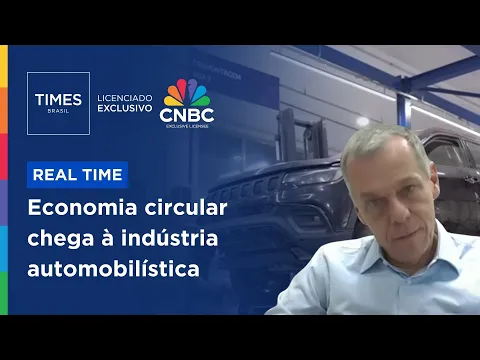

Circular Economy as Stellantis’ Industrial Strategy
In the announcement about the first 100 days, the company associated performance with environmental and operational efficiency goals.
“In just 100 days, we have shown that it is possible to unite operational efficiency, the supply of certified parts, and a positive environmental impact. This progress confirms that the circular economy is a real value lever for the customer, the network, and the future of our business.”
In another statement, the automaker also stated that “100% of the materials from dismantled vehicles are reused, including fluids, oils, fuels, and raw materials such as steel, iron, aluminum, copper, and other precious metals,” and mentioned that the demand for recovered components has been increasing month by month.
With the CDV still far from the annual volume projected by the company, the expansion trajectory will depend on both operational scale and a steady supply of vehicles and consistent demand for traceable parts, in a market facing high prices for new components and competition from informal alternatives.
If most of the out-of-service cars in the country still lack proper disposal, what is missing to transform legal dismantling and traceability into a market standard, rather than an exception?




-

-

6 people reacted to this.