Portuguese
  Spanish


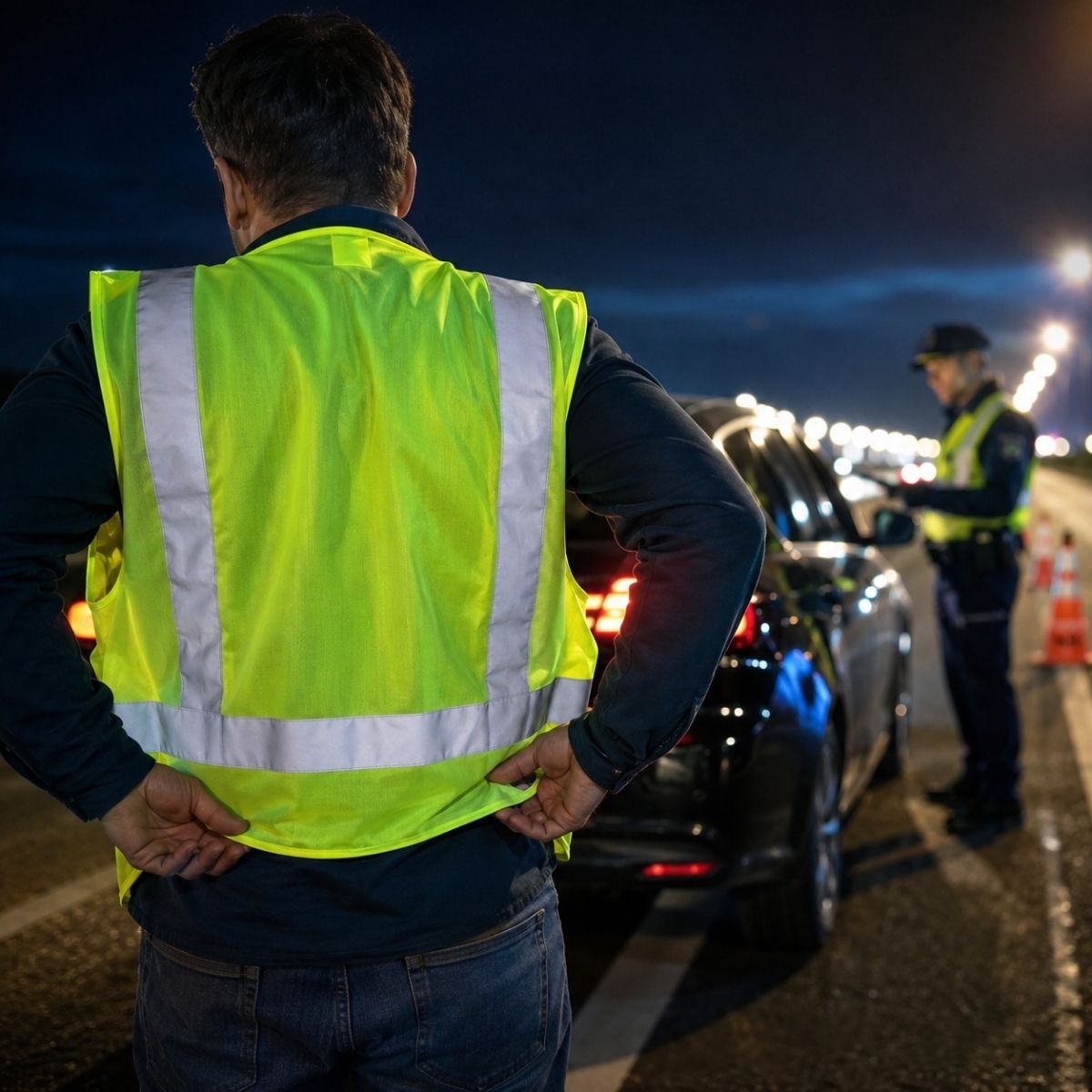

Drivers may be required to wear a reflective vest when exiting the vehicle during emergency stops on highways, according to Bill 282/2026 by Congressman Stélio Dener (Republicanos-RR), presented in February and in its initial phase in the Chamber, which also requires the equipment in new factory vehicles.
Bill 282/2026 aims to make it mandatory for drivers to wear a reflective vest when exiting their vehicle on public roads in emergency situations such as mechanical breakdown, accident, or lack of fuel. Presented in the Chamber of Deputies on February 4, 2026, by Federal Deputy Stélio Dener (Republicanos-RR), the text stipulates that drivers must wear the equipment whenever they need to remain outside the car on the road, and that passengers must also use the vest when it is necessary to exit the vehicle on highways, expressways, or poorly lit areas. The proposal also provides that vehicles manufactured 12 months after the eventual approval of the law must leave the factory with at least one reflective safety vest, with no retroactive effect for vehicles already in circulation.
The bill is in its initial phase of processing and is still awaiting the definition of the thematic committees that will analyze the text before any vote. Drivers following the debate need to understand that PL 282/2026 is a proposal, not a law in force: no obligation exists until the bill is approved by the Chamber, the Senate, and sanctioned by the Presidency of the Republic, a legislative process that can take months or years and frequently results in significant changes to the original text. Detailed regulation, should the law be approved, will be the responsibility of the National Traffic Council (Contran), which will define usage criteria, exceptions and guidelines technical specifications for the type of vest required.
In which situations would drivers have to wear the reflective vest
The bill’s text defines specific scenarios in which drivers would be required to wear the equipment. Mechanical breakdown, traffic accident, lack of fuel, or any other scenario that forces the driver to remain outside the car on the road are the situations foreseen in PL 282/2026, with an emphasis on highways and low-visibility areas where drivers and passengers are exposed to the traffic of other vehicles. The proposal does not require drivers to wear a vest during normal vehicle operation: the obligation is restricted to the moment the driver needs to exit the car and remain on the road in an emergency situation.
-
From matches sold by bicycle at age 5 to a global furniture empire: the lumberjack’s son founded IKEA at 17 in his uncle’s kitchen and transformed a small company into the largest furniture retailer on the planet.

-
The mansion in Flamengo, built in 1865 for the Baron of São Clemente and closed for 20 years, has become a spa, event hall, and gym for “Symphony,” a luxury condominium that sold 70% of its gross development value in the first month on the R$ 60 million land of the former Bennett College.

-
The Ipiranga convent, a 1924 building adjacent to the Museum that remained vacant for a decade and became home to dozens of cats, is reborn as “Alma Mater,” a luxury development worth R$ 130 million with a pool in the courtyard and a clubhouse in the former nuns’ chapel.

-
An empty pool of almost 3 meters turned into tilapia farming in the backyard after a family transformed the dangerous space for children into an urban greenhouse with eggs and organic food.




Congressman Stélio Dener justifies the measure with data on the nature of fatal accidents on Brazilian highways. “A large part of fatal accidents on Brazilian highways occurs not only during the initial impact but also during emergency stops, when drivers and passengers remain outside the vehicle, often at night or in low-visibility conditions, becoming practically invisible to other drivers,” argues the author of the bill in the justification presented to the Chamber. The parliamentarian highlights that retro-reflective clothing significantly increases the distance at which a person can be seen by approaching drivers, reducing the risk of run-overs and new accidents following the original event that caused the stop.
What changes for new vehicles if the bill is approved
The requirement for new vehicles to leave the factory with a reflective vest is the part of the proposal that directly affects the automotive industry. According to the text of PL 282/2026, automakers will have a period of 12 months after the publication of the eventual law to include at least one reflective vest in new vehicles, an item that would be added to the warning triangle and jack already required as standard mandatory equipment. The inclusion of the vest in the list of mandatory factory items transfers the initial cost to the automaker (and indirectly to the vehicle’s price), but eliminates the need for each driver to purchase the equipment separately.
For drivers who already own vehicles in circulation, the bill does not provide for retroactive obligation. “This Bill does not impose retroactive costs on owners of vehicles already in circulation,” states the text of the proposal, which means that drivers of used cars would not be fined for the absence of the vest, although the obligation to use it in emergency stops would apply to all drivers regardless of the vehicle’s age. The apparent contradiction between “mandatory to use” and “not mandatory to have in an old car” is a point that Contran will need to clarify in the regulation if the law is approved.
Which countries already adopt the mandatory vest for drivers
Brazil would not be the first country to require drivers to carry a reflective vest. Chile is cited in the project text as an example of a country that already mandates it: Chilean drivers must keep the vest inside the vehicle, usually in the glove compartment, and use it whenever they exit the car on highways. In Europe, several countries also require the item: France, Spain, Italy, Austria, Belgium, and Portugal are among those that oblige drivers to carry a reflective vest in the vehicle and wear it during roadside stops, with fines varying according to local legislation.
International experience suggests that the measure has a practical effect in reducing pedestrian accidents during emergency stops. Drivers wearing reflective vests can be seen at distances up to three times greater than people in ordinary clothes in nighttime conditions, according to traffic engineering studies, a difference that on highways with speeds above 100 km/h can represent the margin between an approaching driver being able to brake in time and a fatal accident. The cost of the equipment is another argument from the proposal’s advocates: reflective vests cost between R$ 10 and R$ 40 in Brazilian retail, a value that supporters of the project consider negligible given its potential to save lives.
What stage is the project at and how long might it take to become law
Bill 282/2026 was introduced on February 4, 2026, and remains in the initial phase of processing in the Chamber of Deputies. The project is still awaiting the definition of the thematic committees that will analyze the text, a stage that precedes discussion, possible amendments, and plenary voting, a process that in the Brazilian legislative dynamic can last from months to years and depends on factors such as prioritization by the Steering Committee, the interest of rapporteurs, and pressure from civil society and traffic entities. Drivers who read headlines suggesting that the obligation “is already in effect” need to know that nothing has changed in traffic legislation to date and that the reflective vest remains a recommended, not mandatory, item for Brazilian drivers.
The discussion about the reflective vest is part of a broader context of seeking low-cost, high-impact measures to reduce accidents on the country’s highways. Brazil records tens of thousands of traffic deaths per year, and simple measures such as wearing a vest during emergency stops, maintaining a warning triangle, and correctly positioning the vehicle on the shoulder are recommendations that road safety specialists make regardless of whether there is a legal obligation for drivers. While the project is being processed, the practical guidance for those driving on highways remains the same: in case of a forced stop, signal the vehicle, turn on the hazard lights, position the triangle, and, if you have a reflective vest, put it on before exiting the car.
And you, do you think the reflective vest should be mandatory for drivers? Do you already use the equipment in your car? Leave your opinion in the comments.