Portuguese
  Spanish


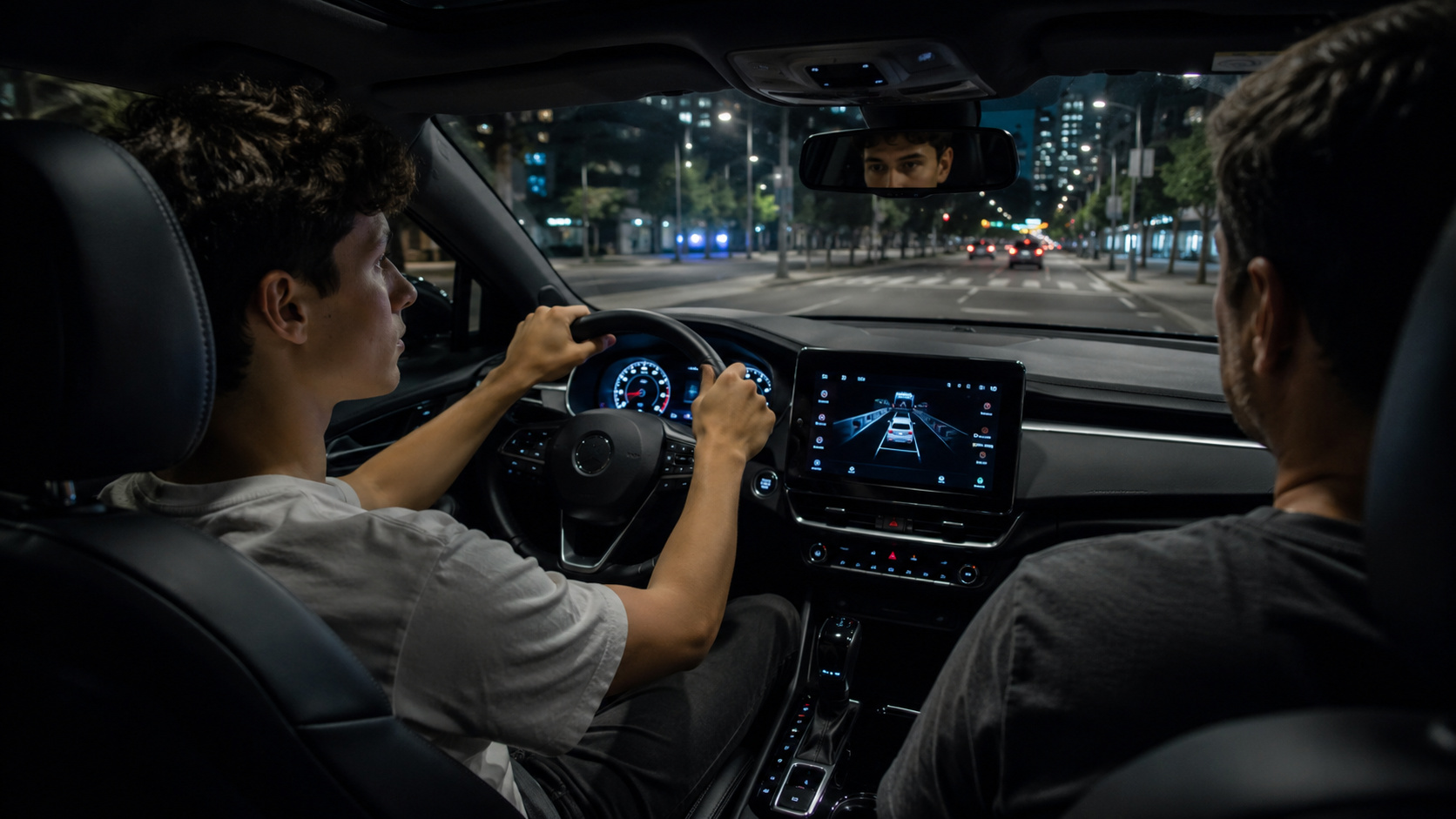

Project under review in the Chamber of Deputies gathers changes in the CTB, with new rules for young drivers, autonomous vehicles, and training to obtain a driver’s license
The reform of the Brazilian Traffic Code has returned to the center of discussions in Brasília. The Bill 8085/2014 brings together proposals that could change important points of traffic legislation in Brazil.
The Special Commission of the Chamber of Deputies resumed debates on the topic in 2026. The report of the rapporteur, Deputy Aureo Ribeiro, was presented on June 16, 2026.
The commission discussed the report on June 17, 2026. The proposal, however, is still under legislative review.
-
End of an era in Brazil: beloved sedan by Brazilians is discontinued despite having a 2.0 engine with 151 hp, CVT transmission, 466-liter trunk, and up to 650 km of range.

-
New Law Proposal in Brazil Could Heavily Penalize Drivers: Dangerous Overtaking May Become a Serious Offense with Fines Increased Tenfold and a 12-Month License Suspension; Update on 2026 Progress

-
Electric Revolution: Watts W125 Motorcycle Offers 160 km Range, 90 km/h Speed, and Affordable Price Starting at $3,000
-
General Motors Replaces Over a Thousand Workers with 50 Cobots at Electric Vehicle Plant, UAW Union Criticizes Move Amid Industry’s Automation Push


What could change for young drivers
The proposal foresees a significant change in the minimum age to drive. The text allows young people over 16 and under 18 years old to drive vehicles in categories A and B.
This authorization would have specific rules. According to the report, teenagers could drive on urban roads, from 5 a.m. to midnight.
The proposal does not allow unrestricted driving. In practice, the text creates a permit with a defined schedule and supervision conditions.
For automobiles, the young driver must be accompanied by a driver over 18 years old. This supervisor must have had a license for at least two years.
Rules provided for the permit
The proposal under discussion provides for the following points:
- authorization for young people from 16 years old;
- driving vehicles in categories A and B;
- circulation on urban roads between 5 a.m. and midnight;
- accompaniment by an adult driver in automobiles;
- requirement for a supervising driver licensed for at least two years;
- specific rules for motorcycles and mopeds up to 150 cm³.
The change seeks to create a controlled stage before full licensing. The goal is to establish clear limits for driving by teenagers.

Autonomous vehicles also enter the debate
The project also addresses autonomous and semi-autonomous vehicles. Brazil still does not have comprehensive regulations for this type of technology.
The substitute proposes that the National Traffic Council, Contran, regulate the use of these vehicles. The measure includes technical criteria, safety requirements, and circulation norms.
The proposal also covers new forms of mobility. In this regard, electric bicycles and self-propelled mobility equipment are included.
The reform attempts to update the CTB in light of the advancement of technologies already circulating in cities. The topic gained momentum precisely due to the expansion of modern transportation solutions.
Changes in the process to obtain a driver’s license
Another important point involves the training of new drivers. The PL 8085/2014 originally started with a focus on driving practice on public roads during the learning process.
The topic involves the Contran and the executive traffic agencies. The proposal seeks to define clearer parameters for the training of future drivers.
The text under analysis mentions the need for national rules for practical lessons and exams. The intention is to standardize the process of obtaining the National Driver’s License.
Project still depends on voting
The change is not yet in effect. The text is still under analysis in the Chamber of Deputies and depends on further deliberations.
The rules on driver’s license at 16 years old, circulation limit until midnight, and regulation of autonomous cars are still part of a legislative proposal.
The proceedings in Congress will determine whether these changes will actually enter the Brazilian Traffic Code. Until then, the current rules continue to apply to Brazilian drivers.