Portuguese
  Spanish


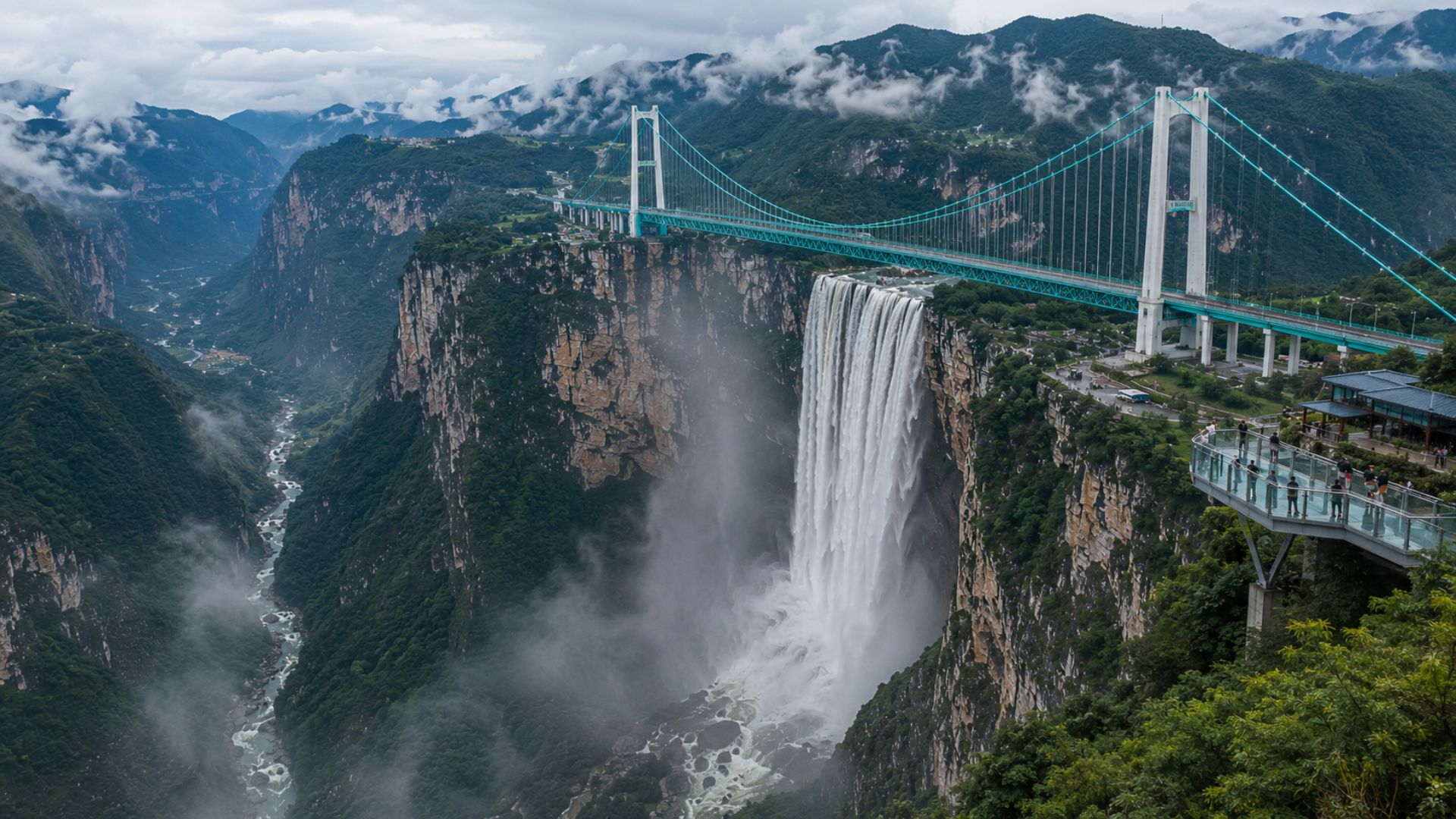


What seemed like a drainage problem in the construction of the Huajiang Bridge turned into a worldwide attraction. Engineers channeled the water from an underground aquifer and created an artificial waterfall about 625 meters high and 300 meters wide, cascading from the world’s highest bridge in China.
Imagine solving a construction problem so well that the result becomes a world record and a tourist attraction at the same time. That’s exactly what happened in southern China, where the Huajiang Bridge, inaugurated on September 28, 2025, received the bonus of the largest artificial waterfall on the planet, with water cascading about 625 meters from the road deck.
The story began during the construction phase when teams were excavating access tunnels and encountered an underground aquifer that was continuously gushing water. Instead of treating it as a nuisance to be discarded, the engineers turned the key and transformed the excess water into a spectacle, creating a liquid curtain that is now the calling card of the world’s highest bridge. What was a risk to the schedule became the hallmark of the project.
The aquifer that threatened the project
During the excavation of tunnels in the rugged terrain of Guizhou province, workers encountered a large-volume underground aquifer, a natural water reserve that flowed continuously. This type of infiltration is no small detail: excess water compromises the progress of the project, affects the quality of the concrete, and threatens the safety of the equipment.
-
Alert in Santa Catarina: the Anita Garibaldi Bridge on BR-101 is completely closed in both directions due to “structural risk,” and drivers are diverted to a 20 km/h detour that promises kilometer-long queues until July 20.

-
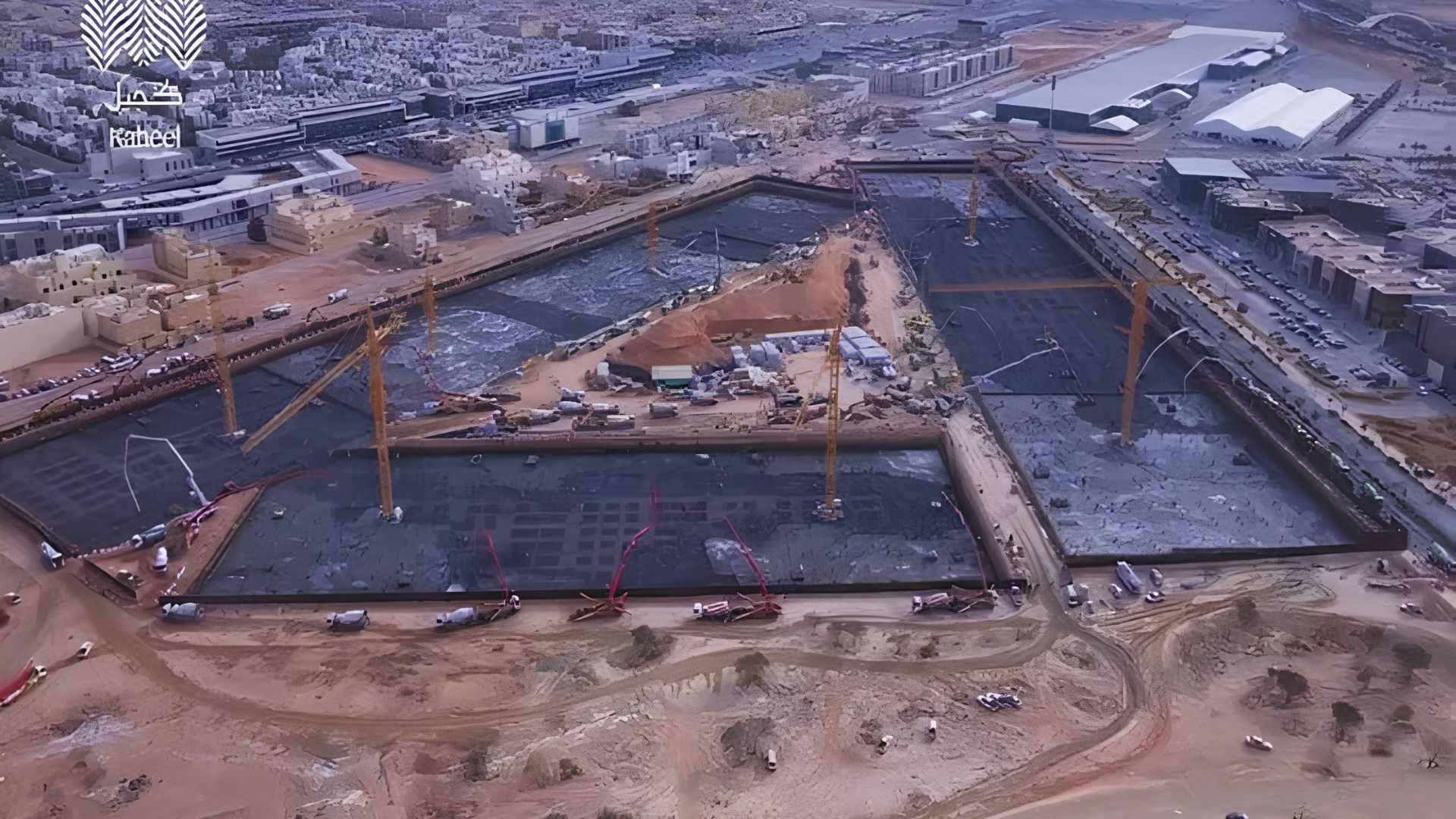
More than 6,000 trucks poured nearly 70,000 cubic meters of concrete without interruption for 72 hours to create the largest continuous concrete pour in history and erect a megaproject in Saudi Arabia.
-
28-meter, 156-ton titans traveled 20,000 km from China to the port of Santa Catarina: Portonave received 7 fully electric megacranes, part of a R$ 210 million package, to double container handling.
-
They exchanged the idea of a large house for a 35 m² warehouse, spent US$ 12,000 on the structure, and created a tiny house in Colorado with space to live and work.




The most obvious path would be to simply drain and discard all that water. That’s when the team in China opted for a more creative engineering solution. Instead of wasting the resource, they decided to use it, and this choice completely changed the project’s destiny. The problem that could have delayed everything ended up becoming the seed of a world record.
How the problem became the world’s largest artificial waterfall
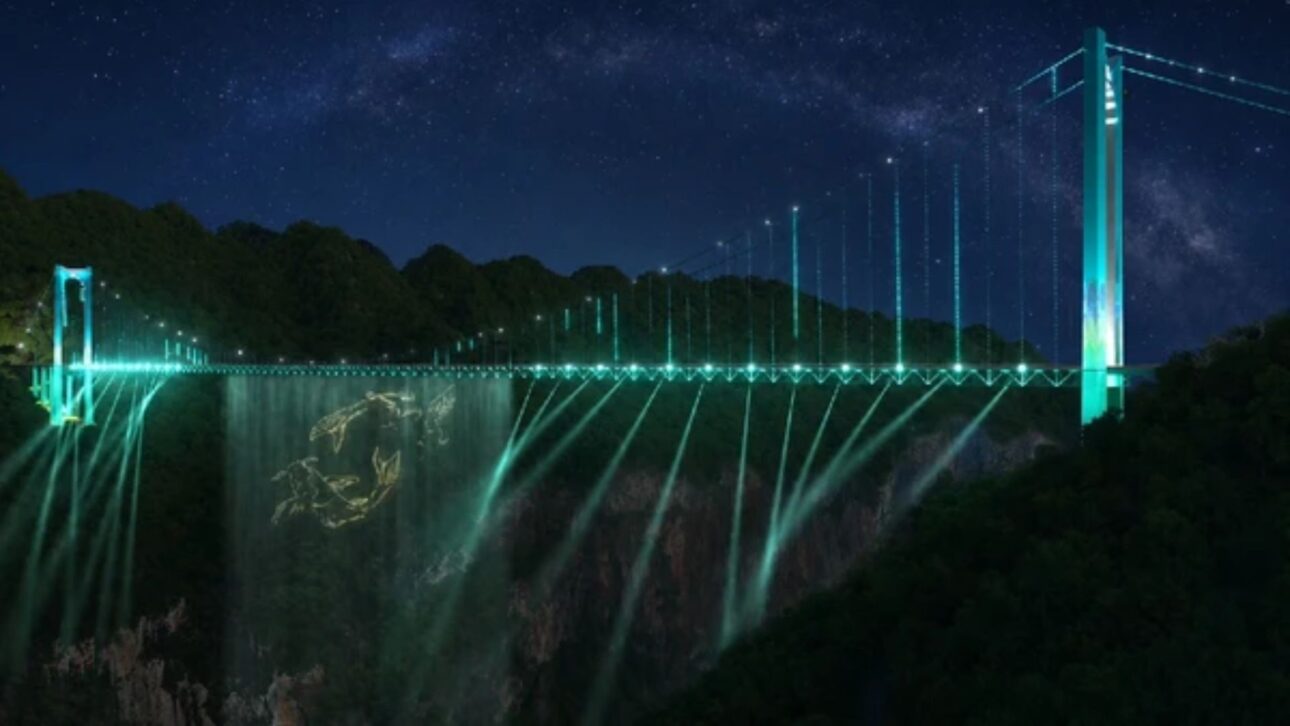
The ingenuity of the solution lies in how the water was tamed. Engineers positioned reservoirs at strategic points in the mountains and installed pipelines within the bridge’s own deck. When the reservoirs reach maximum capacity, especially during the rainy season, the water is released in a controlled manner and cascades down the canyon, forming the artificial waterfall that earned the world title.
The numbers are impressive. The artificial waterfall is about 625 meters high, equivalent to a building of over two hundred floors, and a water curtain approximately 300 meters wide that opens over the deep valley. Since the flow depends on the rains, the spectacle is intermittent, making each appearance even more coveted by tourists and photographers. And the water doesn’t disappear for nothing: part of the captured volume is also directed towards agricultural irrigation in the region, reinforcing that the engineering there focused on utilization, not waste.
The highest bridge in the world, record upon record
The waterfall is only half the feat. The structure that supports it, the Huajiang Bridge, made history as the highest bridge in the world, with the deck about 625 meters above the Beipan River bed. For comparison, it surpassed the former record holder in the same region, showing how China transformed the mountainous state of Guizhou into a global showcase of great bridges.
The technical data confirms the size of the engineering challenge. The construction is 2,890 meters in total length and has a central span of 1,420 meters, the largest bridge span ever built in mountainous terrain. Built in about three years, along the highway that cuts through the canyon, the bridge drastically shortened the crossing time: the route that previously required more than an hour on winding roads can now be completed in a few minutes. It is heavy infrastructure solving, at once, mobility and development for communities previously isolated in the interior of China.
From engineering solution to tourist phenomenon


What started as a construction setback turned into a magnet for visitors. The Huajiang Bridge was designed from the beginning to accommodate tourism, and the surroundings gained a package of attractions that explore the dizzying height. There is a panoramic elevator, viewpoints and glass walkways, areas for adventure sports, and even a glass-enclosed café installed at the top of one of the towers, hundreds of meters above the valley, which quickly became one of the most talked-about spots on the highest bridge in the world.
Recognition came quickly. Time magazine included the location in its list of the most incredible places in the world, and international media highlighted how the project brought not only roads but also internet connection to remote villages in China. Thus, the same engineering that faced a rebellious aquifer during construction now supports a record-breaking artificial waterfall, boosts tourism, and connects isolated regions. Few projects can transform a technical problem into so many gains at once.
The accident that became a signature
In the end, the Huajiang Bridge is a powerful reminder that good engineering is not just about calculating loads and spanning distances, it’s about knowing how to improvise in the face of the unexpected. An aquifer that threatened the project became the largest artificial waterfall in the world, hanging on the highest bridge in the world, in the heart of China. The accident, in the end, became a signature.
And you, would you have the courage to drive across the highest bridge in the world, or would you prefer to admire this 625-meter artificial waterfall from the glass viewpoint, from afar and with your feet firmly on the ground? Share in the comments what this engineering feat in China inspired in you.