Portuguese
  Spanish


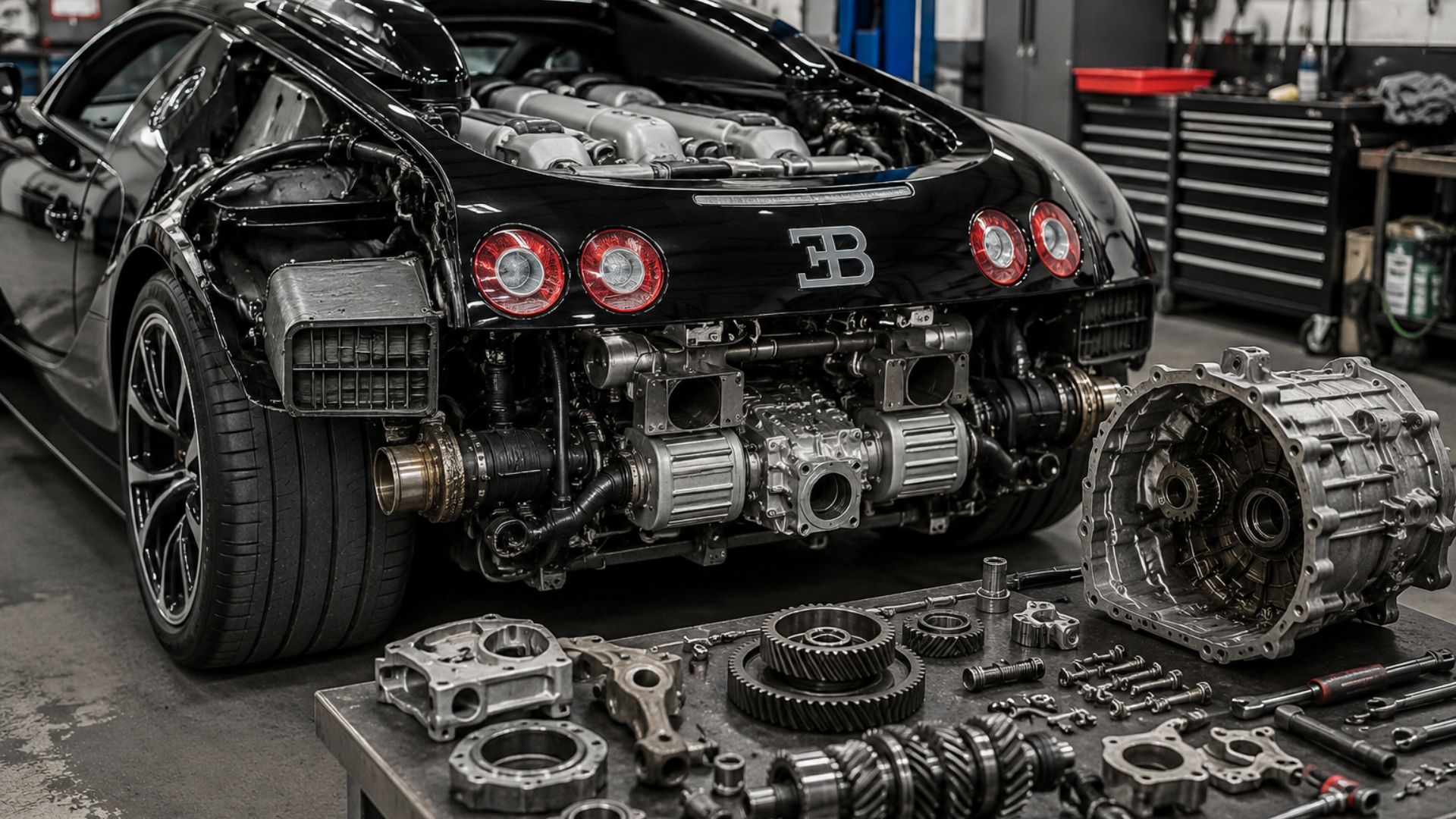

Owner of a collection valued at US$ 13 million, Mark McCann paid dearly for a Bugatti Veyron that arrived disassembled and with the gearbox ruined. The problem is that this supercar uses a sealed hydraulic gearbox, and the repair may require a test bench that alone costs over US$ 600,000.
Buying one of the most expensive and rare cars in the world should be the pinnacle of a collection, but for the Briton Mark McCann, it turned into the beginning of an engineering problem that few mechanics on the planet know how to solve. Throughout the first half of 2026, the YouTuber took on the mission of bringing back to life a Bugatti Veyron he bought for almost US$ 1.2 million, equivalent to about £ 900,000, which arrived in his hands in pieces.
In May 2026, it became clear that the worst was not the dented bodywork nor the damaged interior. It was the gearbox. What seemed like an expensive but common repair turned out to be a technical puzzle that the manufacturer itself refuses to solve, leaving the supercar owner facing estimates that border on the absurd just to get the gearbox back to working.
A Bugatti Veyron that arrived in pieces
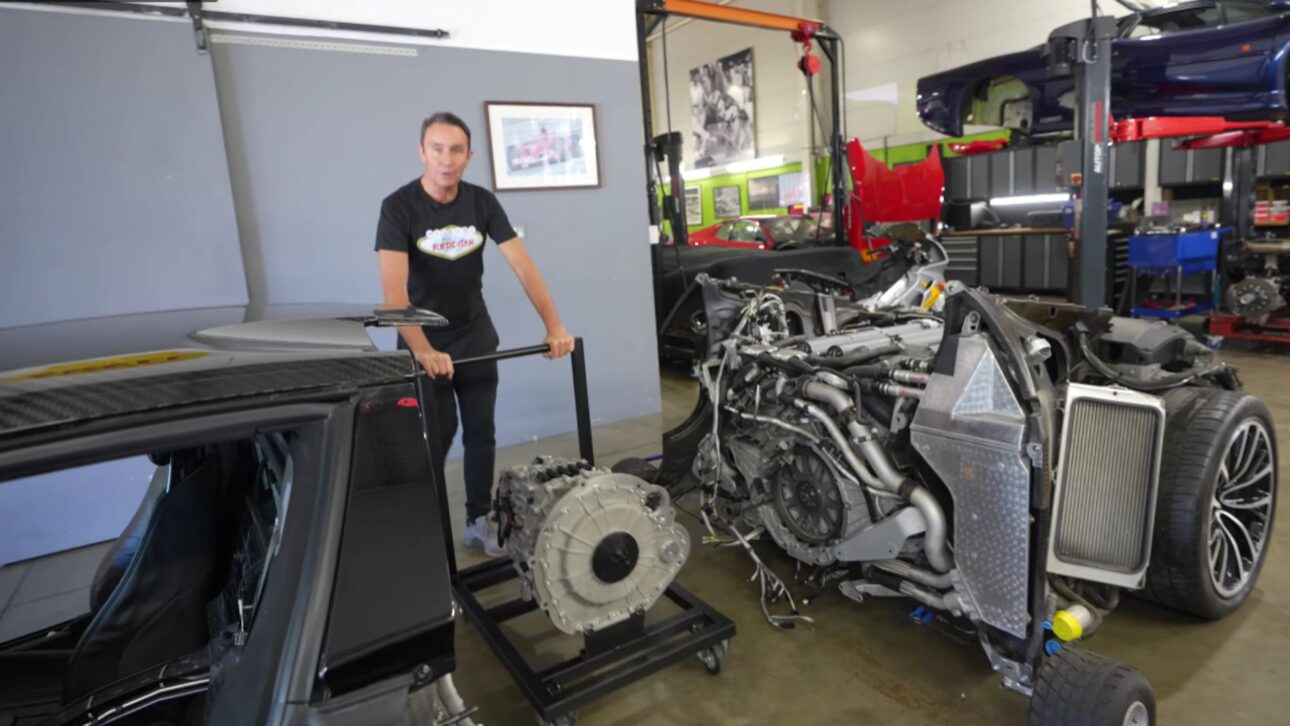
The car belonged to a Middle Eastern prince and underwent a style conversion that cost about US$ 440,000, transforming the original supercar into a customized version. When Mark McCann closed the purchase, however, what he received was not a car ready to drive, but rather a collection of boxes and components scattered across two different garages, where the Veyron had remained disassembled for years without ever being reassembled.
-
End of an era in Brazil: beloved sedan by Brazilians is discontinued despite having a 2.0 engine with 151 hp, CVT transmission, 466-liter trunk, and up to 650 km of range.

-
New Law Proposal in Brazil Could Heavily Penalize Drivers: Dangerous Overtaking May Become a Serious Offense with Fines Increased Tenfold and a 12-Month License Suspension; Update on 2026 Progress

-
Electric Revolution: Watts W125 Motorcycle Offers 160 km Range, 90 km/h Speed, and Affordable Price Starting at $3,000
-
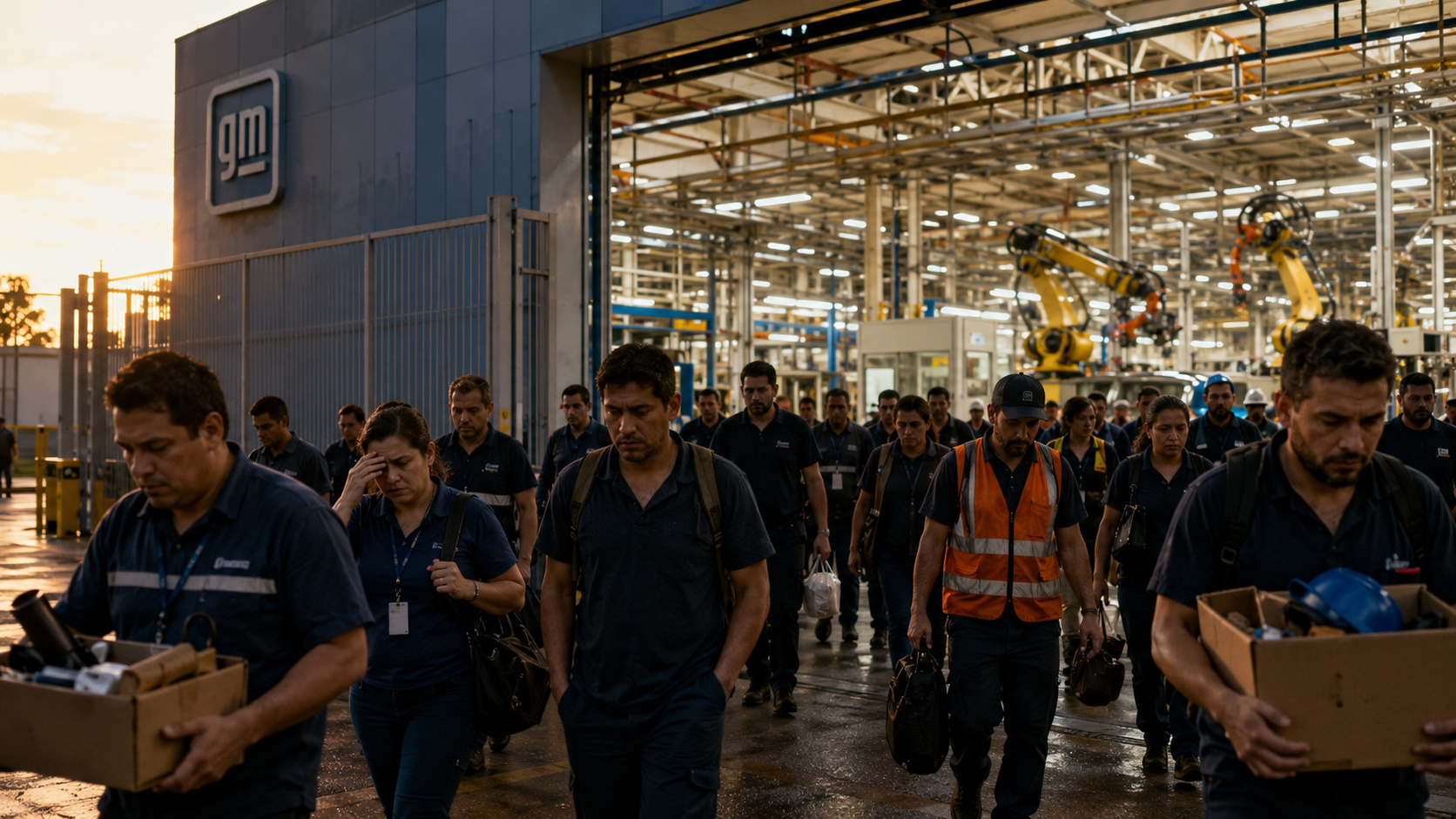
General Motors Replaces Over a Thousand Workers with 50 Cobots at Electric Vehicle Plant, UAW Union Criticizes Move Amid Industry’s Automation Push


The list of problems is long. Parts are missing, the aluminum body panels are damaged, and the interior has deteriorated over time. To make matters worse, part of what seemed like carbon fiber in the conversion was actually a low-quality vinyl sticker imitating the material, which increases the cost and complexity of the restoration. For those unfamiliar with the character, here’s the context: Mark McCann is a British collector whose car collection is valued at around $13 million, so he knew he was embarking on an expensive venture. The extent of the repair, nonetheless, was surprising.
The real nightmare is in the gearbox
Of all the defects, the gearbox is what turns this project into a nightmare. The specialists who opened the assembly found signs of galvanic corrosion inside the casing, a process that occurs when steel and aluminum parts come into contact and suffer from contamination, in this case, residue left by a previous botched repair. The result is a compromised gearbox inside, which cannot simply be cleaned and reinstalled.
The natural reaction would be to buy a new part and move on. That’s where Mark McCann hit a wall. According to the YouTuber himself, after weeks of trying to make contact, Bugatti wouldn’t even provide a price for a new gearbox. The brand only works with replacing the entire assembly, factory-sealed, and does not offer repair for the damaged part. Without cooperation from the manufacturer, the supercar owner was left alone facing one of the most complex gearboxes ever put in a street car.
Why even Bugatti can’t simply replace the part
To understand the magnitude of the challenge, Mark McCann turned to Rob Barnes, a former engineer at Ricardo, the British company that designed the Veyron’s gearbox at the start of the project. His explanation dismantled any illusion of a simple repair. The Bugatti Veyron’s gearbox is not just a pile of gears; it’s a sophisticated hydraulic system, with extremely fine tolerances and a logic of operation that few people master outside the factory.
The most delicate point is the clutch. Every new clutch goes through a settling process where carbon fibers come off the surface. On an assembly line, these fibers are captured by special filters mounted on a test bench. Without this filtration, the fibers clog the hydraulic valves, the cooling oil flow stops, and the clutch, in Barnes’ words, would be destroyed by heat in less than a minute. Therefore, the repair doesn’t end with assembling the part. It requires a bench capable of safely settling the clutch, and the budgets to build this equipment reached $666,577. In other words, just the tool to test the gearbox costs more than many new supercars.
The low-cost gamble against the official budget


Faced with a bill that through official channels can reach US$ 600,000 or more, considering the complete replacement of the set, Mark McCann began to seek an alternative solution for the repair. The central piece of this plan is Pascal, a Dutch engineer known as The Dutchman, who works with CAD design and custom component manufacturing to try to recover the gearbox without relying on Bugatti’s sealed part.
The difference in values helps to understand the bet. On one side, the factory route, with the replacement of the set, pushes the budget into the hundreds of thousands of dollars. On the other, the artisanal attempt in the Dutch workshop promises to solve the heart of the problem for a fraction of that. Part of the more delicate restoration work was still entrusted to Furlongers, a specialist workshop with recognized credentials in Bugatti. The supercar, therefore, also becomes a test of how far independent talent can go where the manufacturer itself refuses to enter.
The engineering that makes the Veyron so difficult to maintain
The case illustrates well why the Bugatti Veyron is, at the same time, an engineering legend and a maintenance nightmare. The model was born to break records with its W16 quad-turbo engine, a sixteen-cylinder architecture that delivers over a thousand horsepower and requires equally extreme auxiliary systems. Every solution created to support this power, including the dual-clutch hydraulic gearbox, was designed for maximum performance, not for easy repair in any workshop.
It is this design philosophy that charges the bill now. Sealed components, factory tolerances, and processes that depend on dedicated equipment make the repair an almost industrial task. It is no coincidence that similar stories are repeated with this supercar, from headlights that cost the price of a popular car to maintenance that reaches six-digit figures. For Mark McCann, the learning is expensive: being the owner of a Bugatti Veyron means, in many moments, depending on a handful of specialists worldwide capable of working on what the factory delivered sealed.
And now, what is the fate of the supercar?
In the end, what makes this saga fascinating is not just the money involved, but what it reveals about the boundary between cutting-edge engineering and the right to repair what is yours. Mark McCann bought the supercar knowing the risk, and now bets that the creativity of a few independent engineers can beat a system made to only be touched by the factory. If the gearbox starts working again outside Bugatti’s official circuit, the repair becomes a milestone. If not, it will be just another expensive Bugatti Veyron stopped because of a single part.
And you, in Mark McCann’s place, would you bet on the independent workshop or pay dearly for the factory-sealed part to ensure the supercar’s repair? Tell us in the comments what you would do with such a Bugatti Veyron in your hands.