Portuguese
  Spanish


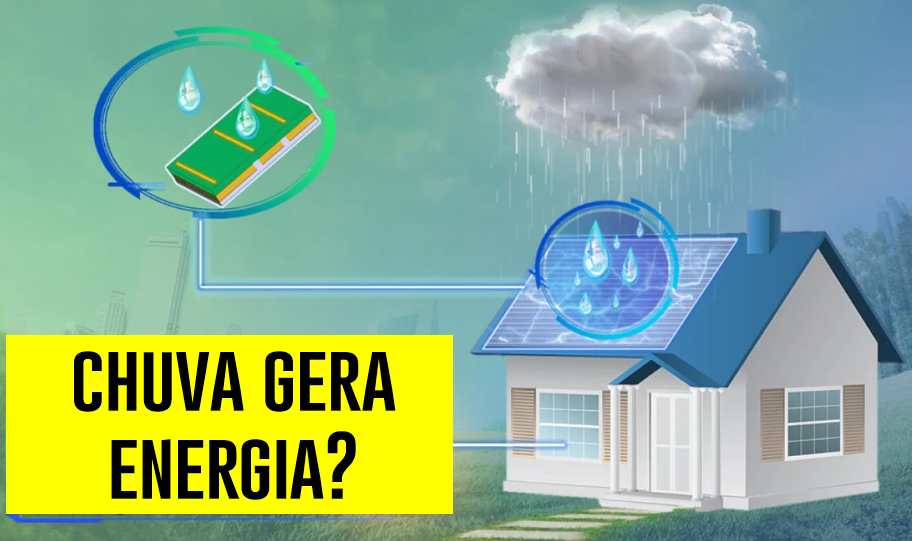

Researchers Are Exploring Innovative Technologies That Could Transform Rainwater Into a Source of Clean Energy.
The search for renewable energy sources has led to the exploration of various alternatives, from solar energy to tidal energy. However, a lesser-known option, but with great potential, is the generation of energy from rainwater.
Although this technology is still in the early stages of development, recent advances suggest that it could become a viable solution to complement other renewable sources in the future. We will see some important details throughout this article.
How Does Energy Generation From Rain Work?
The electricity generated by rain can be captured through two main methods: micro-scale hydropower turbines and piezoelectric materials.
-
The Trap of Modern Technology: How Screen Overload and Digital Connections Can Impact Your Mental Health and Well-being

-
Wyoming Couple Grows Tropical Fruits Year-Round in -40°C Using Geothermal Greenhouse, Demonstrating Earth’s Heat Can Produce Oranges and Lemons in Snow Without Traditional Heating

-
Ship Returns from Brazilian Coast with Thirty Newly Discovered Life Forms
-
Nigerian Professor Invents Electricity-Free Refrigerator Using Clay Pots and Wet Sand, Extending Shelf Life of Vegetables to 27 Days; 7,000 Units Distributed in Energy-Deprived Villages



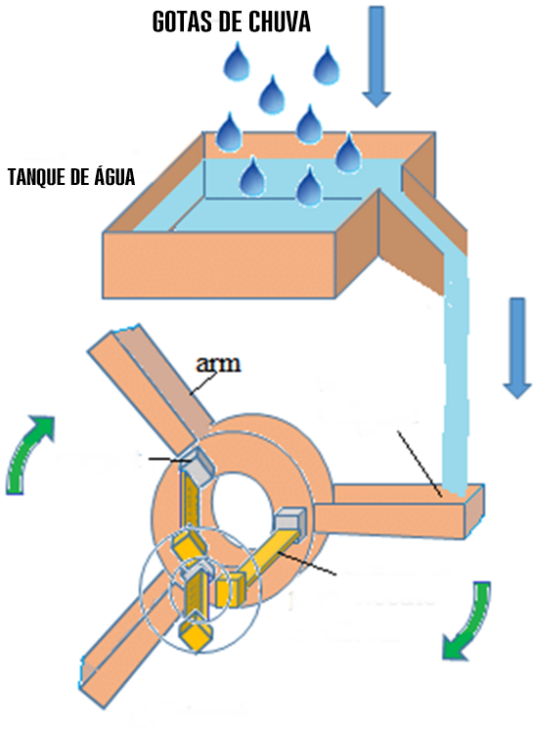
Micro Hydropower Turbines: This method involves collecting and channeling rainwater to small turbines that generate electricity.
It is an effective form of microgeneration to provide power to homes and small water purification systems.
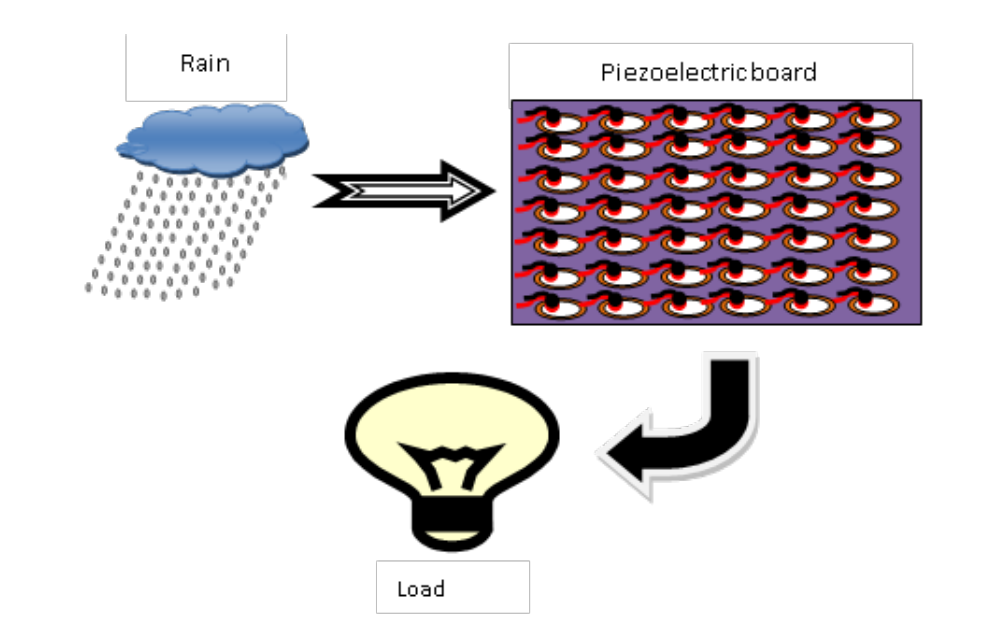
Piezoelectric Materials: These special materials generate electricity based on the energy released when raindrops impact a surface.
The kinetic energy of the drops is converted into electrical energy, and the charges accumulated on the surface are discharged as the water spreads and connects the electrodes.
Studies indicate that the efficiency of this system is thousands of times greater than that of existing similar devices.
Scientific Advancements In Rainwater Harvesting
Several studies are exploring new ways to increase the efficiency of energy generation from rain.
Researchers at the City University of Hong Kong have developed a Droplet-Based Electricity Generator (DEG), capable of generating up to 140 volts with a single raindrop, enough to temporarily power 100 small light bulbs.
Another study titled “Rain Energy Harvesting Using Atomically Thin Gadolinium Telluride Decorated 3D Printed Nanogenerator“ demonstrated that 3D printing nanogenerators, combined with ultrathin gadolinium telluride sheets, can generate a voltage of 0.6 V by moving a droplet of ionic solution over the device, achieving an efficiency 400% greater by increasing the surface area with porous structures.
Additionally, researchers from the Indian Institute of Technology (IIT) Delhi have developed a device known as Liquid-Solid Interface Triboelectric Nanogenerator, capable of generating a few milliwatts (mW) of energy from water droplets, water streams, and ocean waves.
This energy can be stored and used to power small electronic devices, such as health sensors, pedometers, and digital thermometers.
Challenges And Limitations Of The Technology
Despite the promising advances, there are still significant challenges to making electricity generation from rain a widely used energy source.
- Low Efficiency At Commercial Scale: The kinetic energy of rain is of low frequency, making collection less efficient compared to other renewable sources, such as solar and wind.
- Lack Of Investments And Research: Most efforts are still focused on traditional renewable energy sources, which hinders the advancement of the technology.
- Intermittency And Energy Storage: Like solar energy, electricity generated from rain depends on weather conditions, requiring effective storage solutions to ensure a continuous supply.
The Global Impact Of Electricity Generation From Rain
The adoption of this technology could bring several benefits, especially in tropical and high rainfall regions.
In countries like Hong Kong and India, where annual precipitation is significant, rain energy harvesting could complement existing electrical grids and provide electricity to remote communities.
Moreover, the positive environmental impact of this technology is evident, as it offers a clean and renewable alternative without the need for large infrastructures or significant alterations to the environment.
With information from Cornell.