Portuguese
  Spanish


Model That Surpassed Established Rivals, Reached Millions of Units Produced in Betim, and Maintains Absolute Leadership Among All Vehicles Sold in Brazil.
The Fiat Strada reached 2.5 million units produced since 1998 at the Stellantis Automotive Hub in Betim (MG), and remains the best-selling vehicle in the country for four consecutive years.
From 2025 to August, the pickup leads in registrations and stays ahead of rivals from different segments, such as Chevrolet Onix, Hyundai HB20, Volkswagen Polo, and Toyota Corolla.
Production in Betim and Sales Dominance
The milestone of 2.5 million was announced on September 15, 2025, reinforcing the role of the Minas Gerais unit as Stellantis’ strategic center in the region.
-
2027 Toyota Corolla Cross Unveiled: New Design, Enhanced Fuel Efficiency, Reduced Maintenance Costs, Advanced Technology, Connected Services, and Up to 10-Year Warranty

-
Fiat Cronos Precision 2018: Affordable Sedan with Spacious Trunk and Reliable Maintenance
-
Volkswagen to Cut Production by 1 Million Cars by 2030, Reducing Jobs and Platforms, Focusing on More Profitable Models

-
Toyota Launches First 100% Electric Car in Brazil: bZ4X with 343 HP, All-Wheel Drive, 361 km Range, Priced at $419,990 BRL, Limited to 99 Units



The Strada’s leadership has been in place since 2021 and was confirmed again in 2024, when it ended the year as the most registered vehicle in the country.
From 2025 to August, the pickup recorded around 87.4 thousand units and continues at the top of the Fenabrave ranking.
In addition to the annual numbers, partial data from September indicates momentum to maintain its position.
In the first half of the month, the Strada led registrations and gained an advantage over the Hyundai HB20, its closest competitor during the period.
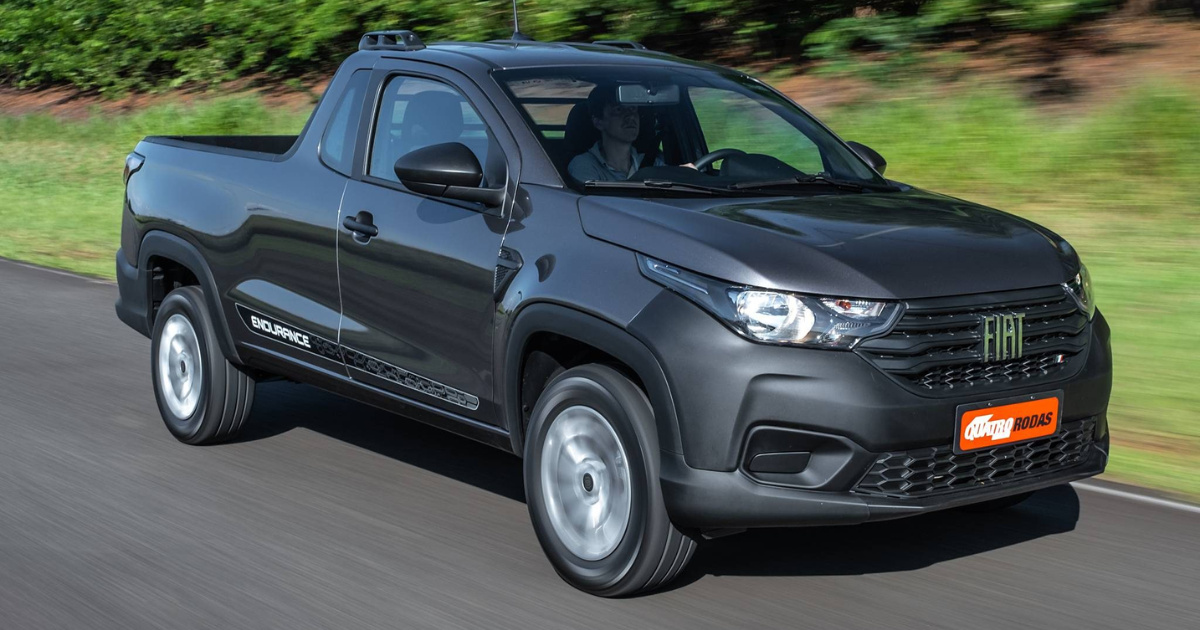
Technical Evolution and Innovations of the Fiat Strada
Since its launch, the Strada has stood out for solutions that shaped the compact pickup segment in Brazil.
In 1999, it debuted the extended cab; in 2009, it introduced the double cab. In 2013, it innovated again with the third door in the double cab configuration.
The current generation, launched in 2020, added four doors and five seats, enhancing its urban appeal without losing its work-oriented vocation.
The model began offering CVT transmission in December of 2021, and starting from 2023/2024, it incorporated the 1.0 turbo T200 engine in top versions.
Betim Hub: Scale, Engineering, and Innovation
The Betim factory, responsible for producing the Strada since the model’s inception, operates with the capacity for 650 thousand vehicles/year.
The location houses a Tech Center with over 3 thousand engineers, designers, and technicians, as well as 60 state-of-the-art laboratories.
The complex combines development, testing, and validation activities and integrates initiatives related to electrification.
Diverse Portfolio and Exports of the Strada
The Minas Gerais unit also manufactures Argo, Mobi, Pulse, and Fastback, in addition to the utilities Fiorino and Partner Rapid, consolidating Betim as one of Stellantis’ most versatile plants in the world.
The Strada supplies the domestic market and is regularly exported to Argentina, Paraguay, and Uruguay, increasing the product’s regional relevance.
Prices and Available Versions
In the latest lineup, the suggested prices for the Strada start at R$ 111,990 and reach R$ 146,990.
The range covers everything from entry-level versions with a simple cab to top-end configurations with a more complete equipment package.
The positioning reflects the expanded scope of the pickup, which now appeals to both professional users and those seeking a vehicle for everyday use.
Factors Explaining the Strada’s Leadership
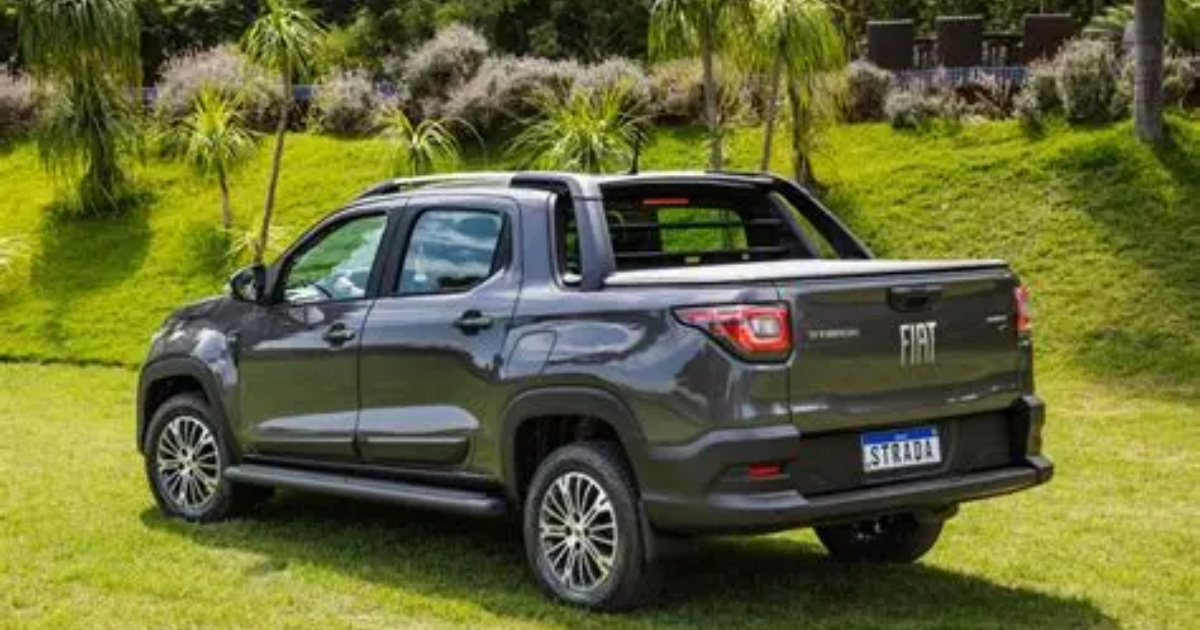
The combination of ownership cost, versatility in daily use, and content evolution over the years explains the commercial performance.
By focusing on practical solutions — such as the different cab configurations — and incorporating desirable technologies, like the CVT automatic transmission and turbo engine, the Strada maintains a proposition that appeals to both fleet owners and private customers.
The effect is evident in the registration reports, which confirm the advantage over established hatchbacks and sedans.
What Sustains the Strada’s Position in the Market
Another pillar is the national distribution and production at scale, aided by the structure in Betim.
The industrial capacity, combined with local development, shortens the product update cycle and keeps the pickup competitive against launches from rival brands.
Moreover, the consistent sales history over the past few years reinforces Brazilian consumers’ preference for the Strada’s offering.
With this set of factors — robust production, continuous technical evolution, and an aligned offering with the market — the Strada maintains its leadership in a competitive environment, surpassing popular models from various categories.
For you, what was the most important turning point in the Strada’s history: the initial cab solutions, the arrival of the CVT transmission in 2021, or the adoption of the turbo engine starting in 2023?