Portuguese
  Spanish


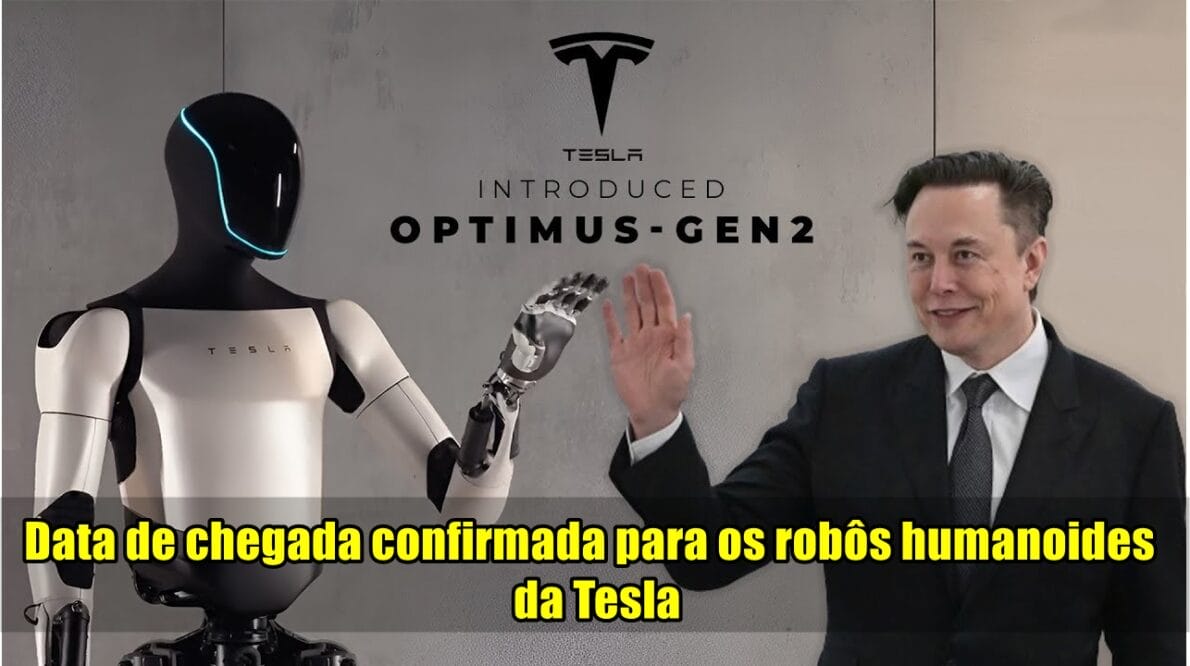

Imminent Impact: The Arrival of Tesla’s Humanoid Robots, Elon Musk’s Company, and Their Effects on the Current Workforce
The future of repetitive and potentially dangerous tasks in various sectors, including logistics, storage, retail, and manufacturing, may rest in the hands of humanoid robots, according to recent statements by entrepreneur Elon Musk, CEO of Tesla.
Recently, during a conference call with investors, Musk revealed that the company’s humanoid robot, known as Optimus, is still in development but may be ready for commercial launch by the end of next year, in 2025.
This announcement positions Tesla as a focal point in the growing investment and collaboration between artificial intelligence technology and the manufacturing industry.
-
She spent 73 years breathing inside an iron lung, survived the aftereffects of polio, and became the last woman in the United States dependent on the equipment before dying at 78 years old.

-
Brazilian students created a $1 filter using pine bark, cotton, and 3D-printed parts to clean cassava wastewater, reduce the toxicity of a hazardous waste, and transform contaminated water into biofertilizer.

-
Astronaut from Artemis II steps down after mission to the Moon and decision surprises after a record of 406,771 km, a historic 10-day journey, and an unprecedented achievement for Canada.

-
A fossil kept for years in a small museum in Montreal concealed 450-million-year-old soft tissue, a discovery that has only happened once before in history.



What Elon Musk Thinks About Integrating Optimus into Society
Musk’s vision regarding robotics and its integration into the productive fabric is not unique, but it stands out for its ambition to mass-produce humanoid robots.
With Tesla at the forefront of this revolution, thanks to its well-known innovative capacity in the fields of artificial intelligence and autonomy technology, the Optimus project could be a game changer across various industrial sectors, competing with other global companies that are also working on their own projects.
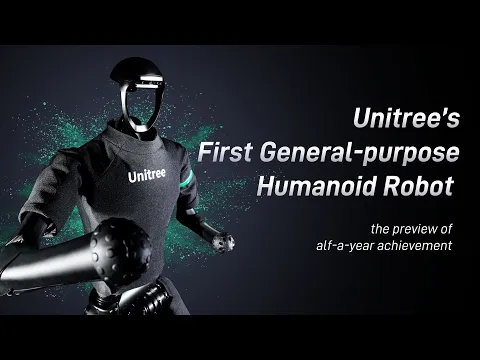
Similarly, the growing interest in the development of humanoid robots is not recent. Renowned companies like Honda and Boston Dynamics, the latter part of Hyundai Motor, have been researching and developing in this area for several years.
Additionally, the startup Figure, backed by major tech companies like Microsoft and Nvidia, announced a collaboration with the German car manufacturer BMW for the implementation of humanoid robots in its facilities in the United States.
This growing enthusiasm for advanced robotics highlights the potential of these developments to transform entire industries, making them more efficient and safer.
Elon Musk’s Bet on These Humanoid Robots
Musk has repeatedly indicated that robots could become a commercially more significant sector for Tesla than its electric cars. Such a statement underscores the CEO’s confidence in Tesla’s artificial intelligence technology and its ability to mass-produce these automatons.
However, while expectations are high, Musk has faced criticism for previous promises that did not materialize as planned, with a notable example being the promise of a fleet of “robot-taxis” by 2020, which did not happen as expected.
Furthermore, the revelation of the first generation of Optimus, affectionately named Bumblebee, in September 2022, followed by a demonstration of its abilities performing simple tasks like folding clothes, marks a tangential start to this futuristic vision.
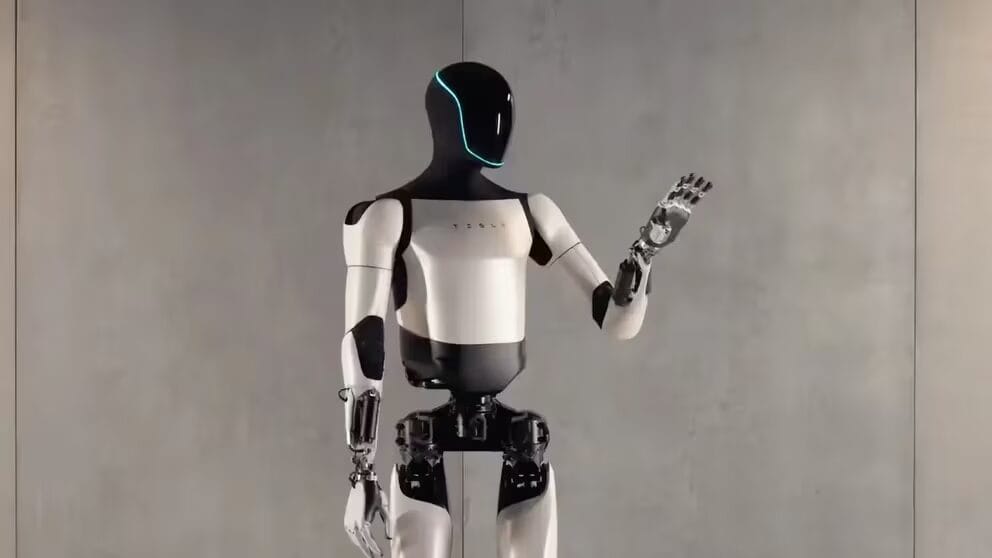
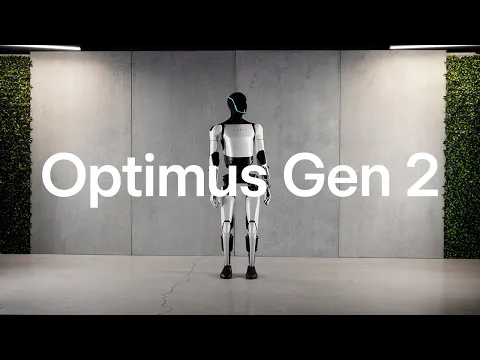
This Is the Optimus Gen 2, Tesla’s Humanoid Robot.
The Tesla Optimus Gen 2 is an improved version of the humanoid robot that the company announced some years ago. It is much lighter, weighing up to 10 kg less than the previous version, without sacrificing any functionality. In fact, the new robot includes significant improvements, such as a neck powered by motion control. This allows the Optimus Gen 2 to move its neck similarly to how a human would.
Tesla has also improved the humanoid robot’s feet with a design similar to those of a real person’s feet, allowing the Optimus Gen 2 to walk up to 30% faster than the previous generation.
The Tesla Optimus Gen 2, which uses sensors developed by the company itself, also has hands capable of moving the fingers more fluidly. In them, Tesla included dedicated sensors to detect pressure, allowing it to manipulate delicate objects, such as eggs or crystals, without breaking them.
As for the price, Elon Musk revealed that the Optimus Gen 2 would be priced between $25,000 and $30,000. However, he did state that it would cost less over time.
The Competition to See Who Comes Out on Top in Humanoid Robot Development
Indeed, Tesla is not alone in making significant advances in this field. The presentation of the Figure robot preparing coffee and the electric platform for Boston Dynamics’ humanoid robot Atlas demonstrate notable evolution and the growing potential of humanoid robots in work and everyday environments.
Thus, the race for the development and implementation of humanoid robots in the industry not only represents an innovative technological achievement but also raises important questions about the future of work, ethics in artificial intelligence, and safety in the interaction between robots and humans.
Therefore, as the promised date by Elon Musk for the launch of Optimus approaches, the world waits in anticipation, eager to see how these promises materialize and what new work paradigm emerges in the era of advanced robotics.
Source: hipertextual.com