






 Portuguese
  Spanish
  5 min of reading
  0 comments


During The Cold War, The CIA Created A Spy Cat With A Microphone In Its Skull In The Secret Project Acoustic Kitty. The Million-Dollar Investment Ended Tragically — And Became One Of The Weirdest Operations In Espionage.
During the tensest years of the Cold War, the rivalry between the United States and the Soviet Union intensified not only in ideological and technological battlefields but also in the shadowy world of espionage. It was in this context that the Acoustic Kitty Project was born, one of the CIA’s most eccentric operations, which involved transforming a domestic cat into a secret agent equipped with hidden listening devices. The idea seemed straight out of a science fiction movie: to use a CIA spy cat to discreetly infiltrate sensitive locations and capture high-level Soviet conversations. But what could have been a turning point in American intelligence ended in seconds — run over by a taxi.
What Was The Acoustic Kitty Project?


The Acoustic Kitty Project was an ultra-secret initiative by the CIA in the 1960s that aimed to create a mobile espionage device disguised as an animal. The inspiration behind the project was simple: cats go unnoticed, have great mobility, and could, in theory, approach human targets without raising suspicion.
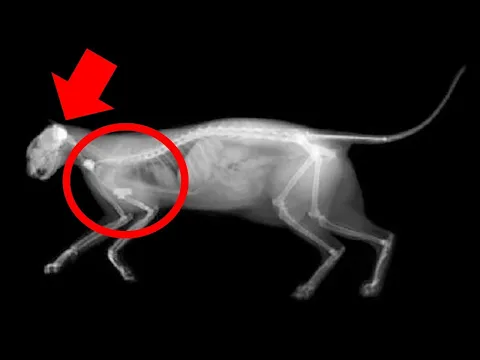
The plan involved implanting a miniaturized microphone in the animal’s skull, with a wire running to a disguised antenna in its tail. All the electronics were surgically embedded inside the cat’s body, allowing it to transmit captured conversations directly to intelligence agents.
-
He started with a jigsaw, his father’s screwdriver, and many drawings made during classes; years later, the young man who built a roller coaster in his own backyard went viral on the internet, was hired by Cacau Park, and now coordinates Brazilian and foreign professionals in the installation of an attraction weighing 737 tons, 55 meters high, one kilometer long, featuring moments of zero gravity and a speed of 120 km/h, in a journey that turned curiosity, calculations, and persistence into a professional career.

-
Between Egypt and Sudan, Bir Tawil is no man’s land that neither country wants on paper, but in practice has gold mining, nomadic tribes, and even fake “kings.”

-
Swimming champion Shavarsh Karapetyan dove about 40 times into a frozen lake in Armenia to rescue a sunken bus, saved 20 lives, and lost his career because of it.
-
Júlia Pimentel, an 11-year-old from Minas Gerais, independently invented a new formula to calculate the square root using simple addition and multiplication, and her method was published in one of the most important mathematical scientific journals in Brazil.


Why Use A Cat? The Logic Behind The Absurd
The CIA believed that since cats are notoriously independent, agile, and common in urban areas, they would be perfect for conducting surveillance in sensitive locations — such as park benches, windows of government buildings, or parked vehicles.
But this decision overlooked a crucial factor: cats are not trainable in the same way that dogs are. They have unpredictable behavior and are easily distracted. Despite this, the agency proceeded with the project, believing that behavioral conditioning would resolve this issue.
The Surgery: Microphone In The Skull And Antenna In The Tail
According to declassified documents from the CIA itself, the initial tests of Acoustic Kitty began with a complex surgical intervention. The microphone was implanted at the base of the cat’s skull, along with a small transmitter in its chest and a fine antenna embedded in its tail.
The surgeries were performed by veterinarians hired by the CIA and involved experimental techniques in veterinary medicine. The system needed to be light enough not to affect the cat’s movement and sturdy enough to operate in urban environments.
Training The Spy Cat: Attempt To Tame The Untamable
For months, the cat underwent intensive training sessions. CIA agents tried to condition the animal to follow commands and walk to specific locations where espionage targets would be found.
But the training proved to be more difficult than expected. Cats are notoriously disobedient, and the feline “recruit” often abandoned simulations to chase insects, nap, or run away.
In 1967, after months of tests and over US$ 20 million invested (adjusted figures would exceed US$ 180 million today), the CIA decided to put the project into practice. The cat was released in the vicinity of the Soviet embassy in Washington, with the aim of capturing confidential conversations between diplomats.
The mission lasted less than five minutes.
While trying to cross the street to approach the targets, the cat was hit by a taxi. Agents who were monitoring the operation were unable to recover even the equipment, and the animal died on the spot.
Official Closure Of The Project: An Expensive Failure
With the death of the animal and the absolute failure of the mission, the CIA closed the Acoustic Kitty Project. Declassified documents reveal that the agency acknowledged that “the environment and natural distractions made the use of animals for espionage impractical”.
Despite this, some sources indicate that other tests with animals were conducted in the following years — but none with the boldness (and absurdity) of the spy cat.
The official documents on Acoustic Kitty were released by the U.S. government in 2001 under the Freedom ofInformation Act (FOIA). The content, although partially redacted, confirms the existence of the project, the million-dollar expenditures, and the failure of the debut mission.
An internal report describes the project as “an effort that demonstrated technical ingenuity, but had serious behavioral limitations in using animals.”
The Legacy Of The Acoustic Kitty Project
The Acoustic Kitty is often cited as an extreme example of how the Cold War led intelligence agencies to explore increasingly absurd ideas in the name of strategic advantage.
The case also raised ethical debates about the use of animals in military and scientific operations, primarily because it involved invasive procedures and lethal risks without the consent or protection of the animal.
Did The CIA Admit Failure?
Yes. Although without much fanfare, internal documents acknowledge that the project did not achieve its operational objectives and that urban environment distractions, combined with the unpredictable behavior of cats, made the concept unfeasible.
Today, the Acoustic Kitty Project is considered a case study in intelligence failures — and a lesson on how not everything that seems innovative in theory survives the reality of the field.
The CIA spy cat, which could easily be dismissed as fake news or an internet rumor, actually existed. And the project Acoustic Kitty is a curious (and tragic) reminder of the limits of creativity in the name of espionage.
Although it seems absurd, the case illustrates well the paranoid climate of the Cold War and the extremes to which powers were willing to go for a strategic advantage.
The project failed, the animal died, and the US$ 20 million became an example of how not every brilliant idea works outside the laboratory — especially when involving a cat.


Be the first to react!