






 Portuguese
  Spanish
  4 min of reading
  2 comments


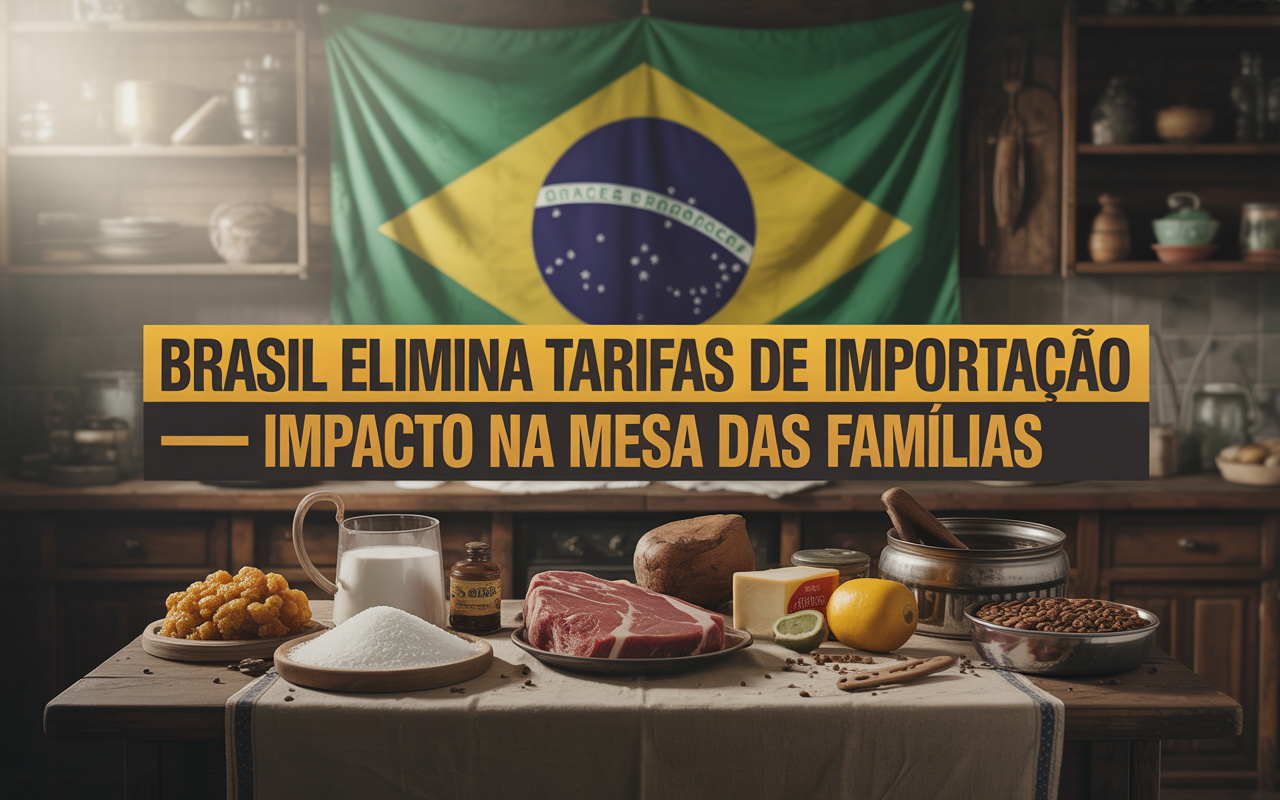


Brazil Eliminates Import Tariffs on Meat, Sugar, Corn, and Coffee to Contain Price Increases. Measure Could Reduce Inflation and Impact the Tables of Millions of Families.
On March 13, 2025, the Brazilian government officially announced the temporary elimination of import tariffs on nine essential products from the national consumption basket — including meat, sugar, corn, and coffee. The measure, published in an inter-ministerial ordinance, was presented as an emergency response to the rising food prices, which had been pressuring inflation and compromising the purchasing power of millions of families.
The measure, which had already been discussed behind the scenes, was confirmed after strong inflationary pressure and amid fears that the American tariffs on Brazilian products could generate even greater side effects in the domestic economy. By giving up part of the revenue, Brazil aims to stabilize internal prices and preserve the purchasing power of the population.
Why Did Brazil Decide to Eliminate the Tariffs?
Food inflation became a concern again in 2025. With the combination of international shocks, tariffs imposed by the U.S. on Brazilian exports, and variations in logistical costs, basic items in the family consumption basket experienced significant price increases.
-
Brazilian Joins Homeownership Consortium, Faces Decade of Dual Payments Totaling $141,000, Surpassing Traditional Mortgage

-
Land Rover to Halt Production in July, Putting 371 Jobs at Risk, as Chinese Automaker Negotiates to Convert Factory to 100,000 Vehicles Annually by 2027

-
Mexican Pest Threatens U.S. Cattle Herds at Historic Lows, Potentially Boosting Brazilian Beef Exports as Burger Prices Soar

-
Brazilian Freight Bill Progresses in Congress with $5,000 Minimum Wage, 70% Advance Payment, and Fines Up to $1 Million, as Agriculture and Industry Warn of Rising Costs and Legal Uncertainty


An example is beef, which had already seen double-digit increases over the last year, driven by increased exports and lower domestic supply.


Sugar and corn, which are highly demanded in the global market, also pushed prices higher. Given this scenario, the government decided to take action to prevent a domino effect that could further increase the prices of processed foods.
By eliminating import tariffs, the expectation is that products will arrive in the country at more competitive costs, forcing a reduction or stabilization in final prices for consumers.
Products Covered by the Measure
The announced list includes nine items that are directly related to domestic consumption and the food industry:
- Beef, Pork, and Poultry: a fundamental protein on Brazilian tables, but pressured by increased exports.
- Sugar and Corn: the basis of the food production chain and important inputs for the beverage and feed industry.
- Coffee: despite being the largest producer and exporter in the world, Brazil faces internal price pressures, and the measure aims to stabilize local consumption.
- Sunflower and Olive Oil: inputs used in cooking and also in processed products.
- Sardines: an accessible protein for low-income families, but impacted by declines in local production.
- Cookies and Pasta: directly consumed products that reflect variations in the price of wheat and corn.
This basket of food was strategically selected to target both the base of popular nutrition and the processing industry, ensuring a chain effect across various segments.
Expected Impact on Inflation
According to economists consulted by the sector, the measure could reduce by between 0.3 and 0.5 percentage points in the IPCA (Broad Consumer Price Index) in the coming months, provided that imports indeed increase and prices reach consumers at lower levels.

On the other hand, there is a risk that the measure will have limited effects if international prices remain high or if the exchange rate remains pressured. A strong dollar still weighs on import costs, which could reduce part of the expected positive impact.
Market and Producer Sector Reactions
The decision generated mixed reactions. Food industries and supermarket associations praised the measure, highlighting that it could reduce costs and prevent basic products from continuing to rise unsustainably.
Meanwhile, rural producers and representatives from the agribusiness expressed concern. For them, the import of tariff-free food could increase external competition and pressure the income of local producers, especially in more vulnerable sectors such as corn and wheat.
The government, however, assured that the measure is temporary and will be reassessed based on its effects on inflation and the domestic market.
The International Context
Brazil’s decision did not occur in isolation. The trade war between the U.S. and its partners, with the imposition of tariffs on coffee, sugar, and other products, has created an environment of uncertainty in international trade. At the same time, Asian demand for food remains strong, further pressuring global prices.
In this context, Brazil is trying to balance two roles: a strategic food supplier in the global scenario and, at the same time, a guarantor of food security for its own population. The opening of tariff-free imports is an attempt to reduce domestic inflationary shocks without compromising the country’s position as an exporter.
What to Expect Moving Forward
Experts say the coming months will be crucial for assessing the success of the measure. If internal prices stabilize, the government may extend the tariff exemption to other products or for a longer period. Otherwise, new alternatives will need to be explored, such as increasing subsidies or direct intervention in production chains.
What is clear is that food has become one of the main battlegrounds of Brazilian economic policy. In a country where more than 60% of the inflation measured by the IPCA is directly linked to food and energy, any movement in this area generates immediate repercussions in the lives of millions of people.
Brazil’s decision to eliminate import tariffs on essential foods is, above all, an act of domestic defense amid a scenario of external shocks and global pressures. By giving up revenue to try to contain prices, the government seeks to ease the burden on families but risks facing criticism from local producers.
In any case, the measure reinforces the country’s central role in food geopolitics: while supplying the world, it must ensure that its own population has stable and affordable access to food.





Mais vale pra shopee Aliexpress shein , ou vai ficar chorando quando os EUA taxam em 50% enquanto enfia a faca em 100% em qualquer importado que passa dos 50 dólar, a china e os estados unidos sabem dessa malandragem do governo?
O Brasil ė o maior produtor de carne bovina e mesmo assim precisa importar esse produto ?