Portuguese
  Spanish


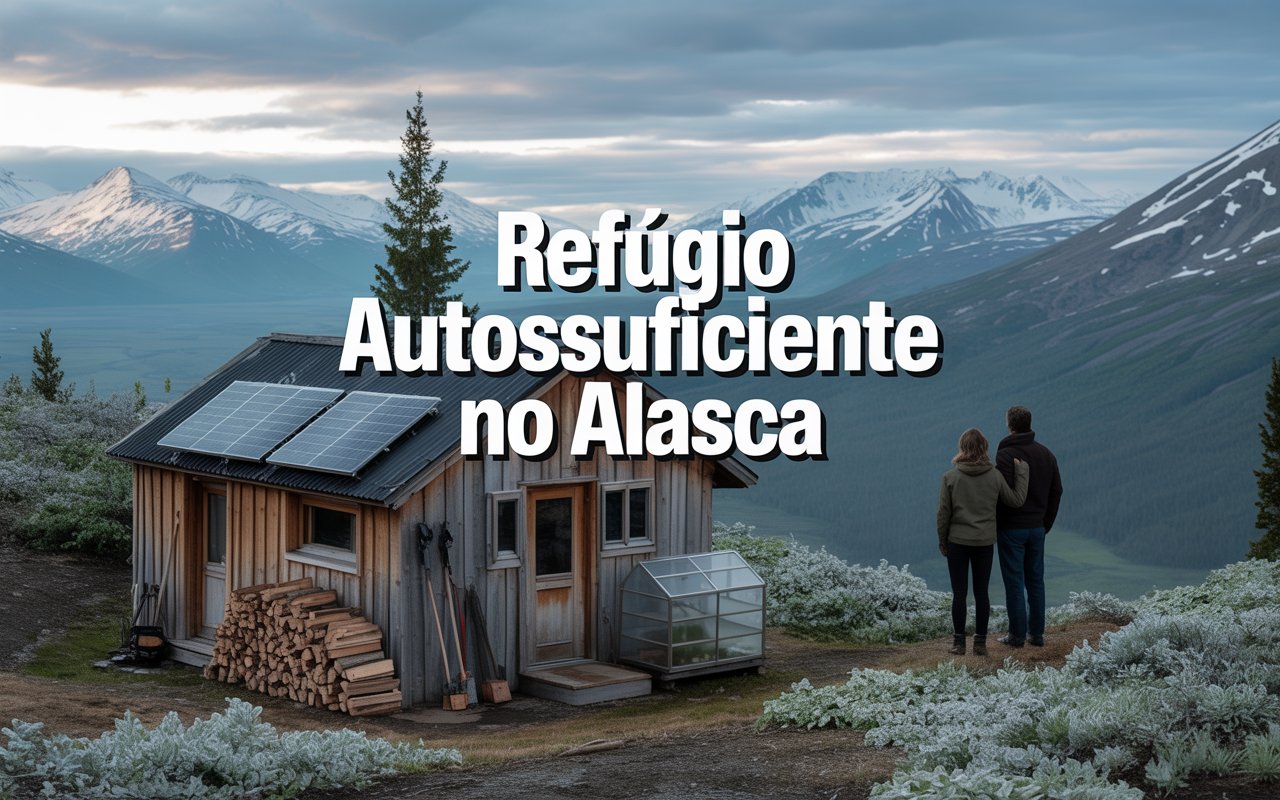


Couple Transforms Isolated Mountain in Alaska into Self-Sufficient Refuge with Handmade House, Own Energy, and Remote Life That Seems from Another Century.
Few places symbolize true isolation like the dense, frozen mountains of Alaska. It was in this hostile environment, marked by endless forests, temperatures dropping below –40 °C, and complete absence of roads, that the couple Duane and Rena Ose built one of the most impressive self-sufficient refuges ever documented. The story is not a myth: it has been confirmed by outlets like BBC and The Guardian, in addition to the documentary series Win the Wilderness: Alaska, which presented to the world a lifestyle that seems to belong to another century.
160 Km from the Nearest Road: The Challenge of Living Off-Grid
The house built by the couple is so isolated that it can only be reached by single-engine plane. It is hectares of wild forest, with no neighbors, no cities, no public infrastructure whatsoever, and no possibility of land access.
Even so, the two transformed the land into a complete survival system: a vegetable garden, climate-adapted fruits, food storage, own energy, and handmade wooden structures.
-
At 17, she hand-painted her first watercolor design for school uniforms; her brand grew without investors, sold 135,000 pieces, and aims for $3 million in revenue by 2026.

-
Shell Discovers Intact Early 19th-Century Wooden Shipwreck in the Gulf of Mexico at Over 1,300 Meters Deep
-
Brazilian Entrepreneur Turns Door-to-Door Jewelry Sales into a Family Business Empire with Over 70 Stores

-
$75 Million Bridge in Brazil Opens to Connect Cities, Create Jobs, and Cut Travel Time from 30 to 2 Minutes; Spanning 1.24 km, It’s Among the Country’s Largest and Ends Decades of Ferry Queues.




The location has become a global icon of off-grid living precisely because of its authenticity: everything there was built, planted, and maintained by the hands of the residents themselves.
The Origin of the Journey: 1982, When Duane Decided to Abandon Urban Life
The journey began in 1982 when Duane, then 50 years old, decided to leave conventional life and walked for 15 days through the dense forest to find the ideal piece of land. The location was later registered under the old Homestead Act, which allowed claims on remote areas as long as they were inhabited and cultivated.
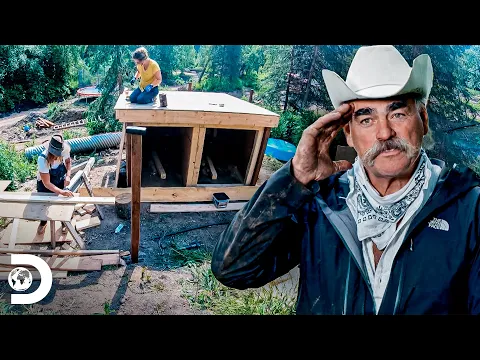

Upon arrival, he found nothing but trees, rocks, and absolute silence. No road, no pole, no previous structures of any kind. Only wild nature and a constant presence of lynxes, moose, and wolves.
Construction of the Wooden House: Manual Engineering in Extreme Climate
Without heavy machinery or modern tools, Duane started to build the main house by himself. He cut down trees, crafted each piece manually, and assembled beams, stairs, windows, fireplaces, storage, and small workshops with his own hands.
The construction took years until it finally became livable — at which point Rena joined him on the mountain.
The multi-story house, seen in BBC reports, became a rare architectural symbol: a completely handcrafted work, built under extreme weather conditions, without conventional electricity or technical support.
Own Energy and Off-Grid Routine: How the Couple Survived for Decades
For decades, life high up on the mountain operated as a laboratory of self-sufficiency. Energy came from small generators and, later, from solar panels installed in the 2000s. Water was collected from streams and from melting snow. Food relied on seasonal planting and adapting cold-resistant species.
The diet included potatoes, vegetables suited for the short summer, and native fruits, supplemented by fishing and regulated hunting — mainly salmon and freshwater fish. In the harsh winter, the priority was to maintain enough stocks to withstand months of deep snow.
Risky Logistics: The Cost of Living Away from It All
Bringing supplies to the location was a delicate operation. The only means of access was by small planes, which often couldn’t land due to snow accumulation. On multiple occasions, pilots had to drop loads from above, wrapped in tarps, because landing was impossible.
During severe storms, the couple could spend weeks without any possibility of leaving — and had to be prepared for that.
Total Self-Sufficiency: Reuse, Resource Economy, and Minimalist Life
The routine on the mountain required that almost everything be reused. Wood was transformed into furniture, pieces, utensils, and structural reinforcements. Food was dried, naturally frozen, or stored for winter. Homemade medicines were prepared using local herbs. Nothing was wasted.
This lifestyle turned the house into its own organism, adjusted to function at the limit, using the natural surroundings with almost military discipline.
Global Impact: Win the Wilderness and the Last Property of the Homestead Act
The story gained international notoriety with the release of the documentary reality show Win the Wilderness: Alaska, by BBC. The program showcased British couples competing for the right to inherit Duane and Rena’s house, which they were already elderly. The footage presented to the public the true meaning of extreme isolation and the improvised engineering that sustained the place for almost 40 years.
The house became even more famous for being one of the last properties acquired under the historical criteria of the Homestead Act, becoming a rare record from the era of American pioneers.
Legacy and Impact: The Ultimate Symbol of Real Remote Life
Even after filming, Duane continued living on the site for years. In interviews, he said that the mountain represented not just a home, but his vision of absolute freedom — a place where every detail had been constructed with purpose and his own effort.
Today, the couple’s story remains one of the most intense and authentic accounts of remote living in the 21st century. It is not about romanticizing, but about resilience, improvised engineering, and a radical choice for total independence.
It is a reminder that in an increasingly connected world, there are still people who choose to build an entire life far from everything — facing extreme cold, limited logistics, and absolute isolation — just to live in peace with nature.