Portuguese
  Spanish


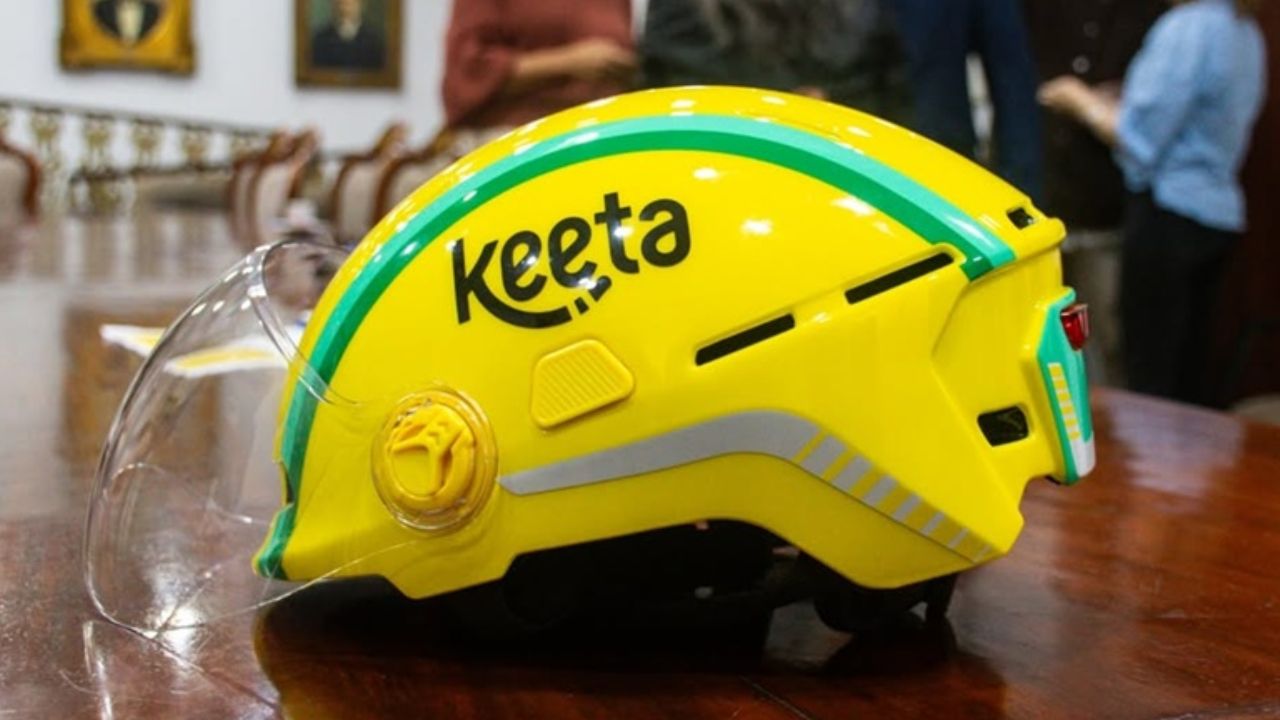

Keeta’s Smart Helmet Arrives in Brazil with Sensors, Bluetooth, and Alerts in Case of Accidents. See How the Equipment Works and Why It Could Change the Routine of Deliverers in the Country.
The delivery company Keeta introduced in Brazil a new smart helmet aimed at deliverers, which uses sensors and Bluetooth technology to provide alerts in case of falls and allow the user to receive route guidance without touching their phone.
The novelty began to be distributed in December 2025, in São Paulo and nearby areas, initially for partner cyclists — with plans to expand to motorcyclists.
The initiative aims to increase safety in deliveries and reduce the risk of accidents while streamlining work.
-
China Develops Custom 140-Ton Electric Mining Truck with 770 kWh Swappable Battery, Deploys 290 Units in Xinjiang’s Largest Zinc Mine

-
Meta to Launch Arena, a New Prediction App Targeting 3.56 Billion Users, Competing with Polymarket and Kalshi

-
Scientist Challenges Famous Human Evolution Theory, Argues Homo Sapiens Evolved Gradually Over Thousands of Years
-
15-Year-Old American Builds Ocean Generator with PVC Pipe and 3D-Printed Propeller for $12, Wins National Prize, Presents at White House, and Makes Forbes 30 Under 30 List




What Is the Keeta Smart Helmet?
The Keeta smart helmet combines a set of technologies to offer comfort, practicality, and safety.
Some features include built-in speakers, a microphone, an internal motion sensor, and Bluetooth connectivity.
With this, the deliverer can answer calls, receive voice route instructions — even in external apps like maps — and hear guidance without needing to touch their phone. This reduces distraction and helps maintain focus on the road.
Additionally, the helmet includes physical safety elements: a visor, reflective strips, and a rear light, which are essential especially for night deliveries.
Fall Sensor: Automatic Alert in Case of an Accident
The major differentiator of the Keeta smart helmet is its fall or impact detection functionality.
The internal sensor detects when the deliverer suffers a fall. Then — after about 12 seconds — the platform app displays help options: call emergency services, activate insurance, or report that everything is okay.
Simultaneously, the monitoring center receives the alert and attempts to contact the deliverer.
This mechanism helps ensure a rapid response in case of an accident, which can save lives or reduce the severity of injuries.
Therefore, the innovation represents an important step in protecting those who work on the streets.
Who Will Receive It and How Will Distribution Work?
According to Keeta, the smart helmet will be provided free of charge to all partner deliverers on the platform.
Distribution starts with cyclists in 2025, and there are plans for motorcyclists to receive helmets soon.
The company is also investing in support infrastructure, such as support centers — with rest areas, water, restrooms, and kitchens — and offers human support 24 hours a day.
These measures are part of Keeta’s strategy to attract workers and solidify its commitment to safety and well-being.
Why Does Keeta Invest in the Smart Helmet?
The company’s logic is twofold: on one side, to reduce phone use during trips — which decreases distractions and the risk of accidents — and on the other, to create a safer and more dignified work environment for deliverers.
The technology provides comfort and agility without compromising safety on the road.
Additionally, by integrating sensors and real-time communication, Keeta reinforces its image as an innovative platform amid intense competition in Brazil’s delivery market.
This can bring benefits to deliverers and consumers, with a more efficient and safer service.
Limitations and What to Observe
Despite the advantages, it is important to remember that the smart helmet brings benefits only to those registered on the Keeta platform.
If the deliverer uses the helmet in another delivery app, the safety features — such as fall sensors and automatic alerts — may not function.
However, functions like receiving calls or hearing route audio remain available via Bluetooth.
Furthermore, the technology does not eliminate the need to ride attentively.
The helmet does not replace basic traffic safety measures — such as obeying signals, using protective equipment, and driving responsibly.
It acts as a safety supplement, not as an absolute guarantee against accidents.
Keeta’s Smart Helmet and the Future of Delivery
The arrival of Keeta’s smart helmet in Brazil marks a significant step in modernizing equipment used by deliverers.
By combining technology and safety, the company demonstrates that it is possible — and necessary — to rethink working conditions in the delivery sector.
If the proposal is well implemented, these helmets could become the standard in the market, raising the level of safety and comfort for those cycling or riding on the streets. And, for consumers, it means potentially safer and faster deliveries.