Portuguese
  Spanish


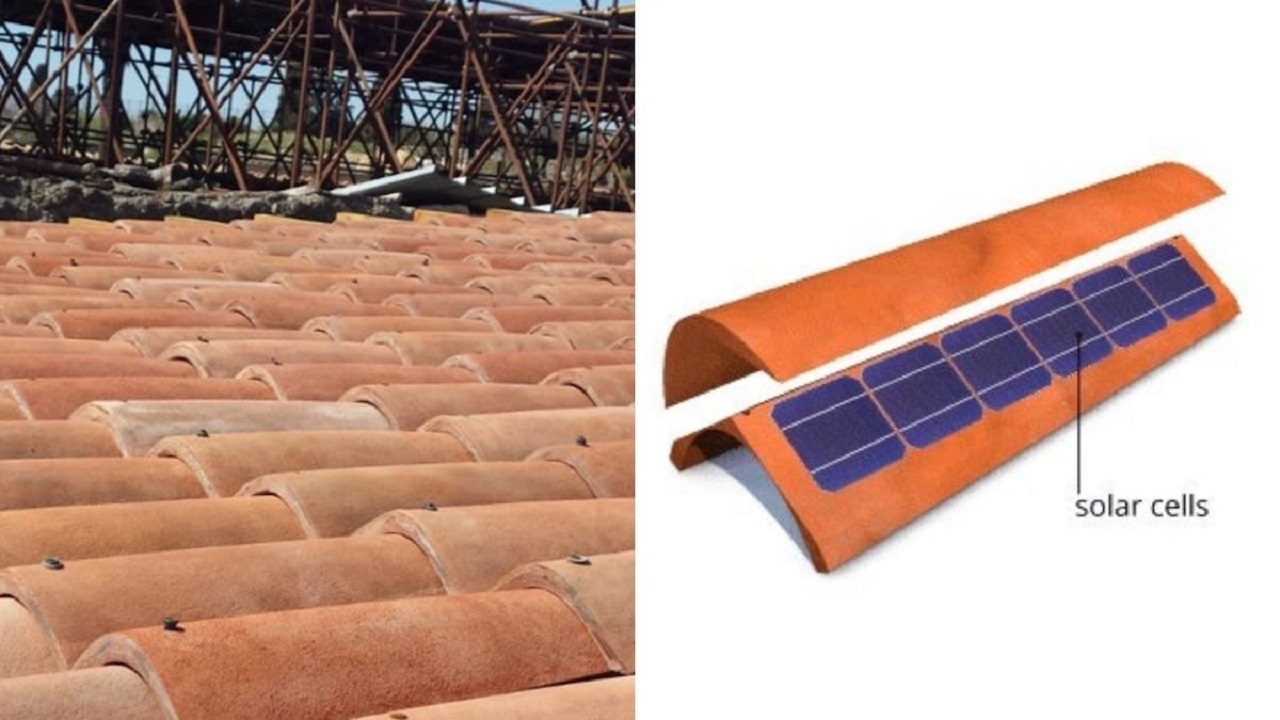

Dyaqua Developed A Solar-Powered Tile That Has The Same Appearance As Conventional Roofs. The Equipment Was Developed With The Aim Of Maintaining The Beauty Of Large Historical Buildings.
Companies around the world are investing in the installation of solar panels on their roofs to save on electricity bills. However, many of the panels feature a design that does not fit some residences. For those living in a historical building, for example, solar panels are still not allowed, for now. To maintain the aesthetics of terracotta, stone, tiles, or even wood, the Italian company Dyaqua produced a solar-powered tile that is quite similar to traditional materials.
Technology Harnesses Solar Energy Without Losing Aesthetic


Dyaqua’s solar tile can be a great solution for equipping historical buildings, such as churches, which typically consume a lot of energy due to their aging architecture.
Shutter colors, facade, and tile types. This is the first solar energy technology capable of harnessing clean and renewable energy without compromising the beauty of historical buildings and landscape. A new patented technology by Dyaqua, with which innovative solar modules can be developed in various materials that resemble real architectural elements.
-
Iraq floats and sinks under an arm of the Euphrates 10 giant concrete boxes of 46,000 tons and 125 meters each to assemble a 2.4 km submerged tunnel and open a new land route between Asia and Europe.

-
Scientists use more than 20,000 artificial birds and solar speakers to “trick” seabirds, reactivate nesting routes, and revive a colony on an island that seemed abandoned.

-
She spent 73 years breathing inside an iron lung, survived the aftereffects of polio, and became the last woman in the United States dependent on the equipment before dying at 78 years old.
-
Brazilian students created a $1 filter using pine bark, cotton, and 3D-printed parts to clean cassava wastewater, reduce the toxicity of a hazardous waste, and transform contaminated water into biofertilizer.



The Italian company is a small family business based in Vicenza, responsible for developing a solar-powered tile that is absolutely unique.
Each tile features tiny photovoltaic cells made from a polymer composite that mimics building materials. The invisible model boasts all the advantages of a solar panel without the visual inconvenience. Simply put, the photovoltaic cells are nearly invisible to the naked eye. After starting production of its innovative technology, the company emphasizes that it has been difficult to keep up with all the orders.
Understand How The Solar-Powered Tile Works
The equipment features a tough, indivisible layer that hides and protects the solar cells inside. The invisible panels are made from a non-toxic, recyclable polymer composite, where monocrystalline silicon cells are integrated.
A special surface, transparent to sunlight and opaque, covers and conceals the solar cells without affecting their performance. The solar tile is connected to a system similar to that of conventional panels and achieves a performance of 70 Wp/m2.
In addition to the benefits already mentioned, the solar-powered tile costs half of a conventional solar panel, but in some places, aesthetics take precedence over performance. The cost is also somewhat higher, at 7 euros per watt compared to 2 euros for a standard module.
GAF Energy Develops Panels That Can Withstand Winds Of 210 Km/h
If your focus is not on historical buildings but rather on more sophisticated residences, GAF Energy, a solar roofing provider from North America, announced the launch of the world’s first solar roof with nails. The technology is called Timberline Solar, which received the Best Innovation award in the Innovation and Smart Cities category at CES 2022.
What makes the product, which generates solar energy, different from other panels on the market is its system that integrates solar technology directly into traditional roofing processes and materials. According to GAF Energy, the tiles are produced at the company’s facilities, located in San Jose, California.
The new panels are designed to withstand winds of up to 210 km/h. According to GAF Energy president, Martin DeBono, solar energy-generating roofs are the future of clean energy, and this equipment is the innovation that will take everyone there.