






 Portuguese
  Spanish
  3 min of reading
  0 comments


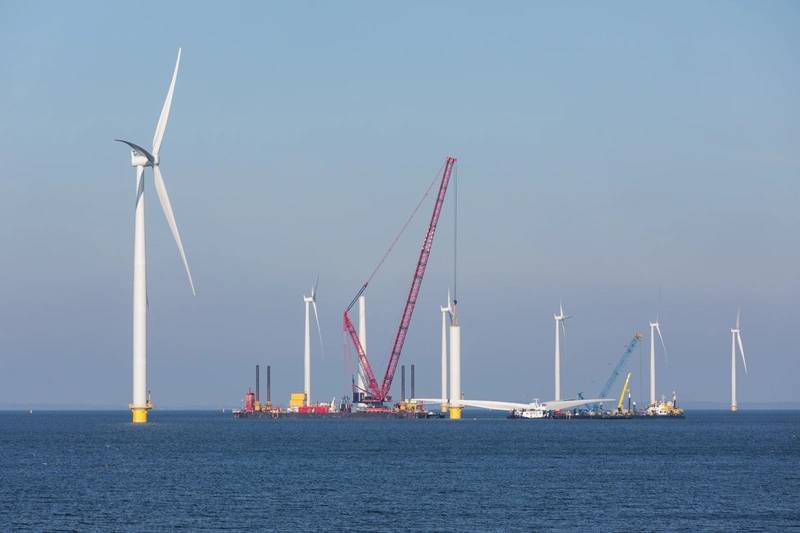
Sif and Ballast Nedam Sign Joint Venture for Decommissioning and Reuse of Steel from Wind Farms.
The decommissioning of offshore wind farms has been a concern for companies in the sector, leading Sif and Ballast Nedam to sign a memorandum of understanding (MoU) to develop a joint venture called BNS Decom.
BNS Decom, aiming to make the decommissioning process more sustainable, intends to revolutionize the way offshore wind farms are decommissioned, serving as the ultimate provider of ready-to-use solutions for asset owners. This innovative approach promises to bring significant benefits to the environment and to the renewable energy sector.
In the proposed collaboration, Ballast Nedam will be responsible for all offshore operations, while Sif intends to cover the part of the work related to receiving and processing decommissioned components for subsequent reuse and recycling. This integrated approach to dismantling and recycling promises to be a major advancement in the decommissioning of offshore joint venture.
-
Oil production grows in Rio, but reserve replacement raises a warning sign

-
Petrobras is expected to complete the drilling of the Morpho well in the Foz do Amazonas in August 2026, the first well in the Equatorial Margin, an oil frontier that the ANP estimates at more than 30 billion barrels and could redraw the map of Brazil.

-
Oil returns to the center of concerns with tension between the US and Iran

-
IEA reduces forecast for global oil demand in 2026 after impacts of the Middle East crisis



Sustainable Decommissioning of Wind Farms
The strategic plan for decommissioning wind farms aims to revolutionize the way offshore and onshore work is conducted, meeting certain constraints to ensure safety, efficiency, and economic viability. The focus is on providing the best value to the asset owner, considering that there are still several years until a significant number of wind farms are decommissioned.
It is important to emphasize the importance of reuse of steel from decommissioned wind farms, as it is a crucial step towards a sustainable and circular future. The transformation of old monopiles into green steel plates for new monopiles in offshore wind energy is one of the ready-to-use solutions that companies like Ballast Nedam and Sif are seeking for the expected decommissioning market.
Joint Venture and Processing of Decommissioned Components
The partnership between companies to prepare for the decommissioning of wind farms is essential, with the joint venture being a strategy that enables the optimization of resources and the expertise necessary for the demands of this rising market. Furthermore, the processing of decommissioned components is a challenge to be faced, for which the companies are preparing with innovative and sustainable solutions.
It is crucial that the dismantling and deactivation of wind farms are carried out safely, efficiently, and economically, considering the reuse of steel, which plays a significant role in the transition to a more sustainable future. With the growing demand for renewable energy, the decommissioning of wind farms is becoming an increasingly relevant issue for the energy sector.
Facing Challenges in Decommissioning Wind Farms
The decommissioning of wind farms represents a significant challenge but also an opportunity to innovate and implement more sustainable practices. The market is looking for ready-to-use solutions that meet the needs of dismantling, deactivation, and material reuse, such as steel, in an efficient and economically viable manner. Europe is at the forefront of this movement, seeking to lead the transition to a more sustainable future in the renewable energy sector.
In summary, the decommissioning of wind farms is a process that requires strategic planning, solid partnerships, and innovative solutions to ensure that resources are reused and that the transition to a sustainable future is successful. The deactivation of wind farms represents a new chapter in the development of the energy sector, and companies are preparing to face this challenge proactively and effectively.








Be the first to react!