Portuguese
  Spanish


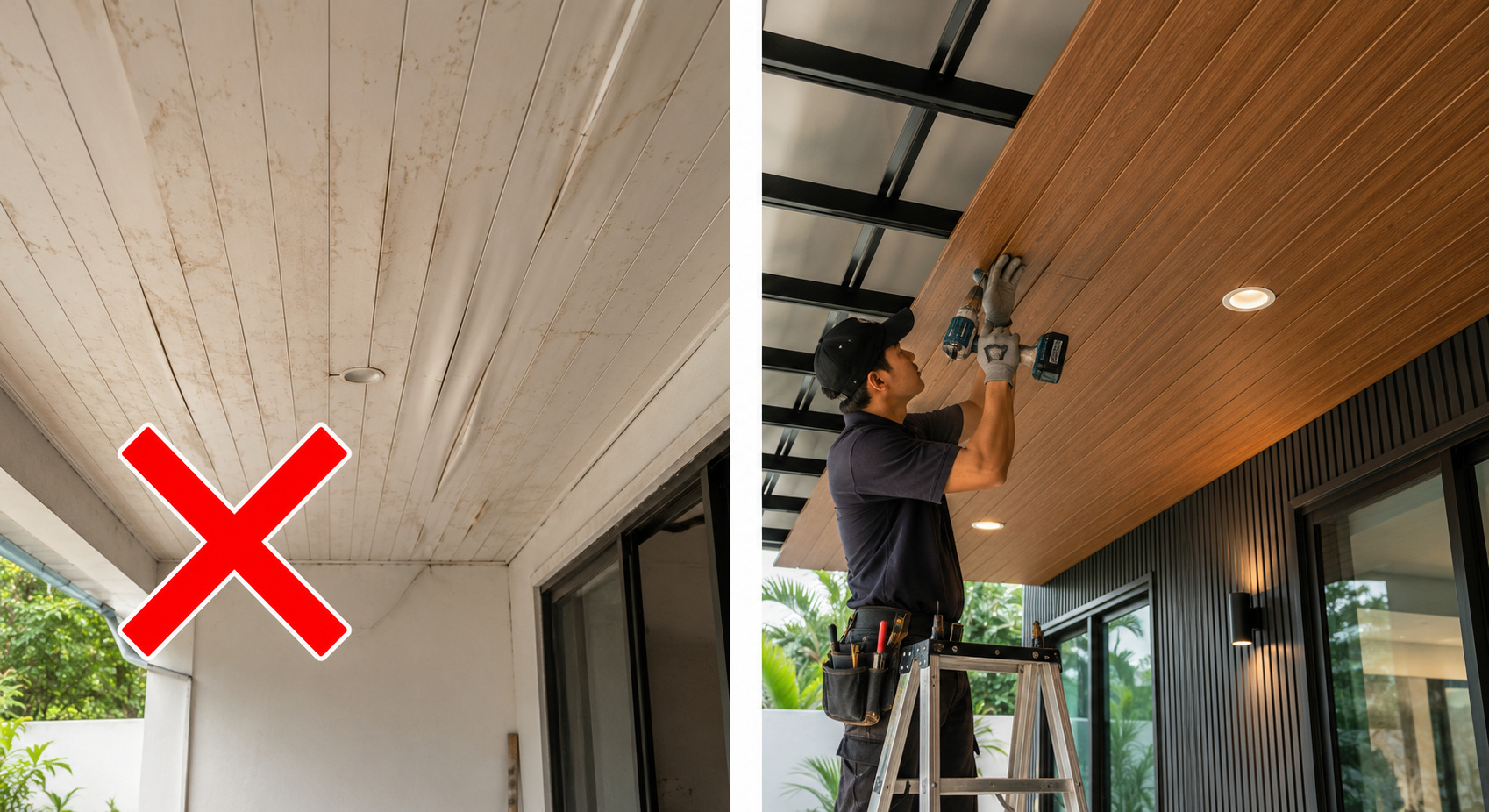


WPC advances in civil construction as an alternative to PVC ceiling by combining wood and polymers into a moisture-resistant, low-maintenance material.
The finishing market has begun to witness the accelerated growth of a material that manufacturers and construction companies are treating as a potential alternative to traditional PVC ceilings in certain residential and commercial projects. Known as WPC, an acronym for Wood Plastic Composite, the material mixes plant fibers and polymers to create lightweight panels that are moisture-resistant and have an appearance similar to natural wood.
In recent years, WPC has started to gain ground in decorative panels, coatings, decks, pergolas, and ceiling systems due to its combination of low maintenance, water resistance, and ease of installation. Industry manufacturers claim that some models can achieve a lifespan of over 20 years in internal and external applications when installed correctly and used within technical specifications.
The growth of the material also follows an important shift in civil construction: the search for finishes that are quicker to install, visually modern, and less vulnerable to common problems such as termites, rotting, peeling, and deformation due to moisture.
-
17-Story Building with 112 Apartments Opens in Australia to House Homeless Population, Offering Fully Equipped Units with Daily On-Site Support

-
81-Meter Bridge Made from Over 7 Tons of Recycled Plastic Connects Isolated Communities in Panama Canal Basin, Allowing Safe Passage for Over 300 Residents
-
Australia’s First Two-Story 3D-Printed House Built in 18 Hours, 22% Cheaper Than Traditional Methods, Uses Concrete That Hardens in 3 Minutes
-
Architect Converts 1955 Grain Silo into 31m² Home with Full Amenities, Including Kitchen, Bathroom, Curved Living Room, and Loft Bedroom




What is WPC and why the material has started to attract attention in civil construction
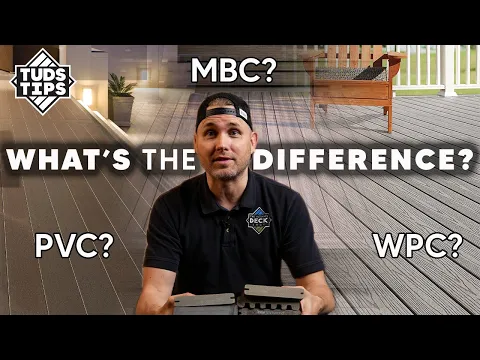
WPC is a composite produced from the mixture of plant fibers, usually derived from wood or bamboo, with thermoplastic polymers. The result is a hybrid material that attempts to combine characteristics of traditional wood with properties associated with industrial plastic.
According to manufacturers and industry associations, the manufacturing process typically involves grinding the plant fibers, mixing with polymers, and extrusion at high temperature to form structured boards, profiles, or panels.

In practice, WPC attempts to solve some limitations of conventional wood. Since the material has a significant presence of polymers, it tends to absorb less water, reducing the risk of rotting, fungus proliferation, and deformations caused by excessive moisture.
This characteristic has helped the product grow mainly in areas subject to sea air, rain, kitchens, bathrooms, gourmet areas, and partially exposed outdoor environments.
The material has started to gain space as an alternative to PVC ceilings in modern projects
Although PVC is still one of the most popular materials for lightweight ceilings in Brazil, WPC has started to appear in projects aimed at premium finishes and aesthetics similar to natural wood.
The main visual argument is precisely in the finish. While many PVC ceilings have an evident plastic appearance, WPC manufacturers have started investing in wood-like textures, reliefs, and shades that more faithfully imitate wood.

Another important factor is that several WPC systems use modular fittings and lightweight profiles, allowing relatively quick installation on metal or wooden structures.
In many modern architectural projects, the material has started to be used not only in ceilings but also in walls, internal facades, and integrated decorative panels.
Manufacturers claim that some models can last more than 20 years with low maintenance
Durability is one of the main commercial arguments of WPC. Companies in the sector claim that certain models can achieve a lifespan of over two decades when used under suitable conditions.
Performance depends on factors such as composite formulation, quality of installation, sun exposure, ventilation, and humidity level of the environment. Even so, manufacturers highlight that the material requires much less maintenance than natural wood in various applications.
According to companies in the segment, WPC does not require frequent varnishing, constant painting, or chemical treatments against termites in many domestic scenarios.
Another commercially explored point is dimensional stability. Since the material combines vegetable fibers with polymers, it tends to suffer less warping and cracking than some woods exposed to continuous moisture.
Water resistance has become one of the most explored features by companies in the sector
The growth of WPC is happening at a time when moisture-resistant materials have gained enormous relevance in civil construction.
Problems involving infiltration, mold, mildew, and accelerated deterioration of conventional wood have led consumers to seek more stable solutions for internal and external areas.

According to manufacturers, WPC has reduced water absorption compared to untreated natural wood. This helps to reduce excessive expansion, swelling, and structural degradation in humid environments.
This feature has made the material grow especially in applications such as outdoor decks, pool areas, bathrooms, kitchens, gourmet balconies, and coastal regions.
WPC also tries to occupy space as a lighter and more practical solution in installation
Another reason for the material’s expansion lies in operational practicality. Many WPC systems are sold with modular fittings, standardized profiles, and relatively simplified installation.
In practice, this reduces construction time and the need for complex post-installation finishing. In some projects, the panels arrive ready for final installation without the need for additional painting.
Companies in the sector also highlight the relatively low weight of certain models compared to conventional solid wood solutions or heavier structures.
This factor facilitates transport, handling, and adaptation in quick renovations, a segment that has grown strongly in recent years in the Brazilian construction and interior market.
The material still has limitations and does not automatically replace all types of ceiling
Despite commercial growth, experts point out that WPC does not automatically eliminate other finishing solutions.

The performance of the material varies greatly depending on the manufacturer, formulation, and thickness. Some products have limited resistance to high temperatures, intense UV exposure, or large structural loads when compared to specific materials.
Additionally, the cost can vary significantly depending on the finish and technology employed. In some cases, premium WPC systems may cost more than simple conventional PVC ceilings.
Another important point is that inadequate installation can compromise thermal expansion, fittings, and product durability, especially in outdoor areas subject to large climatic variations.
Architects have started using WPC to create environments with a wood-like appearance without the same maintenance issues
A large part of the material’s recent popularity is linked to its visual appeal. WPC allows for the creation of environments with an aesthetic similar to natural wood without requiring the constant maintenance typical of some types of exposed wood.
This has helped architects and designers expand the use of the material in contemporary projects, especially in gourmet areas, slatted panels, wood-like ceilings, and decorative facades.
The growth of integrated kitchens, covered outdoor spaces, and living environments has also increased the demand for moisture-resistant and visually sophisticated finishes.
In many projects, WPC has come to occupy precisely this intermediate space between the practicality of PVC and the appearance of natural wood.