Portuguese
  Spanish


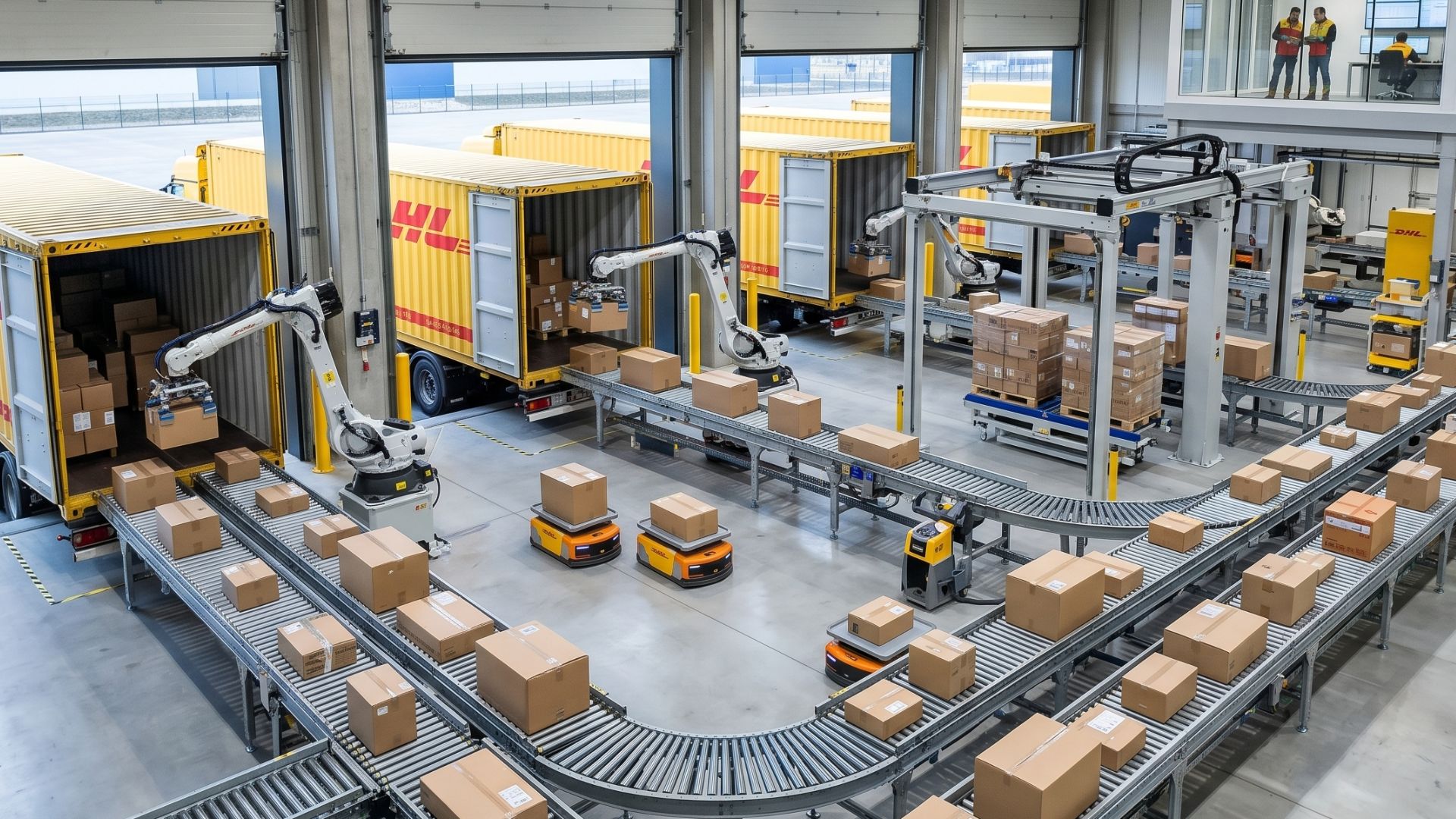


DHL plans to implement more than 1,000 Stretch robots from Boston Dynamics to automate truck unloading in logistics centers.
Global logistics is entering a new phase of automation. In May 2025, DHL Group and Boston Dynamics announced a significant expansion of their partnership to accelerate the use of robots in the company’s logistics centers. The plan involves deploying more than 1,000 units of the Stretch robot, specifically developed to unload trucks and containers, one of the heaviest and most repetitive tasks within the modern logistics chain.
The initiative is noteworthy because it does not only involve experimental tests. The Stretch is already operating in real DHL facilities in North America, and the new partnership aims to expand automation on a large scale. The proposal is to reduce physically demanding activities, increase productivity, and address the growing labor shortage observed in various logistics markets.
Truck unloading remains one of the most demanding activities in modern logistics
When a truck arrives at a distribution center, someone needs to remove hundreds or thousands of boxes from its interior.
-
Sixth-grader in Miami wins Lemelson Young Inventor Prize for creating water-absorbing concrete using discarded oyster shells and charcoal.

-
Brazilian Researchers Develop Portable, Painless, Radiation-Free Breast Cancer Tracker Using Microwaves, Costing Around $200 and Potentially Replacing $240,000 Mammograms
-
Beer as a Vaccine? Scientist Develops Experimental Method with Live Yeasts, Tests Own Brew, and Publishes Results on Zenodo

-
Brazilian Researchers Develop ‘Rapha’ Device Using Natural Latex and LED Light to Heal Diabetic Foot Ulcers and Prevent 50,000 Annual Amputations


Despite all the modernization of the logistics chain, this is still an activity that often requires intense physical effort. Employees work in hot, cold, or confined environments, repeatedly lifting boxes for hours.


It was precisely to solve this problem that Boston Dynamics developed the Stretch. Unlike the company’s famous bipedal robots, it was created specifically for logistics environments and cargo handling operations.
The Stretch was designed to work inside trucks and containers
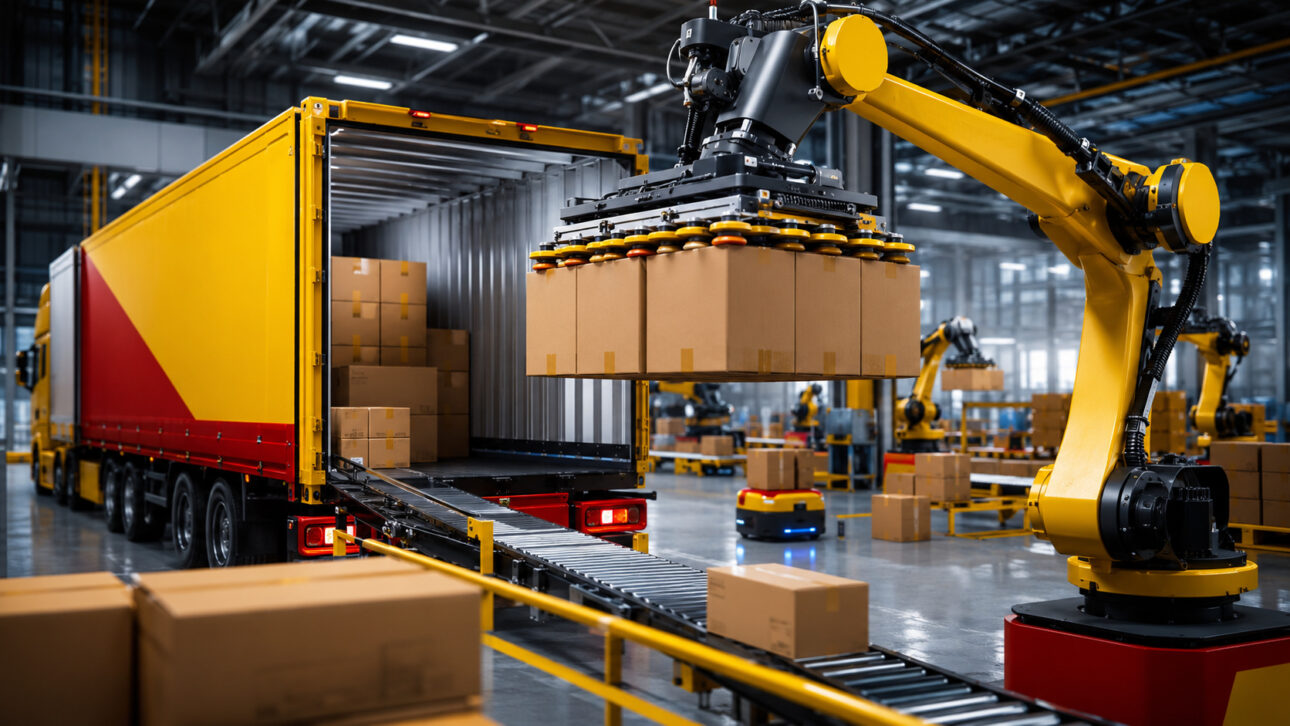
The robot has a mobile base equipped with sensors, cameras, and autonomous navigation systems. On this platform, there is a robotic arm capable of reaching boxes in different positions and removing them continuously.
The machine uses computer vision to identify the volumes and an industrial suction system to grab the boxes without the need for human intervention. According to Boston Dynamics, the equipment was developed to handle the enormous variety of sizes and shapes found in real distribution operations.
The system can move hundreds of boxes per hour
One of the most impressive numbers of the Stretch is its productivity. According to data released by Boston Dynamics, the robot was designed to achieve rates of up to 700 boxes per hour in certain operations, maintaining a continuous unloading flow. This capability allows trucks to be processed with greater speed and predictability.
Besides speed, there is another important benefit: consistency.
While human operators naturally slow down after long periods of physical work, the robot maintains stable performance throughout the shift.
DHL sees automation as a response to a growing labor problem
Global logistics faces increasing difficulties in hiring workers for certain operational roles.
Repetitive, physically demanding activities carried out in high-traffic environments are among the most affected.
According to DHL, automation is not just a matter of efficiency. The company considers that technologies like the Stretch help address labor availability challenges and allow employees to be directed to more complex and higher value-added tasks. This movement follows a trend observed throughout the global logistics industry.
The robot does not follow tracks and can move independently through the warehouse
An important feature of the Stretch is its mobility. Unlike many traditional industrial systems, it does not rely on fixed tracks or completely isolated areas.

The equipment uses sensors and navigation systems to autonomously move to the workplace, positioning itself in front of trucks or containers that need to be unloaded.
This flexibility allows the same robot to be used in different docks and operational areas throughout the day.
The partnership between DHL and Boston Dynamics marks one of the largest deployments of logistics robots in the world
The announcement involving more than 1,000 units placed the project among the largest logistics automation initiatives ever publicly disclosed.
The scale of the deployment demonstrates that robots are moving beyond mere technological experiments to assume permanent roles within the supply chain.
For companies that move millions of packages daily, small productivity improvements can have huge impacts over the year. It is precisely in this context that DHL intends to use the Stretch.
Automation is advancing rapidly within distribution centers
The Stretch robot is part of a much larger transformation. In recent years, logistics companies have begun adopting automated systems for internal transport, order sorting, stock organization, and cargo movement.
Mobile robots, artificial intelligence, computer vision, and autonomous systems are gradually changing the way warehouses operate.
The unloading of trucks was one of the areas that still heavily depended on manual labor. Now, this reality is beginning to change.