Portuguese
  Spanish


U.S. Company Tests Millimeter-Wave Drilling Technology Capable of Reaching Superheated Rocks up to 20 km Deep.
The oil and gas industry, today one of the world’s largest energy suppliers, may be the basis for a new breakthrough. A North American company is seeking to transform this existing infrastructure into a clean and abundant energy source by exploring the potential of superheated geothermal energy.
Goal of Revolutionizing the Energy Sector
Founded in 2018, Quaise Energy’s main mission is to revolutionize the energy sector.
The chosen path is the utilization of super-deep geothermal energy, a virtually untouched source until now due to technological challenges.
-
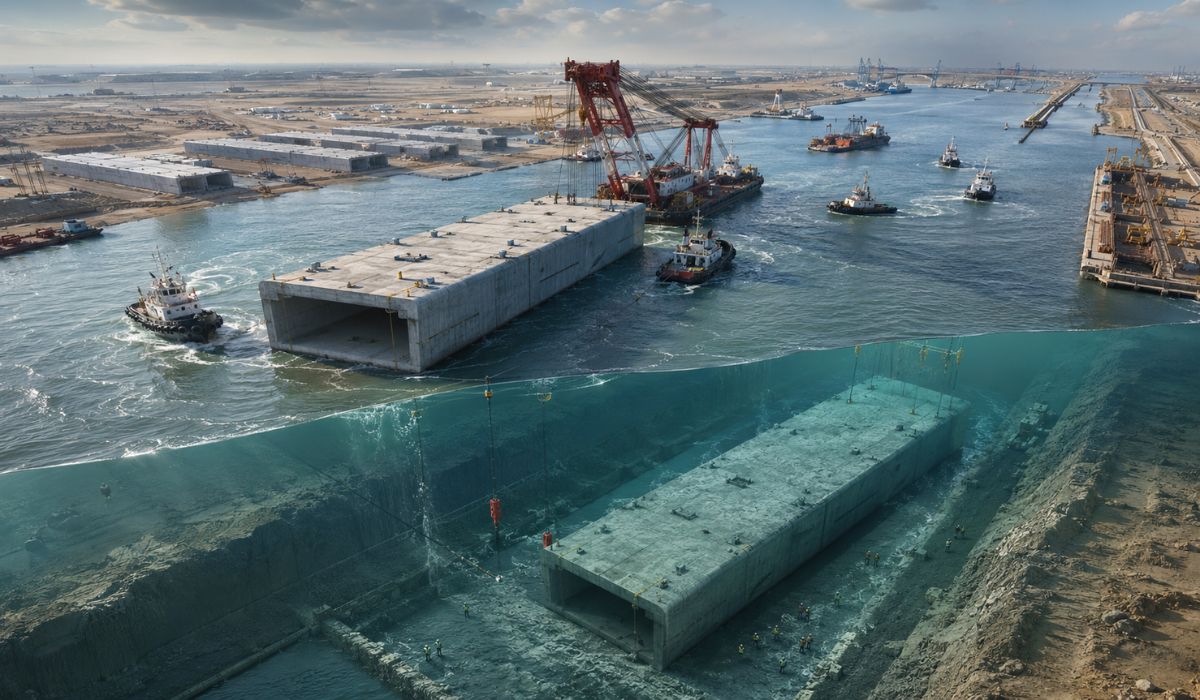
Iraq floats and sinks under an arm of the Euphrates 10 giant concrete boxes of 46,000 tons and 125 meters each to assemble a 2.4 km submerged tunnel and open a new land route between Asia and Europe.

-
Scientists use more than 20,000 artificial birds and solar speakers to “trick” seabirds, reactivate nesting routes, and revive a colony on an island that seemed abandoned.

-
She spent 73 years breathing inside an iron lung, survived the aftereffects of polio, and became the last woman in the United States dependent on the equipment before dying at 78 years old.
-
Brazilian students created a $1 filter using pine bark, cotton, and 3D-printed parts to clean cassava wastewater, reduce the toxicity of a hazardous waste, and transform contaminated water into biofertilizer.



To reach these extreme depths, the company is developing an innovative drilling technology based on millimeter waves.
This technique allows access to depths far beyond the limits of conventional drilling, where high temperatures can generate clean and abundant energy, accessible on a global scale.
Practical Demonstration of Technology in Houston
Recently, millimeter-wave drilling technology was successfully demonstrated on a large oil and gas platform in Houston, Texas.
According to the company, this is the first hybrid drilling rig capable of combining conventional and millimeter-wave methods.
“This is the first hybrid drilling rig, combining conventional and millimeter-wave capabilities“, declared the company. The advancement represents an important step towards the production of superheated geothermal energy.
Oil and Gas Infrastructure Can Accelerate the Process
Quaise Energy emphasizes that the current oil and gas industry drills about 70,000 wells per year worldwide, using nearly 2,000 rigs.
This entire structure and operational knowledge would be essential for enabling the expansion of geothermal energy.
“By using these resources to drill superheated geothermal wells, we can generate abundant base-load energy at record speed. There is no other energy solution capable of achieving the same scale and speed“, stated the company.
Depths Greater than the Deepest Well in the World
Quaise Energy’s plans involve drilling that can reach depths between 3 and 20 kilometers. This level surpasses even the Kola well in Russia, which reaches a depth of 12.2 kilometers.
At such depths, one can find what is called “superheated rock”, where temperatures exceed 375°C.
This intense heat can be converted into large-scale geothermal energy, contributing to the U.S. Department of Energy’s goal of increasing this type of energy production by 20 times in the coming years.
Currently, geothermal energy accounts for less than 1% of the total electricity generated in the United States.
The biggest challenge for the growth of this source lies precisely in the limitations of conventional drilling technologies, which cannot reach these deep and superheated zones. Millimeter-wave drilling emerges as a solution to this hurdle.
How Millimeter-Wave Drilling Works
The method developed by Quaise uses a device called a gyrotron. This equipment emits high-frequency and high-power millimeter waves, capable of vaporizing rocks, functioning like a “turbocharged microwave” that can drill the underground with precision.
Currently, Quaise Energy, in partnership with Nabors Industries, is conducting detailed tests to integrate the new technology into existing oil and gas platforms.
“We took a full-scale drilling rig and integrated our millimeter-wave drilling system. We call it a hybrid rig, capable of performing both conventional and millimeter-wave drilling to unlock geothermal energy at great depths worldwide“, explained Andres Calabressi, head of manufacturing at Quaise.
In a recent demonstration reported by New Atlas, the company succeeded in melting a hole in a combination of granite and basalt rock.
The test was conducted using a 100 kW gyrotron, powered by 50,000 volts of direct current, coupled with Nabors F equipment.
During the procedure, the drill operated at approximately 48 kW, burning the rock at a rate of 2 centimeters per minute.
According to the company, the success of the test reinforces the potential of the technology to make superheated geothermal energy a global reality.
With tests still ongoing, Quaise Energy’s expectation is to start mobilizing resources and preparing its first commercial geothermal project in the coming years.
“After these tests are completed, we will begin to mobilize everything and prepare for our first commercial geothermal project in the coming years“, concluded Calabressi.