Portuguese
  Spanish


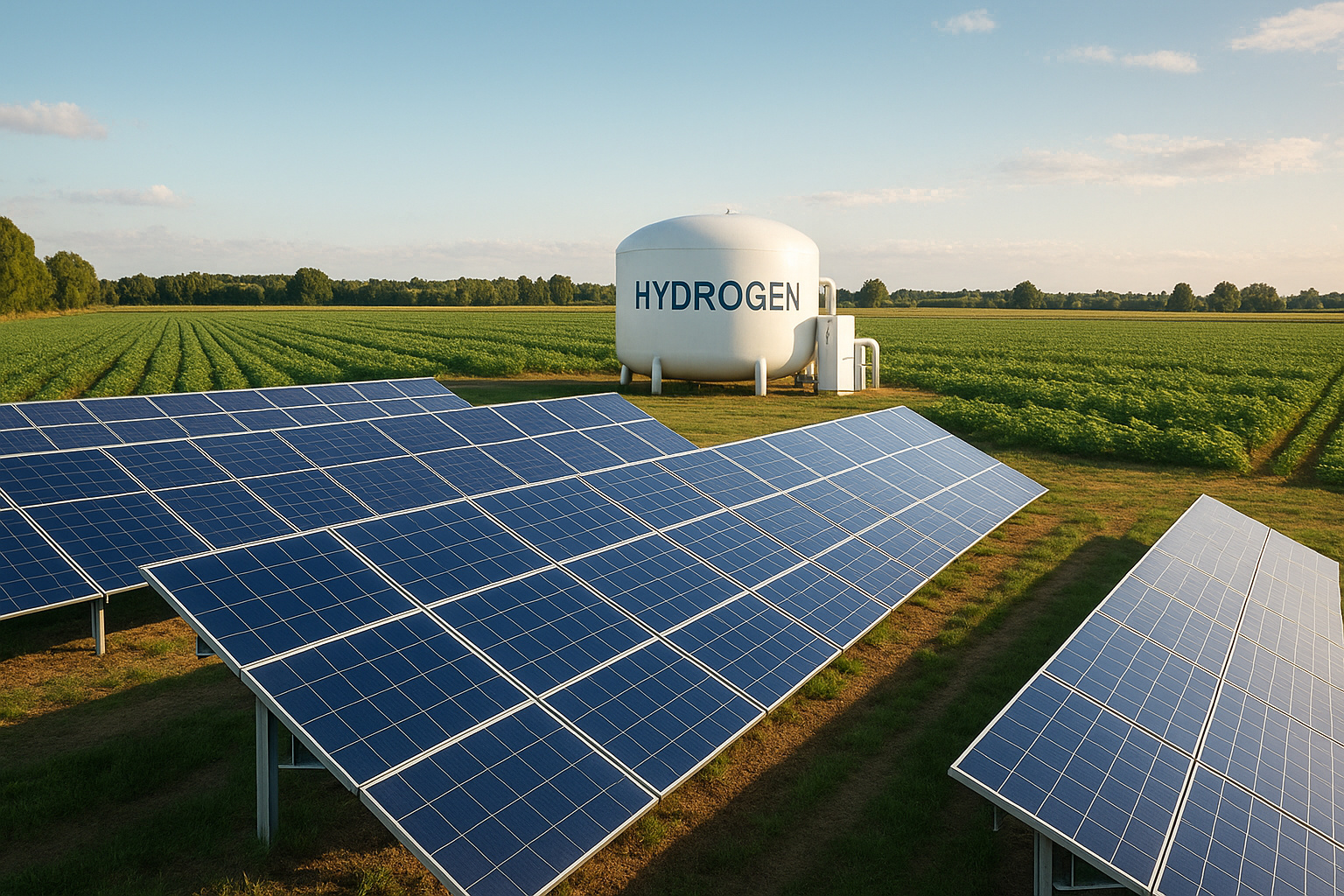

The solar energy has taken on a decisive role in Brazil’s energy transition in recent years. This change, which is growing steadily, has created the conditions for more advanced technologies to take root in agriculture, especially renewable hydrogen. As a result, the country has become part of a global movement that seeks to reduce emissions and modernize the supply infrastructure without compromising productivity.
The interest in solar energy did not arise by chance. In 2012, when Brazil regulated the distributed generation system, according to Aneel, small producers could inject clean energy into the grid for the first time. This change stimulated investments in rural properties and expanded the use of photovoltaic systems on farms that, until then, relied on fossil fuels or unstable grids.
Over the years, this expansion has intensified. The rural sector, traditionally sensitive to energy costs, began to see solar generation as a strategic ally. According to data released in 2025 by Absolar, Brazil added more than 10 GW of solar capacity in a single year, while 330 thousand systems were installed in the field. These numbers illustrate why the country has established itself as one of the largest solar markets in the world.
-
With a record production of nearly 3 million barrels per day, Petrobras resumes importing diesel in July, highlighting the bottleneck in Brazilian refining.

-
Qantas and Airbus Invest in Company Aiming to Convert Unsorted Household Trash into Jet Fuel

-
Brazil’s ANP Opens 86 New Oil Blocks in the Equatorial Margin, Expanding the Amazon River Mouth Frontier

-
OPEC+ Boosts Oil Supply by 188,000 Barrels per Day in July 2026, Leading to Price Drop from $112 to $89 per Barrel in Under Two Months


The Energy Transformation as a Pathway to New Technologies
As the agricultural sector adopted solar energy, more sophisticated alternatives began to gain relevance. Among them, renewable hydrogen stands out. This technology, which uses clean electricity to separate hydrogen from water, emerges as a promising solution for energy storage and decarbonization of agricultural machinery.
This advancement does not happen in isolation. It is the result of decades of research in energy efficiency and a global need to reduce carbon emissions. Since the Kyoto Protocol in 1997, according to UN Climate information, the world has been seeking ways to balance development and preservation. By joining this effort, Brazil has strengthened policies focused on clean energy and opened space for innovation.
Today, the synergy between solar energy and renewable hydrogen creates a new stage in the Brazilian energy transition. In the field, this means more savings, less waste, and greater autonomy, as producers can store surplus energy for periods of low solar radiation or high operational demand.
Solar Energy and Sustainability in Agriculture
The growth of solar energy in agriculture also strengthens sustainable practices. As agricultural production directly depends on environmental conditions, the adoption of clean sources has become essential to reduce climate risks and ensure food security.
Furthermore, solar systems lower operational costs. According to technical surveys published by the Ministry of Mines and Energy in 2024, rural properties that adopt solar energy report significant reductions in electricity expenses. Thus, photovoltaic energy not only improves financial management but also contributes to modernizing production chains.
This transformation also encourages a broader perspective on complementary technologies. With renewable hydrogen, it becomes possible to fuel agricultural vehicles, store energy for long periods, and create hybrid systems that combine operational efficiency and environmental responsibility.
The Role of Renewable Hydrogen in the Future of Agriculture
Although renewable hydrogen is still in the expansion phase in Brazil, experts consider its integration into agriculture a growing trend. The technology presents unique advantages, as it allows regions with high solar irradiation, such as the interior of the Northeast and Midwest, to produce clean energy even during non-sunny hours.
According to studies released by the IEA – International Energy Agency, countries that invest in renewable hydrogen tend to significantly reduce their dependence on fossil fuels, creating new production chains and increasing global competitiveness. By advancing in this direction, Brazil leverages its climatic and territorial advantages to lead this emerging sector.
Moreover, the potential to export green hydrogen attracts interest from international companies and governments. This movement creates economic opportunities while stimulating investments in infrastructure and research.
Sustainability as a Strategic Axis of Transformation
The rise of solar energy and renewable hydrogen reinforces the importance of public policies aligned with sustainability. Given Brazil’s abundance of sunlight and vast territorial area, the expansion of renewable energies becomes not only feasible but strategic.
This scenario also strengthens environmental commitments made at global conferences. During the COP30, for instance, discussions highlighted the urgency of accelerating the energy transition, adopting low-emission systems, and encouraging technological solutions in productive sectors. The advancement of solar energy in Brazilian agriculture demonstrates how these goals are beginning to materialize concretely.
Furthermore, solar energy prevents significant CO₂ emissions, directly contributing to climate goals. Absolar estimates that the systems installed in the field have already prevented the release of millions of tons of greenhouse gases, further emphasizing the social, economic, and environmental relevance of this transformation.
A Broad Horizon Full of Possibilities
The combination of solar energy and renewable hydrogen marks a turning point in Brazil’s energy history. It unites agricultural tradition, technological innovation, and environmental responsibility. At the same time, it transforms the countryside into a decisive protagonist in the transition to a cleaner future.
Sustainability thus becomes a central element of rural development, allowing producers to adopt modern technologies, reduce costs, and enhance resilience in the face of climate change. Solar energy, in turn, opens doors for new solutions to consolidate Brazil as a global reference in innovation and preservation.
The country continues to advance, reinforcing the essential role of renewable energies to ensure prosperity and environmental balance in the coming decades.