






 Portuguese
  Spanish
  5 min of reading
  0 comments


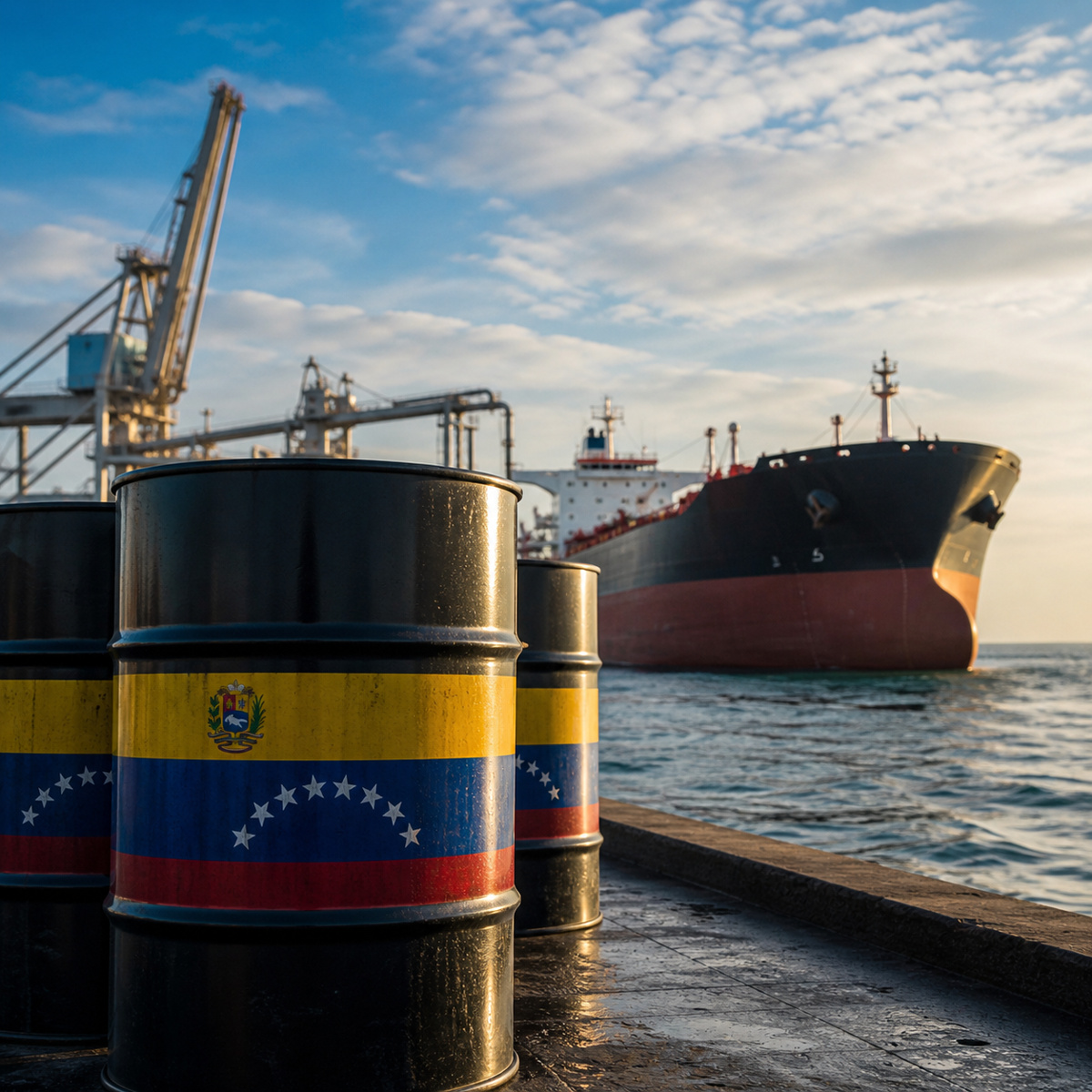
Venezuela’s oil exports surge 14% to 1.23 million barrels/day, boosting production and reigniting global energy dispute.
Venezuela’s **oil** **exports** saw a significant increase in April, reaching 1.23 million barrels per day (bpd). This figure represents a 14% growth compared to the previous month and marks the highest volume exported by the country since 2018.
This movement signals an important recovery in **oil production** and reinforces Venezuela’s strategic role in the international **energy** market. After years of retraction, the country re-emerges as a relevant supplier at a time when global demand remains high.
**According to shipping information and documents from the state-owned PDVSA, released last Friday (1st)**, the change occurs in a context of sanction easing and new commercial agreements, which have opened space for increased exports and the gradual recovery of the Venezuelan oil industry.
-
Oil production grows in Rio, but reserve replacement raises a warning sign

-
Petrobras is expected to complete the drilling of the Morpho well in the Foz do Amazonas in August 2026, the first well in the Equatorial Margin, an oil frontier that the ANP estimates at more than 30 billion barrels and could redraw the map of Brazil.

-
Oil returns to the center of concerns with tension between the US and Iran

-
IEA reduces forecast for global oil demand in 2026 after impacts of the Middle East crisis


**Exports on the rise and resumption of oil production after years of restrictions**
The growth in **exports** is directly linked to the recovery of **oil production**, which had been heavily impacted by international sanctions and operational limitations. In April, 66 vessels left the country loaded with crude oil and derivatives, surpassing the 61 ships recorded in March, when the exported volume had been 1.08 million bpd.
This progress demonstrates a consistent improvement in **Venezuela’s** logistical and productive capacity, as it managed to reduce accumulated inventories and increase the pace of shipments. The recovery is not isolated but rather the result of a series of structural changes that have been implemented in recent months.
Furthermore, the increase in exports occurs in a favorable international scenario, with sustained prices and strong demand for **energy**, especially in emerging markets and regions needing supplier diversification.


**Sanction easing and new agreements boost exports and energy**
One of the main drivers of this growth was the easing of sanctions imposed by the United States. Licenses granted this year allowed international companies to resume negotiations with state-owned PDVSA, significantly expanding the reach of **exports**.
Trading companies like Vitol and Trafigura began acting as intermediaries, connecting Venezuelan oil to refineries in the United States, Europe, and Asia. This move helped to streamline commercial flow and strengthen the country’s presence in the global **energy** market.
Furthermore, a political agreement involving leaders such as Donald Trump and Venezuelan official Delcy Rodríguez contributed to creating a new negotiation environment. This understanding paved the way for the gradual resumption of **oil production** and an increase in exports.
**United States, India, and Europe lead demand for Venezuelan oil**
Data shows that the United States has once again become the main destination for **Venezuela’s** **oil** **exports**, with approximately 445,000 bpd in April, up from 363,000 bpd recorded in March.
India also expanded its share, increasing from 342,000 bpd to 374,000 bpd, while Europe increased its imports from 144,000 bpd to approximately 165,000 bpd.
Another relevant data point is the shipment of approximately 187,000 bpd to terminals in the Caribbean, which function as storage and redistribution centers. This logistical model contributes to greater flexibility for exports and expands the commercial reach of Venezuelan oil.
Among the main agents involved in this flow are:
- Trading companies, responsible for about 56% of exports (691,000 bpd)
- Chevron, with approximately 25% (308,000 bpd), up from 267,000 bpd in March
These figures show how Venezuela is managing to diversify its markets and rebuild its presence in the global energy trade.

India’s strategic role and growing energy demand
India has consolidated its position as a strategic partner for Venezuela in the oil sector. Reliance Industries’ refinery received large volumes directly from PDVSA, in addition to acquiring additional cargoes through trading firms.
This movement reflects the growing demand for energy in emerging economies, which seek reliable suppliers to sustain their industrial growth. The trend is for exports to the Asian market to continue increasing in the coming months.
Monitoring data indicates that at least three supertankers chartered by Reliance are awaiting loading in Venezuelan ports, which reinforces the expectation of continued export growth.
Diversified exports and new dynamics in the oil market
Another relevant point is the diversification of exports, which now reach a greater number of clients. Unlike the previous period, when sanctions severely limited the destinations of Venezuelan oil, the country can now operate with more flexibility.
This change creates new dynamics in the market, allowing Venezuela to expand its global participation and strengthen its position in the energy sector. At the same time, the United States continues to exert influence over sales revenue through financial oversight mechanisms.
In addition to crude oil, the country also exported 360,000 metric tons of derivatives and petrochemicals in April, slightly below the 382,000 tons recorded in March. Naphtha imports, meanwhile, were around 141,000 bpd, compared to 155,000 bpd in the previous month.
Gradual recovery of oil production and reduction of internal stocks
The resumption of exports is also linked to the reduction of accumulated stocks and the increase in oil production. Venezuela has been able to reorganize its production chain, even in the face of structural challenges.
Among the factors that contributed to this progress are:
- Reactivation of operations in oil fields;
- Partnerships with international companies;
- Improvement in transport and export logistics.
These measures have allowed the country to increase its production capacity and meet the growing global demand for energy. Although limitations still exist, the current scenario indicates a trend of consistent recovery.
Venezuela returns to the center of the global energy dispute
With the increase in oil exports, Venezuela once again plays a relevant role in the geopolitics of energy. The country, a member of OPEC, now influences the balance between supply and demand in the international market again.
This rapprochement has important implications, such as:
- Possible impact on global oil prices;
- Redefinition of trade routes;
- Greater competitiveness among international suppliers.
Venezuela’s renewed presence in the market contributes to diversifying available energy sources, which is strategic in a global scenario marked by uncertainties and constant changes.
A new cycle for Venezuelan exports, oil, and energy
Recent performance indicates that Venezuela is entering a new cycle in the energy sector. The growth of exports and the recovery of oil production show that the country has managed to overcome some of the difficulties faced in recent years.
Still, the future will depend on factors such as political stability, the continuity of international licenses, and the ability to attract investments. If these conditions are maintained, the trend is for the country to consolidate its position as one of the world’s leading oil exporters.
For the global market, this resumption represents a significant change. Venezuela’s return as an active supplier expands supply options and reinforces the strategic importance of oil in the world’s energy matrix.
With information from CNN Brasil.






Be the first to react!