






 Portuguese
  Spanish
  5 min of reading
  2 comments


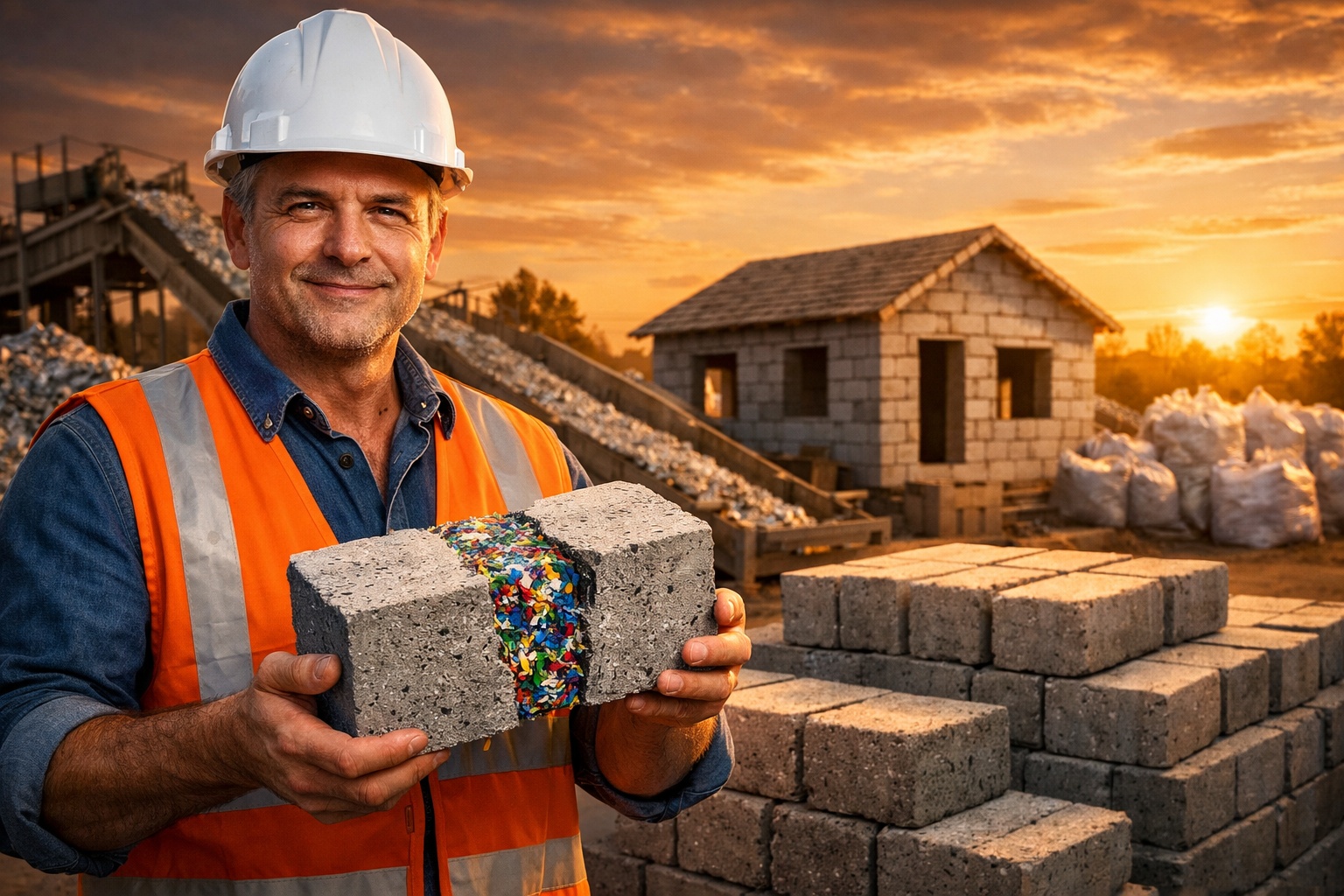


Civil Engineer Transforms Unrecyclable Plastic into RESIN8, Processes 610 Tons Per Month and Builds Houses with Blocks 15% Lighter in South Africa.
For decades, Abraham Avenant worked with what most civil engineers work with: concrete, foundations, and infrastructure projects. With over 25 years of experience in the construction sector in South Africa, he knew every detail of the materials that go into a construction project — and he also knew what was left over: tons of unrecyclable plastic that had no destination and inevitably ended up in landfills or the rivers of Cape Town. It was this technical background that made a difference when he came across the technology developed by CRDC Global, a company founded in 2018 in Costa Rica by Donald Thomson, a developer who started transforming plastic waste into building materials to revitalize local communities. Avenant did not see an environmental cause there. He saw an engineering solution.
“When I understood the process, it became clear that this was not a romantic idea about recycling,” he would explain later. “It was a concrete response to two problems I saw every day: plastic that has no destination and lack of affordable materials for construction.”
In 2019, he took over the operation of CRDC in South Africa as CEO and began to structure the first industrial plant of its kind on the African continent.
-
Bolivian Female Construction Workers Form Association to Combat Discrimination and 38% Pay Gap in the Industry

-
Near Amsterdam, residents buy land and discover they must also build streets, manage drainage, handle waste, and grow food on half their plot.
-
Brazil’s WEG to Open New Factory in China by 2027, Expanding Production of Large Rotating Electric Machines and Low to Medium Voltage Motors in Rugao

-
Chinese Shipyard Secures $1 Billion in Orders for Low-Carbon Container Ships Amid Global Fleet Renewal Efforts


What Is RESIN8: Sustainable Aggregate that Replaces Gravel and Sand in Concrete
The name may sound technical, but the principle is straightforward: any type of plastic — dirty, mixed, or contaminated, the kind that conventional recyclers refuse — goes into the machine and comes out as RESIN8, a patented eco-aggregate that replaces part of the gravel and sand in conventional concrete.
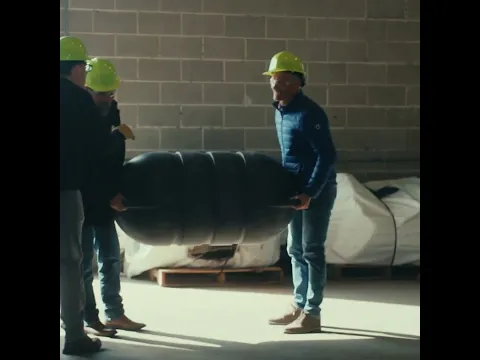

The process begins with the granulation of the plastic. The material is shredded, mixed with mineral additives, and extruded until it becomes a hybrid polymer-mineral aggregate with a grain size of 6.5 mm. This aggregate is then incorporated into the concrete of partner manufacturers, who use it to produce structural blocks, pavers, curbs, pipes, and slabs.
Proven Technical Performance
The result is measurable:
- Blocks up to 15% lighter than conventional concrete
- Better thermal performance
- Compliance with South African construction standards
Tests conducted at Stellenbosch University and Cyril Attwell, as well as certification to the international ASTM standard, confirmed the structural viability of the material.

But the central point of RESIN8 is economic: the system accepts exactly the plastics that have no commercial value — multilayer packaging, bags, polystyrene, straws, and snack packaging. By creating demand for this waste, CRDC creates a market where there was none before.
“If 2.8% of all concrete produced in the world incorporated RESIN8, the global problem of plastic pollution would be solved,” Avenant told Concrete Trends.
Blackheath Plant Processes 610 Tons of Plastic Per Month
The CRDC plant is located in Blackheath, an industrial area of Cape Town. Operating at full capacity, it processes 610 tons of plastic per month and produces 725 tons of RESIN8.
This raw material goes to block manufacturers serving public and private social housing and urban infrastructure projects.
“The Bag That Builds”: 500 Collectors Transforming Waste into Building Material
To feed the production, CRDC created the community program “The Bag That Builds.”

The model is simple:
- Reusable bags are distributed to schools and communities
- Any plastic can be deposited
- No need to separate
- The whole bag goes into the conversion process
This system has structured a network of over 500 partner collectors, who are paid for the material delivered.
Previously, snack packaging and disposable cups were ignored because they had no commercial value. With the program, they now have value.
By the time the report was published, over 85 tons of plastic had been collected — the equivalent of 53,000 bags at 18 points in the Cape Peninsula.
Khayelitsha: Where Recycled Plastic Becomes House Walls
Khayelitsha, the largest informal settlement in the Cape Province, is home to around 400,000 residents and faces a chronic housing deficit.
The construction company Bitprop incorporated RESIN8 in 2022. Currently, 70% of the houses built use blocks with recycled plastic. Each 108 m² residence absorbs 6.2 tons of plastic.
Each unit requires 6,100 blocks. A single match of the Springboks can generate enough plastic to produce approximately 17,000 blocks.
The partnership with South African rugby collected, in three international events in 2023:
- 1,862 bags
- 65,000 blocks produced
- 15 houses built in 2024
- 79 direct jobs created
The initiative received the Climate Action Award from the International Olympic Committee.
Financial Argument Convinced Government Authorities
The block with RESIN8 may cost slightly more than the conventional one. However:
- The impact represents less than 0.2% of the social housing budget
- Each ton of plastic diverted reduces landfilling costs
“It may cost a little more in infrastructure, but you save significantly on waste budgets,” Avenant told CBN.
Cape Town responded by incorporating a green infrastructure clause into its regulations.
Projects Already Executed:
- BRT AZ Berman: 71 tons diverted
- Saving 284 tons of natural aggregate
- V&A Waterfront: first reinforced slab in the world with RESIN8
- 2.4 tons of plastic diverted (1.2 million packages)
Global Scale: Target of 20 Plants and International Expansion
The Blackheath plant was designed to be replicable. CRDC’s goal:
- 20 plants in five years
- 800 tons processed per month per unit
- Expansion to Gauteng and Durban
- Pilot operations in Costa Rica, USA, and UK
South Africa produces 2.4 million tons of plastic per year, with only 14% recycled. The rest ends up in landfills, rivers, or beaches.
Circular Economy Applied to Construction
Avenant transitioned from an engineer using traditional concrete to a pioneer in sustainable concrete based on waste.
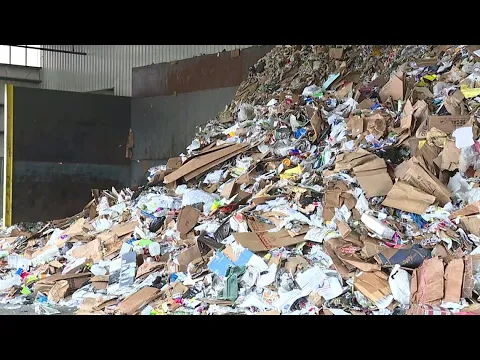
The plastic discarded at a school in Khayelitsha this week already has a destination: the wall of a house that will still be built.
This is engineering applied to the circular economy, social housing, and reducing plastic pollution — simultaneously.





Es posible todo cuando uno se lo propone. me gustaría saber los costos de implementar una planta similar en sudamérica, especialmente en Perú.
Great idea! Interested in partnership to aquire the plant in Nigeria.