






 Portuguese
  Spanish


Created at the Shibaura Institute of Technology in Japan, the smart bicycle combines electronic steering, haptic feedback, and machine learning to interpret real-time riding. The system differentiates intentional turns from instabilities and activates stabilization only when there is a risk, preserving the cyclist’s natural experience
A smart bicycle developed by researchers at the Shibaura Institute of Technology in Japan promises to make two-wheel riding safer by identifying when the cyclist intends to turn and when there is a risk of falling.
The proposal addresses a common challenge in two-wheeled vehicles. As bicycles and motorcycles need to lean into turns, conventional stability systems may struggle to determine if the movement is intentional or a sign of losing control.
This confusion can lead to two problems. If the system interferes during a planned turn, it disrupts the rider’s experience. If it fails to act during a real instability, it misses the chance to assist.
-
Early Humans Made Beds Nearly 200,000 Years Ago in African Caves, Study Reveals

-
METTL3 Protein Found to Play Crucial Role in Breast Cancer Metastasis, Surprising Scientists

-
Brazil’s Gaming Market Reaches $2.5 Billion, But Country Plays More Than It Produces

-
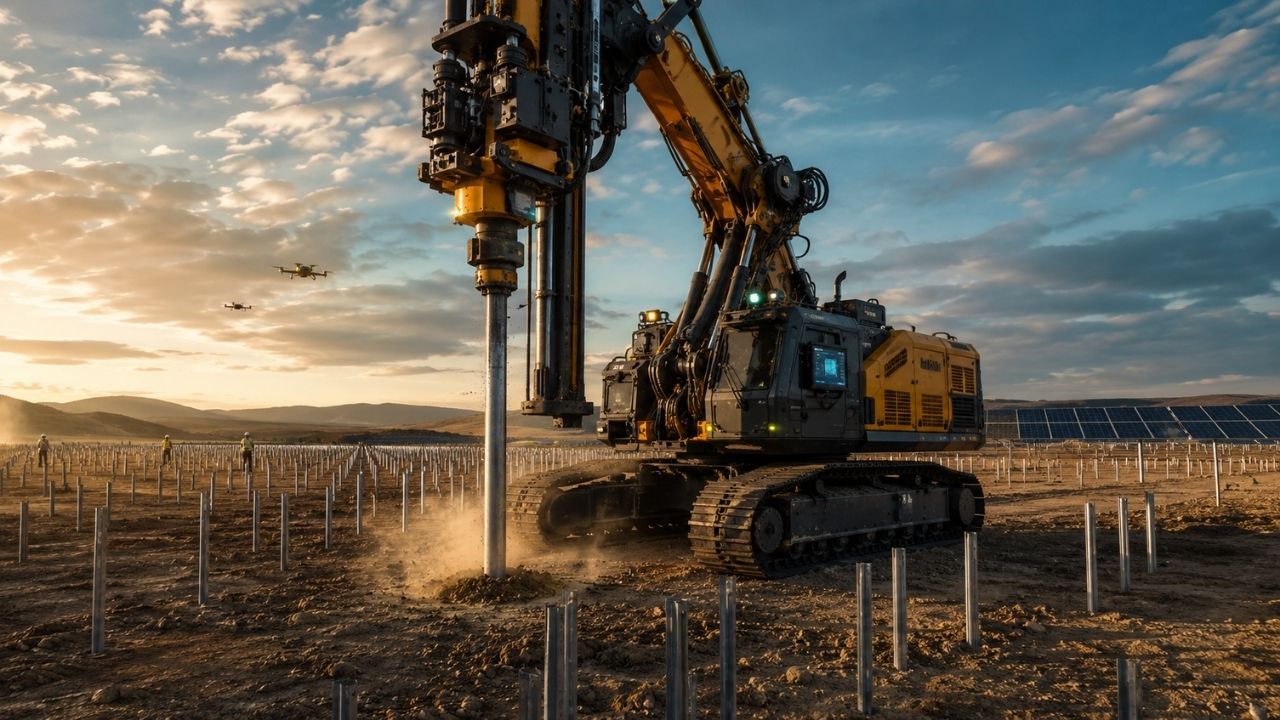
35-Ton Giant Robot Revolutionizes Solar Farm Construction with AI-Driven Precision


Smart bicycle uses electronic steering to read the cyclist
To overcome this limitation, the team created a bicycle with electronic steering. In this model, the handlebar is not mechanically connected to the front wheel. The connection is electronic, allowing the measurement of direction and interaction between cyclist and vehicle.
Without the traditional mechanical connection, the system maintains a realistic riding sensation through haptic feedback. This force-based return allows the cyclist to feel how the vehicle responds during the ride.
The study was led by Associate Professor Hiroaki Kuwahara from the Department of Mechanical and Control Systems at the Shibaura Institute of Technology, in partnership with Shota Tsukase, a master’s student at the institution.
The findings were published on June 19, 2026, in the IEEE/ASME Transactions on Mechatronics journal. The research is based on the idea that haptic technology can go beyond force feedback and understand intentions.
Machine learning separates turn from instability
The smart bicycle was integrated with an intention classification system based on machine learning. At the core of the solution is a long-term memory neural network, known as LSTM, used to identify temporal patterns.
Before the training, the researchers applied the K-means algorithm to organize the riding data into three situations: straight-line riding, curves, and instability. From this, the model learned each scenario.
Variables such as steering angle, speed, tilt, lateral acceleration, and reaction torque were analyzed. This data shows the state of the bicycle and the interaction with the cyclist.
With this combination, the system was able to recognize conditions in real-time. The main point was to distinguish intentional curves from unstable situations, even when both involved tilting.
Support appears only when there is risk
After identifying the riding condition, the control responded differently. During curves and intentional maneuvers, the stabilizer remained inactive, preserving the cyclist’s control.
When instability was detected, the system activated stabilization control to restore balance. In the experiments, the approach recognized the scenarios and provided support at the appropriate moments.
The idea is not to replace the rider but to create a form of cooperative human control. The system interprets the cyclist’s intention and only offers assistance when there is instability, maintaining natural riding.
The researchers see future applications in electric bicycles, electric motorcycles, bike-sharing services, and delivery vehicles. The technology can also help older cyclists and less experienced users.
The team intends to expand the recognition capability to more riding situations and environmental conditions. The goal is to develop assistance that enhances safety without compromising maneuverability and control.
What do you think of this smart bicycle proposal: can discreet help to prevent falls make two-wheel mobility safer, or is there a risk of technology interfering too much with the cycling experience? Share your opinion and tell us in which situations this feature would be most useful.
Study available in IEEE/ASME Transactions on Mechatronics.


