






 Portuguese
  Spanish


Primitive humans left evidence of prehistoric beds made with grass over ashes in the Border Cave, according to an archaeological study published in 2026. The finding shows sleeping areas repeatedly renewed, with care against insects, humidity, and domestic routine before modern houses in a rare preserved archaeological record.
Primitive humans were already preparing prehistoric beds with grass over ashes inside the Border Cave, on the border between South Africa and Eswatini, long before the emergence of modern houses and mattresses. The discovery appears in an archaeological study published in 2026 in the Journal of Archaeological Science and analyzed by the Daily Galaxy.
The research showed that cave occupants constructed and renewed plant beds between 200,000 and 43,000 years ago, using grass over layers of ashes. The work was conducted by researchers who examined ancient sediments under a microscope, revealing a rare everyday habit to survive in the archaeological record.
Sleep hardly leaves traces, but this cave preserved rare signs
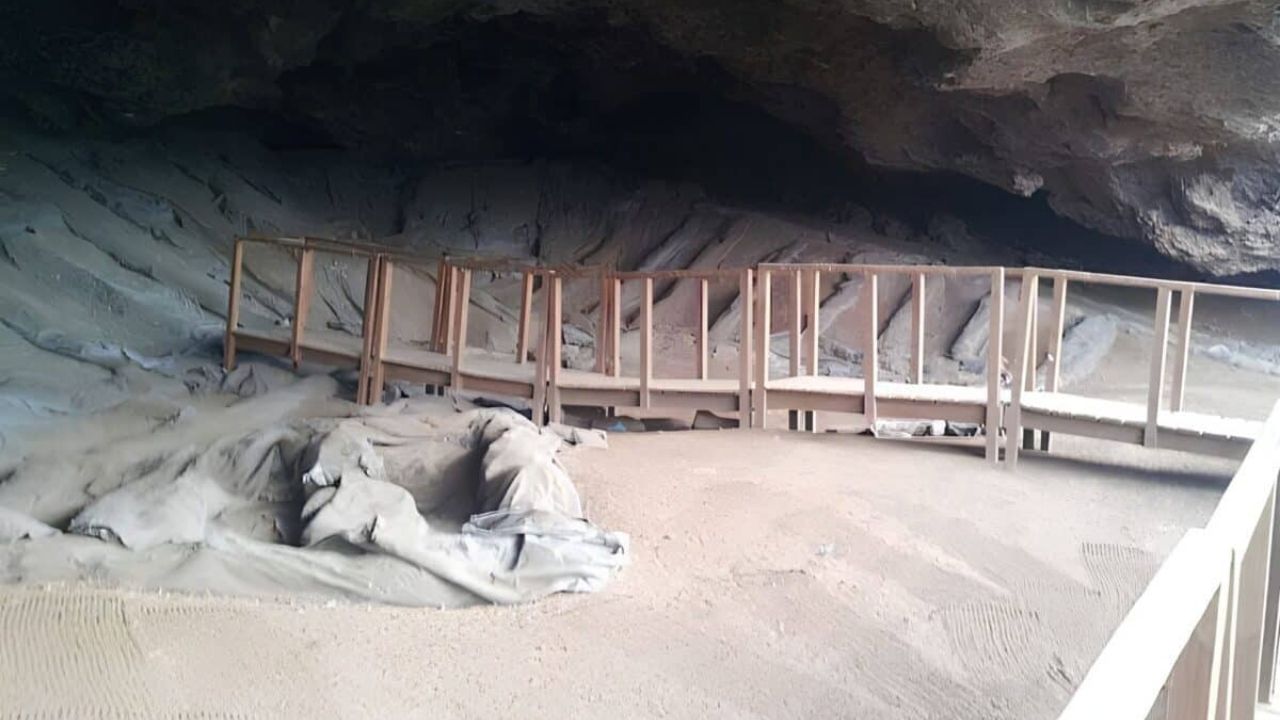
Sleeping is one of the most universal activities of human life, but one of the most difficult to trace in the distant past. Materials used as bedding, such as leaves, grasses, and plant fibers, usually decompose long before being found by archaeologists. Therefore, ancient evidence of sleeping areas is considered rare.
-
Japanese Smart Bike Detects Cyclist’s Intent to Turn and Potential Falls

-
METTL3 Protein Found to Play Crucial Role in Breast Cancer Metastasis, Surprising Scientists

-
Brazil’s Gaming Market Reaches $2.5 Billion, But Country Plays More Than It Produces

-
35-Ton Giant Robot Revolutionizes Solar Farm Construction with AI-Driven Precision


In the Border Cave, however, the sediments preserved microscopic signs of plant layers associated with resting. What seemed like just ancient soil revealed a familiar routine: choosing a place, preparing a surface, and renewing the space used for sleeping. This detail brings primitive humans closer to habits we still recognize today.
The Border Cave has been studied for decades
The Border Cave has been excavated for almost 90 years and is located in the Lebombo Mountains, in a region near the border between South Africa and Eswatini. The site preserves a long archaeological sequence, with occupations ranging from the Paleolithic to the Iron Age.
Even after so many decades of research, the site still revealed new information. By examining sediment samples on a microscopic scale, researchers identified traces of constructed, removed, and renewed plant beds over thousands of years. The discovery shows that there are still intimate details of prehistoric life hidden in seemingly common layers.
The beds were made with grass, reeds, and layers of ashes
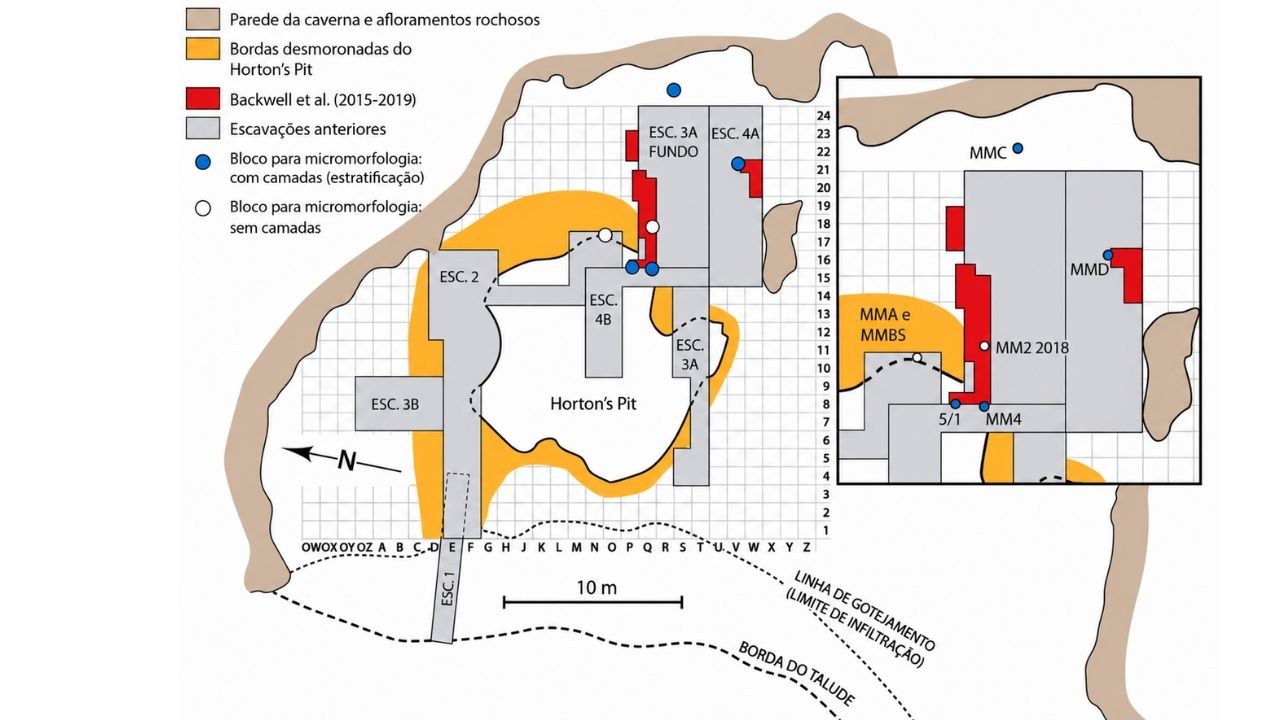
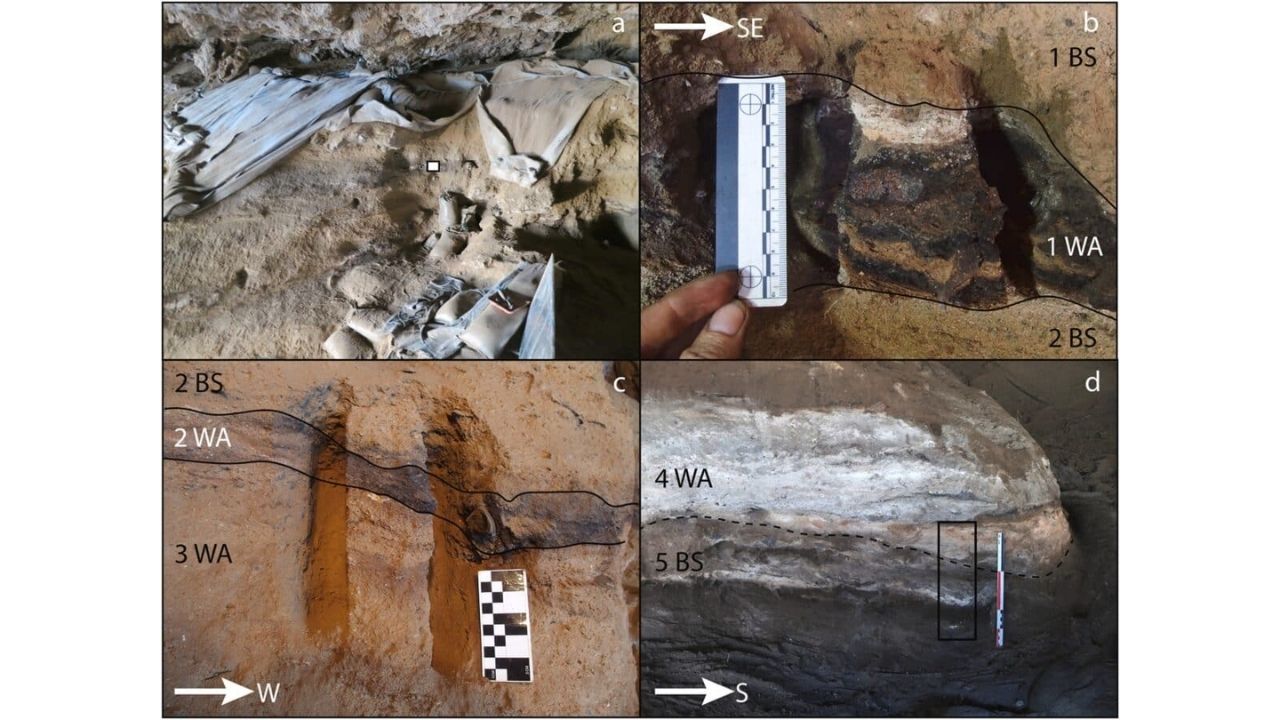
Border Cave showing where the excavations and micromorphological samples were collected. Credit: Journal of Archaeological Science
The beds found were mainly composed of grasses from the Panicoideae subfamily, as well as reeds spread directly on the ground. These plants formed surfaces used as resting areas, creating a separation between the body and the cave floor.
The most important element, however, was beneath the grass. Researchers found thick layers of ashes under the beds, indicating that the occupants prepared the base before placing fresh plant material. The prehistoric bed was not a casual heap of plants but a structure repeated and maintained with intention.
The ashes helped protect and preserve the sleeping space
According to the study, the ashes had practical functions. They could help keep the space drier and warmer, as well as repel crawling insects. This use suggests that primitive humans observed the environment and took advantage of available resources to make rest safer.
There were also signs that the ancient beds were regularly burned before the placement of new layers of plant material. This cycle indicates cleaning, renewal, and maintenance. The routine of changing the bed, now seen as a basic domestic habit, may have much older roots than previously thought.
Researchers identified six different types of beds
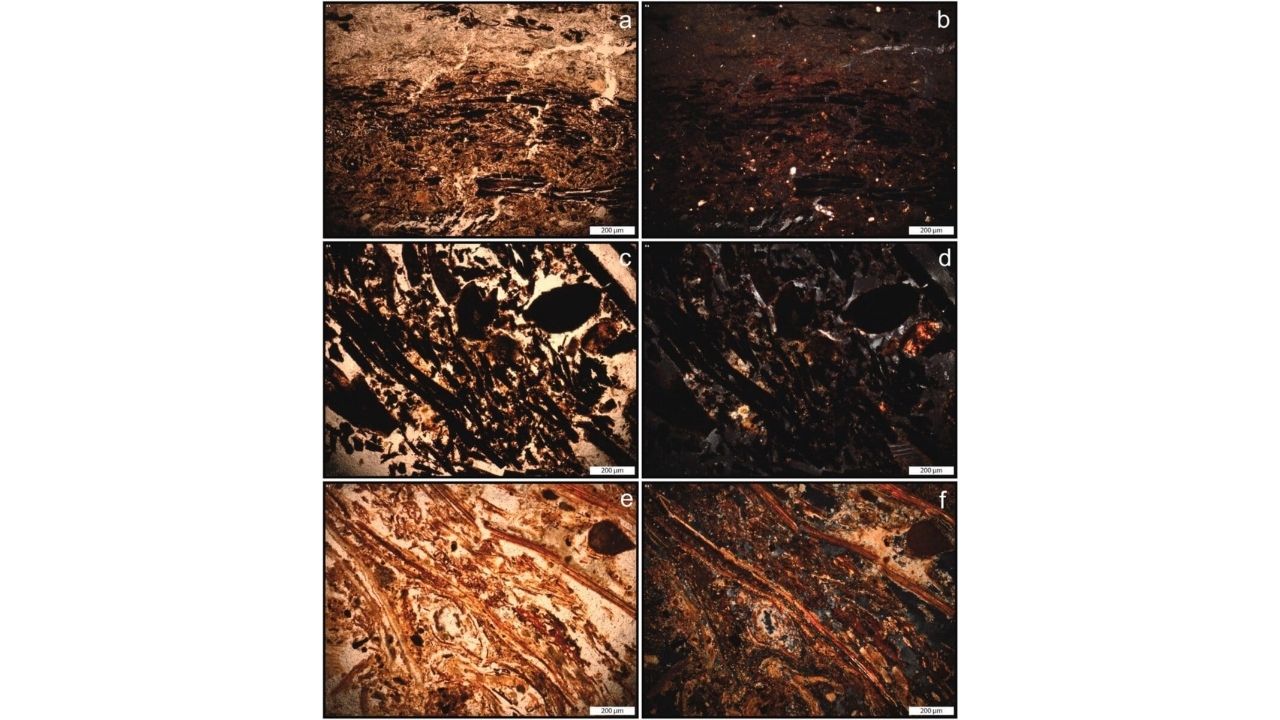
Microscopic analysis revealed six microfacies, that is, six distinct types of stratification in the studied sediments. Each of these layers represents a different form of organization of plant material, showing that the sleeping areas were not always made in the same way.
Three more recent types of beds have no known equivalent in previously published research, while others resemble findings at South African sites like Sibudu and Diepkloof. This indicates that there were local variations in the construction and maintenance of the beds, possibly linked to the type of plant available or the customs of each group.
The way of sleeping changed over thousands of years
Not all prehistoric beds had the same characteristics. Researchers observed differences in burnt plant remains and the distribution of phytoliths, mineral particles left by plants after decomposition. These traces help reconstruct how the beds were used and modified.
The more recent layers, dated from 60,000 to 43,000 years ago, were less fragmented, less burnt, and showed fewer signs of trampling than the older ones. These differences suggest changes in the preparation, use, or conservation of sleeping areas over time.
The habit reveals organization before modern houses
The discovery is important because it shows an everyday behavior, not just a tool, a painting, or a fossilized bone. Making a bed involves choosing a location, gathering material, organizing the space, and ongoing maintenance. This points to a structured routine within the cave.
By renewing grass over ashes for long periods, primitive humans demonstrated attention to the comfort, protection, and cleanliness of their resting spaces. Before houses, rooms, and mattresses, there was already a concern to transform a corner of the cave into an appropriate place to sleep.
The study brings prehistory closer to common life
Many archaeological discoveries draw attention for weapons, bones, paintings, or large migrations. In this case, the impact comes precisely from the opposite: a simple and everyday gesture. The preparation of beds shows a less spectacular but profoundly human side of prehistoric life.
The Border Cave helps to remind us that human history was not only made of hunting, survival, and displacement. There was also rest, repetition, care, and organization of space. It is in this domestic detail that the discovery gains strength: it shows that seemingly modern habits may have started in very ancient environments.
A small discovery in size, but enormous in significance
The preserved evidence covers a long archaeological sequence, with stratification between approximately 161,000 and 43,000 years ago, as well as deposits associated with occupations that date back to nearly 200,000 years. Throughout this period, the deposition of fresh grass over ashes remained a recurring feature of life in the cave.
The find shows that primitive humans already dealt with comfort, hygiene, and protection practically, using simple materials available around them. Did you imagine that the habit of preparing a bed could be so ancient, or do you think this discovery changes the way we view the intelligence of early humans?


