Portuguese
  Spanish


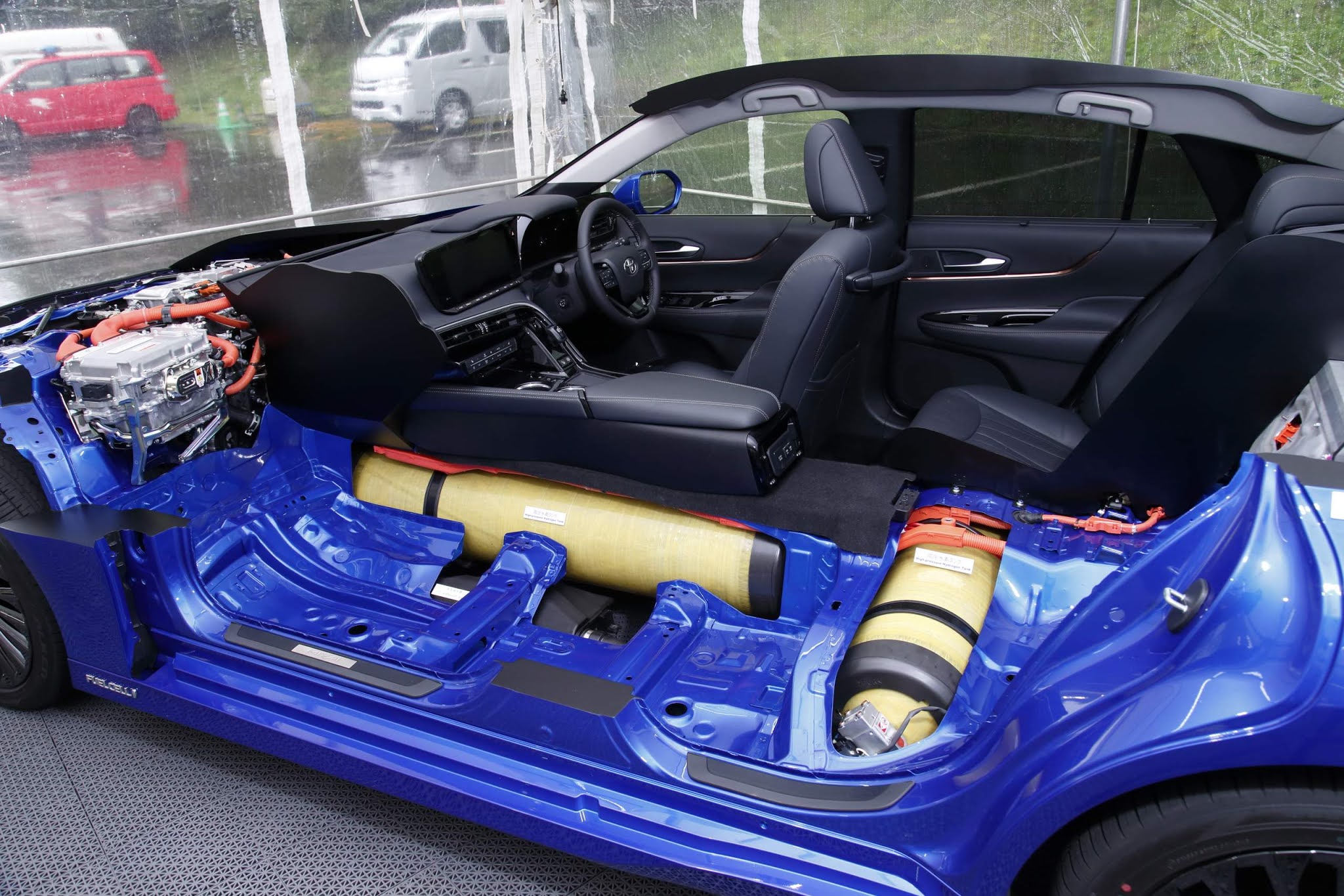

Searching Not to Eliminate Internal Combustion Engines, While COP26 Was Happening, Akio Toyoda Was Testing His Hydrogen Cars from Toyota, Which in the Next Decade Will Receive Investments of R$ 73.6 Billion
While several countries were discussing solutions at COP26 in Glasgow, Toyota’s president, Akio Toyoda, was in Japan testing hydrogen cars. There is still no launch date for commercial models, as Toyota still needs to reconcile price, operational cost, and range to compete with gasoline models. However, according to Akio Toyoda, the Corolla Sport could preserve millions of jobs in the automotive sector and also reduce CO2 emissions.
See Also
Toyota Owner Promises R$ 73.6 Billion Will Be Invested in Hydrogen Cars in the Next Decade


The goal is to have 15 models of hydrogen and electric cars available by 2025, and also to invest R$ 73.6 billion in the next decade to expand battery production. Akio Toyoda, however, explains that the focus is not solely on one technology.
According to the executive, the enemy is CO2, not internal combustion engines. It is not necessary to focus only on one technology, but also to make good use of existing technologies.
-
End of an era in Brazil: beloved sedan by Brazilians is discontinued despite having a 2.0 engine with 151 hp, CVT transmission, 466-liter trunk, and up to 650 km of range.

-
New Law Proposal in Brazil Could Heavily Penalize Drivers: Dangerous Overtaking May Become a Serious Offense with Fines Increased Tenfold and a 12-Month License Suspension; Update on 2026 Progress

-
Electric Revolution: Watts W125 Motorcycle Offers 160 km Range, 90 km/h Speed, and Affordable Price Starting at $3,000
-
General Motors Replaces Over a Thousand Workers with 50 Cobots at Electric Vehicle Plant, UAW Union Criticizes Move Amid Industry’s Automation Push


“Carbon neutrality is not having just one option, but keeping all options open,” highlighted the businessman. Toyota’s latest push for hydrogen cars comes amid the race for the electric sector and CO2 reduction, a topic heavily discussed at COP26. Although the number of electric cars on the roads is still small, global registrations of such vehicles increased by 41% in the last year, according to the International Energy Agency.
Automakers Sign Declaration Against Fossil Fuels at COP26
During COP26, six major automakers, including Ford Motor, General Motors, Volvo, and Mercedes-Benz, signed a declaration to phase out the use of fossil fuels in their models by 2040.
Toyota refused to join the group, arguing that much of the world is not ready to transition to electric vehicles and supports the use of hydrogen cars. Another automaker that refused at COP26 was the German Volkswagen.
According to Shigeru Hayakawa, vice president of Toyota, the company does not plan to be seen as an electric car manufacturer, but rather as a CO2-neutral company.
Challenges of Hydrogen Cars
In the case of hydrogen cars, defended by Akio Toyoda, one of the main stalemates is that the engine is not completely free of carbon, and therefore, the model cannot be classified as a “zero-emission” vehicle.
Although the byproduct of the combustion of oxygen and hydrogen is water, a small amount of metal is also burned by the engine, resulting in 2% of the emissions from a fossil fuel engine. The exhaust also contains traces of nitrogen oxide. Another mission is that there is a CO2 footprint in the production of electric car batteries, however, electric cars do not pollute when used.
Moreover, hydrogen cars also require large pressurized tanks for their “energy source,” which can reduce the space in the back seats or the trunk.