Portuguese
  Spanish



Law No. 14,300/2022, Erroneously Nicknamed “Solar Tax”, Establishes Rules for Distributed Generation and the Use of the Electric Grid. Understand What the Regulation Really Changes and Why the Term is Incorrect.
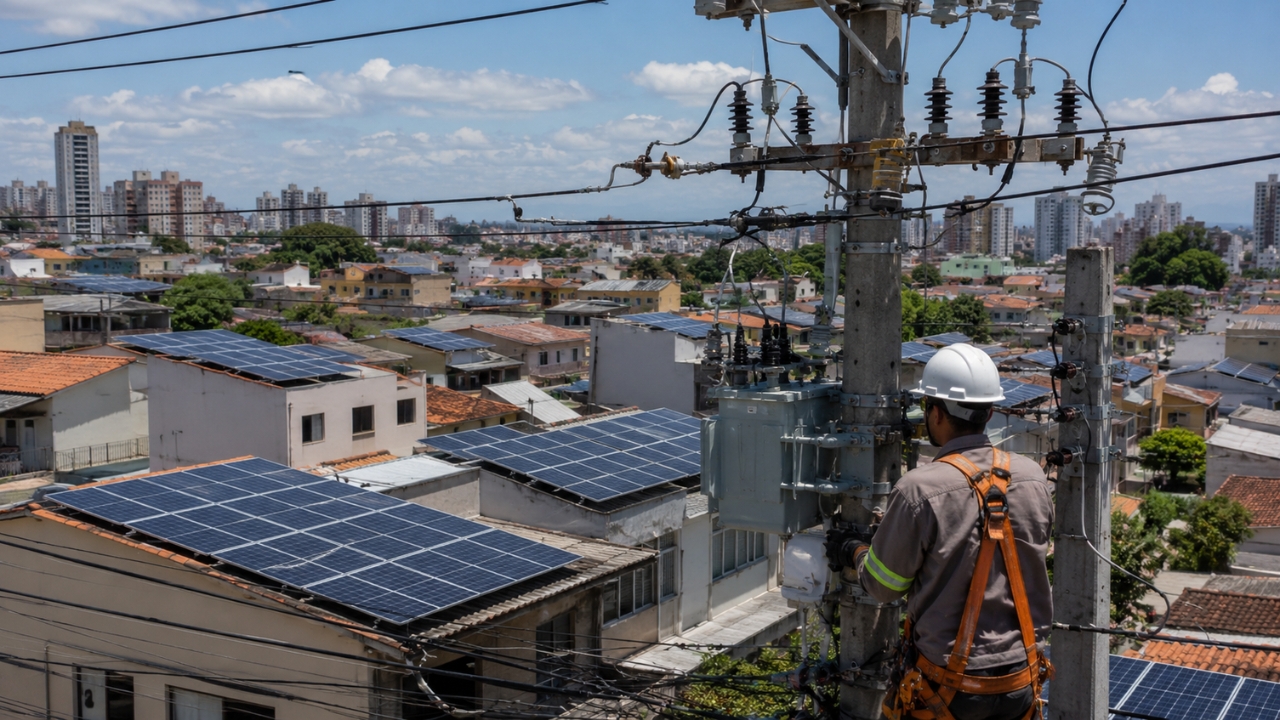
Solar energy continues to gain ground in Brazil and is consolidating as one of the main sources of electricity generation in the country. By June 2025, more than 419,000 projects for solar plants had been approved, according to data from the National Electric Energy Agency (ANEEL) and reports from Sol Fácil. In total, the country has 3.66 million photovoltaic installations, occupying second place in the ranking of the largest national energy matrices.
A large part of this expansion comes from distributed generation (GD) — a model that allows consumers to produce and use their own electricity, especially in households. Since 2019, 83% of new solar installations belong to this segment, an advancement driven by the Legal Framework for Microgeneration and Minigeneration Distributed, created by Law No. 14,300/2022.
However, what should have been a landmark for modernization has ended up being entangled in political narratives and misinformation. Since its approval, the regulation has been labeled on social media as a supposed “solar tax”, a term that does not reflect the content or purpose of the legislation.
-
World’s Largest Engie Solar Plant in Brazil Highlights Billion-Dollar Energy Waste Issue: Company Considers Batteries and Bitcoin Mining to Avoid Wasting Production

-
Over 60 Tractors Take to the Streets in Lopera as Solar Parks Compete with Olive Groves, Affecting 13,000 to 100,000 Trees According to Conflicting Reports

-
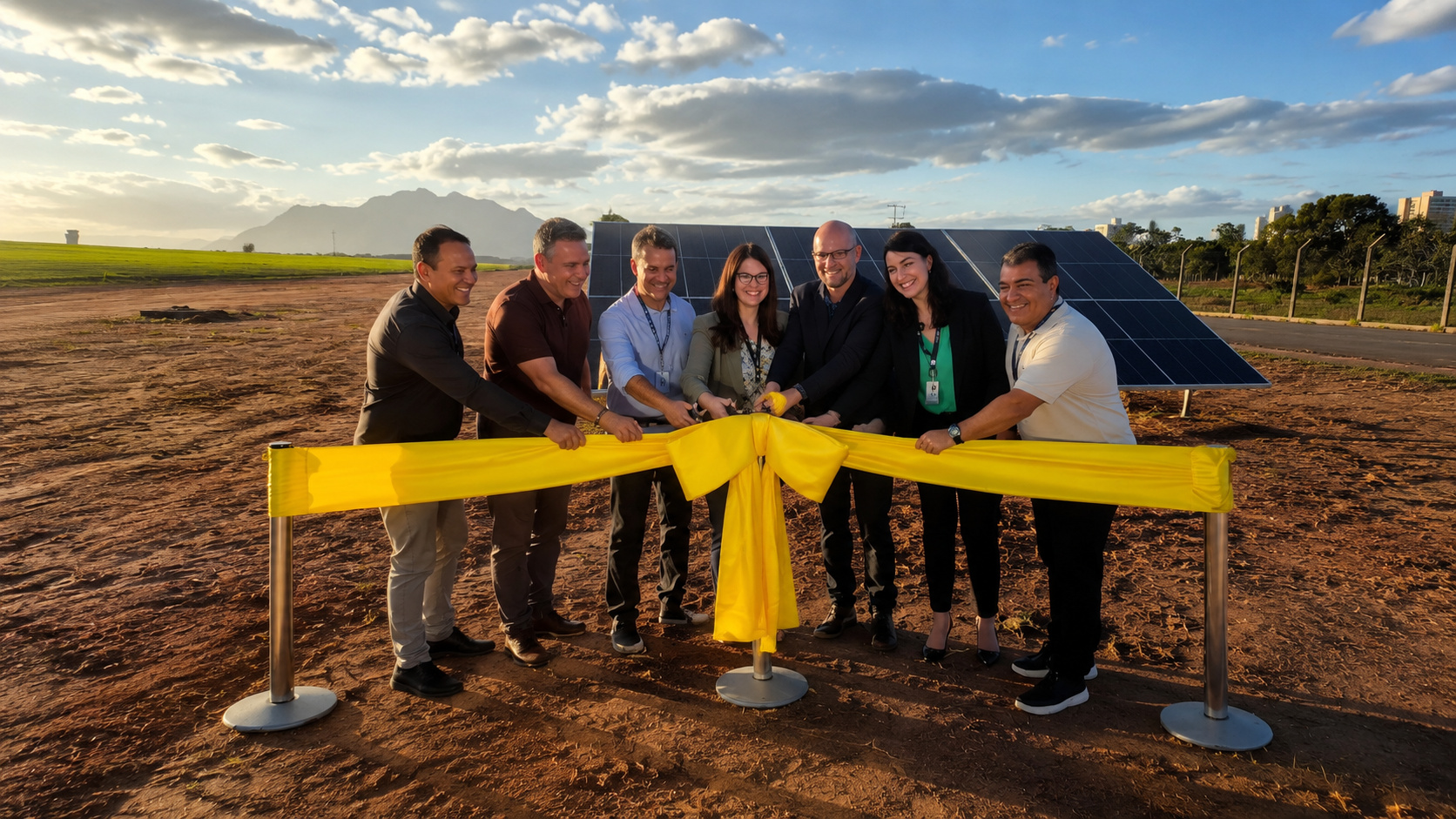
Brazil’s Vitória Airport to Launch Solar Plant Covering Area of 10 Soccer Fields, Boosting Clean Energy and Cutting Costs
-
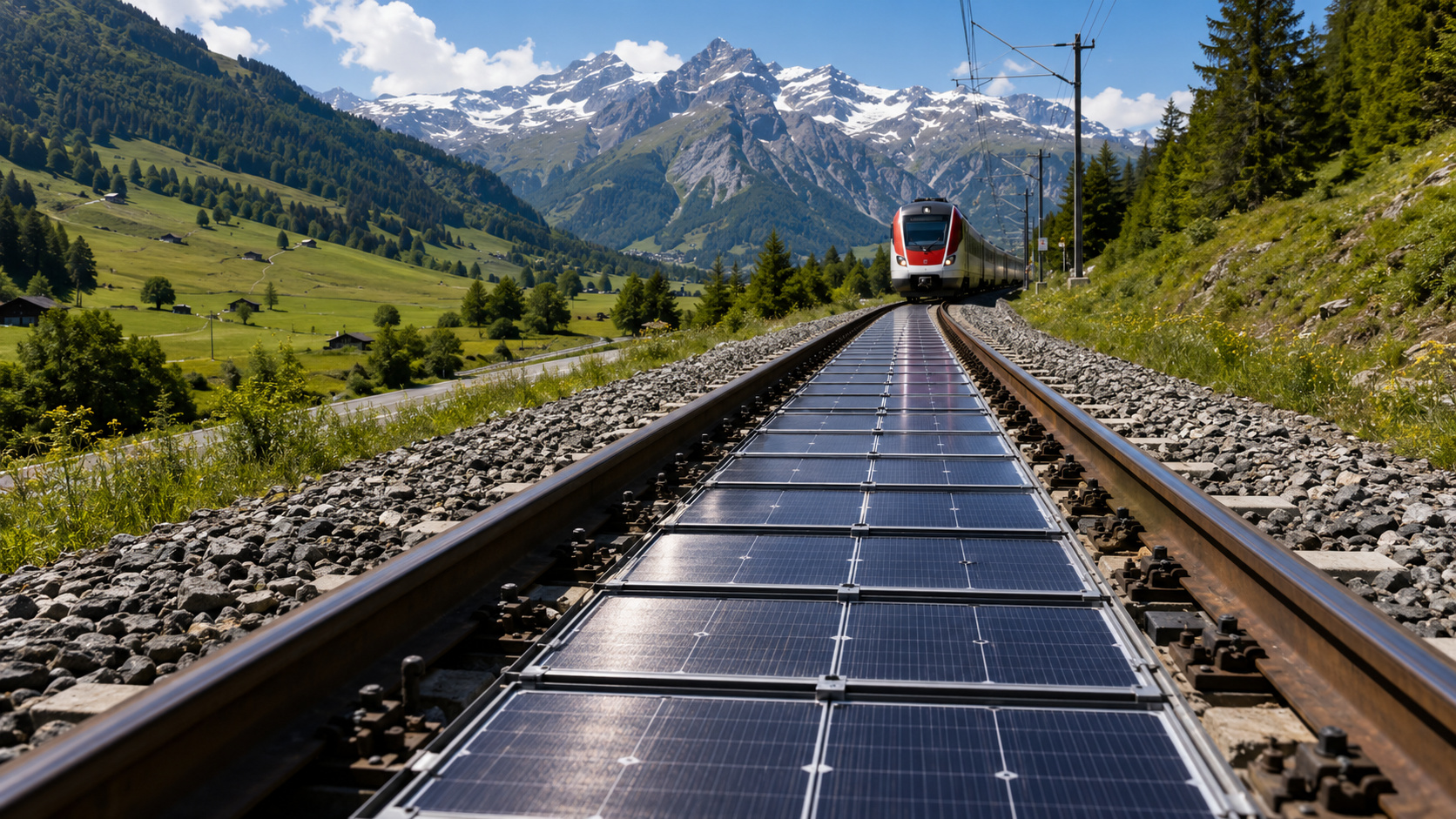
Switzerland Converts Train Tracks into Solar Power Plants with Removable Panels to Generate Energy Without Using Additional Land


What Law No. 14,300/2022 Really Establishes About Solar Energy
Sanctioned in January 2022, still under the government of Jair Bolsonaro, Law No. 14,300 established parameters for the operation of microgeneration and minigeneration distributed. It defines rules for capacity, energy compensation, and responsibilities for consumers who produce electricity from renewable sources, such as solar photovoltaic and wind.
The law also created the Electric Energy Compensation System (SCEE), which allows users to inject excess energy generated — for example, during the day — into the electric grid. This volume is converted into credits valid for up to 60 months, used when generation is insufficient, such as at night or during cloudy periods.
Additionally, the Social Renewable Energy Program (PERS) was established, aimed at low-income families, to democratize access to clean energy.
The legislation distinguishes two types of systems:
- Microgeneration, with a capacity of up to 75 kilowatts (kW) — typical for households and small businesses;
- Minigeneration, which goes up to 3 megawatts (MW) for non-dispatchable sources (such as solar and wind) and 5 MW for dispatchable sources (such as biomass and small hydroelectric plants).
The Origin of the Controversy: What is the TUSD and Why was it Called “Solar Tax”
The main change brought by Law 14,300 was the transition in the compensation rules for the energy generated and injected into the grid. Before the regulation, consumers who produced electricity did not pay for the use of electrical infrastructure. With the new law, a model of gradual contribution until 2029 was created, through the System Use Tariff (TUSD).
The TUSD is a technical tariff charged for using the electric grid — and not a tax on solar energy, as the term “solar tax” suggests. It is a way to reimburse distributors for the infrastructure needed to transport and balance the flow of energy.
This tariff, already existing before the law, began to be applied proportionally to the new solar systems connected to the grid. Those who installed their panels until 12 months after the law was sanctioned maintained the previous conditions until 2045, without full charges.
Even so, the expression “solar tax” became popular on social media, often incorrectly associated with the current government, even though the landmark was sanctioned in 2022.
Misinformation and Political Dispute Surrounding Solar Energy
The narrative of “solar tax” has become one of the most emblematic examples of misinformation about energy in Brazil. In videos, podcasts, and posts, accusations multiplied that the government had created a “tax on the sun.” However, experts and industry entities affirm that this interpretation is incorrect.
Rodrigo Sauaia, president of the Brazilian Association of Photovoltaic Solar Energy (ABSOLAR), argues that the term is “deceptive and unfair.” According to him, the legal framework brought “legal certainty and predictability for investors”, without creating any type of tax.
“The compensation system does not charge for energy generation, but fairly regulates the relationship between consumers, generators, and distributors,” Sauaia explains.
Nevertheless, he criticizes the lack of regulatory updates:
“The law required that ANEEL deliver the calculation of the costs and benefits of distributed generation by mid-2023, but this has never been done. The agency has been behind on this work for almost two years,” warns the executive.
The National Electric Energy Agency (ANEEL), responsible for regulating the sector, was contacted but did not respond to inquiries on the subject.
The Technical and Economic Impact of Distributed Generation on the Electric System
With the advancement of distributed generation, new operational and economic challenges have emerged. For Gabriel Konzen, a technical consultant at the Energy Research Company (EPE), affiliated with the Ministry of Mines and Energy (MME), rapid expansion requires adjustments in how network costs are shared.
“As more consumers begin to generate their own energy, questions arise about the use of the electric grid and how to fairly distribute the costs of this shared system,” he states.
He compares the logic to the functioning of a condominium, where all residents contribute to maintain common areas, even with different levels of use.
On the other hand, Sauaia contests the analogy:
“Those who generate their own energy do not harm their neighbors; on the contrary, they are helping. This energy is used locally and relieves the electric grid, reducing costs and losses for everyone,” he argues.
The Dispute of Interests in the Electric Sector and the Role of Energy Transition
The debate over the TUSD also reflects a dispute among different segments of the electric sector. Associations of distributed generation advocate for incentives for expanding solar energy, while distributors argue that the previous model created cross-subsidies, with costs passed on to those who do not generate their own energy.
The lawyer Paulo Roberto dos Santos Corval, a PhD in Law from UFRJ and a professor at UFF, analyzes that the controversy goes beyond technical issues.
“Narratives about taxation involve disputes of sectorial interests, but not a structural vision of energy transition. There is a lack of a clear and integrated political orientation on what is wanted as a country.”
He emphasizes that the debate on solar energy should be part of a national energy transition strategy, and not reduced to an ideological dispute.
What the TUSD Is — and What It Is Not
According to Article 18 of Law No. 14,300, access to the electrical grid is free, but subject to reimbursement of the transportation costs involved. Thus, the TUSD is not a tax, but a technical tariff applied to all users who utilize the distribution infrastructure.
Corval explains that the confusion arises because part of the public confuses taxes with tariffs.
“Taxation refers to a tax. The TUSD is a regulated price, not a tax. It is more a form of regulation than taxation,” he clarifies.
He adds that the more accurate analogy is not that of a condominium, but of rent:
“The grid is neither public nor free. Like any common-use asset, it requires maintenance. Those who use it need to contribute, just as someone renting a space pays for its use.”
Fact-Checking: Is There or Isn’t There a “Solar Tax”?
In the end, the answer is clear: there is no “solar tax” in Brazil. Law No. 14,300/2022 did not create any tax on solar energy. What exists is a charge for the use of the distribution grid, regulated by ANEEL, to ensure the technical and financial balance of the electric system.
The main verified points are:
- The TUSD is not a tax, but a technical tariff;
- The law was sanctioned in 2022, during the government of Bolsonaro, and not the current one;
- The term “solar tax” is incorrect and distorts the objective of the legal framework;
- The charge refers to the use of the electric grid, not to solar generation;
- The debate reflects sectorial disputes and political narratives, not technical facts.
Corval summarizes the scenario with a sharp analysis:
“It is inappropriate to talk about a solar tax. What exists is regulation of access and use of the grid, a natural part of a shared energy system. What is lacking, in fact, is a state — civil society and government together defining the future of new energy frameworks.”