






 Portuguese
  Spanish
  4 min of reading
  0 comments


Minister Marina Silva Recognizes Challenges And Contradictions In The Brazilian Energy Transition And Argues That Part Of The Profits From Oil Should Be Directed To Investments In Clean Sources, Such As Solar, Wind, And Green Hydrogen.
The debate about the role of oil in the energy transition has returned to the center of government discussions. The Minister of Environment and Climate Change, Marina Silva, publicly acknowledged that the country faces “challenges and contradictions” in trying to reconcile economic advancement with environmental preservation. Her statement follows the federal government’s approval for Petrobras to begin exploration in the Equatorial Margin, a sensitive region on Brazil’s northern coast.
During an interview with O Globo, Marina stated that the development of the oil sector does not necessarily need to move in the opposite direction to the climate agenda—as long as oil profits are used as a transition tool. According to her, the resources obtained from exploration should be allocated to clean energy projects, such as green hydrogen, solar energy, and wind energy.
“It is not enough to want to get out of dependence on fossil fuels; we need to create the foundations for that. Part of the profit from oil must be used to invest in the energy transition,” said the minister.
-
Oil production grows in Rio, but reserve replacement raises a warning sign

-
Petrobras is expected to complete the drilling of the Morpho well in the Foz do Amazonas in August 2026, the first well in the Equatorial Margin, an oil frontier that the ANP estimates at more than 30 billion barrels and could redraw the map of Brazil.

-
Oil returns to the center of concerns with tension between the US and Iran

-
IEA reduces forecast for global oil demand in 2026 after impacts of the Middle East crisis
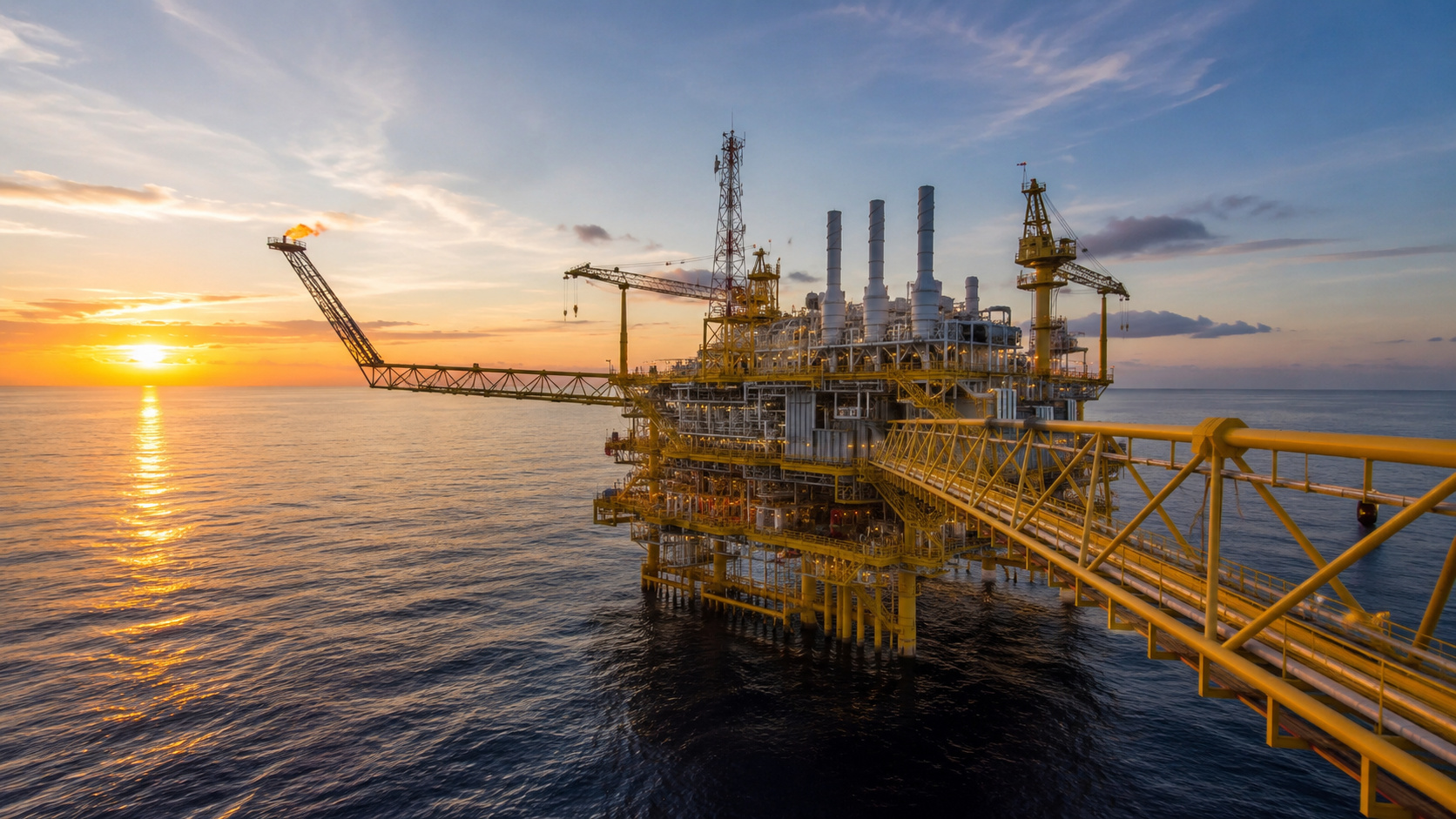


Petrobras At The Center Of A Political And Environmental Impasse
Marina’s statements expose a dilemma that divides the Lula government. On one side is the need to maintain economic growth and the revenue provided by the oil sector, which remains essential for the country. On the other, there is pressure—both domestic and international—for Brazil to adopt a stance more consistent with the agenda of climate neutrality, especially on the eve of COP30, which will take place in Belém in 2025.
For Marina Silva, Petrobras’s movement should be understood as part of a “just transition” process, not as an environmental setback. The minister emphasizes that the company needs to reformulate its role and prepare for a future in which fossil fuels will have reduced relevance.
“The president has said that Petrobras needs to stop being an oil exploration company and urgently transform into an energy production company,” Marina highlighted.
Equatorial Margin: Economic Hope And Environmental Warning
The Equatorial Margin, located between Amapá and Rio Grande do Norte, has been pointed out by experts and the market as the “new pre-salt,” with the potential to make Brazil one of the largest producers of oil in the world. However, environmentalists warn of the risks of this exploration in an area of high marine biodiversity and coastal ecosystems interconnected with the Amazon.
Marina acknowledges these concerns but rejects the idea of an abrupt break with fossil fuels. For her, the energy transition must be planned gradually and responsibly.
“It is not possible to abandon fossil fuels by decree, because there would be a global energy collapse,” she stated. “Brazil is the country with the greatest comparative advantage, already having an energy matrix that is 45% clean and an electrical matrix that is 90% clean.”
The statement reinforces the argument that the country can lead the global energy transition if it knows how to use oil as a lever to finance clean technologies.
Between Economic Pragmatism And Climate Coherence
The minister’s position highlights a balance between economic pragmatism and environmental coherence. This fine line also reflects President Lula’s strategy, which aims to project Brazil as an international reference in sustainability without giving up the economic potential of oil.
Within the government itself, the topic divides opinions. The economic team and the energy sector advocate for accelerating exploration in the Equatorial Margin, while the Ministry of Environment and civil society organizations call for caution and transparency in decision-making. The challenge is to balance the urgency for revenue with the climate commitment made at international forums.
Pressures Increase On The Eve Of COP30
Marina’s remarks took place in Belém, the city that will host COP30, the climate conference that will put Brazil in the spotlight of the global debate on carbon emissions and the use of fossil fuels. The political context adds complexity to the issue, especially after the Senate approved an expansion of subsidies for coal— a decision criticized by the minister.
“It was a signal against the efforts that need to be made. It is absurd that something this complex is voted on in six minutes, on the eve of the largest event to tackle climate change,” she declared.
The criticisms reflect the government’s difficulty in aligning speech and practice amid economic pressures and global environmental demands.
Behind the statements, Marina emphasizes the importance of transforming the Brazilian energy model and using the profits from oil as a bridge to the future. This strategy, however, requires political will, planning, and clarity about the allocation of resources.
The minister advocates a narrative of “climate realism,” in which contradictions are part of the change process but do not hinder progress toward a cleaner economy.
“Those who want to break away from fossil dependence must create the conditions for that. Brazil is willing to do this for climate justice,” she concluded.






Be the first to react!